AI Agent Infrastructure

AI Agent Infrastructure

AI agent infrastructure is the runtime layer that lets coding agents actually execute work: sandboxed terminals, persistent memory, pre-wired APIs, deployment targets, and the UIs that wrap them. Agent frameworks (LangChain, CrewAI) build agents; infrastructure tools run them.

Vibecode CLIHermes AgentHermes WebUI

Agent infrastructure is the part of the stack that gets overlooked when people talk about AI coding. The framework (LangChain, CrewAI, AutoGen) decides what the agent does. The infrastructure decides where and how it runs: in a sandboxed cloud, on your laptop, in a persistent process with memory, behind a CLI or a web UI. In 2026 this layer is starting to consolidate around two patterns: managed cloud runtimes that give an agent everything it needs in one click, and self-hosted persistent runtimes for teams that want their agents close to their data. The tools in this category cover both ends of that split. The agent-framework tools (CrewAI, AutoGen, LangChain Hub, Agent Zero) live in AI Development Tools; this page is about the runtime layer underneath them.

What to know about AI Agent Infrastructure

<strong><a href="/tools/vibecode-app">Vibecode CLI</a></strong> is a managed cloud runtime, your agent (Claude Code, Cursor, Codex, Gemini) gets a sandboxed environment with 30+ pre-authenticated APIs, a database, auth, and one-click deploy. Best when you want zero setup and your agent to ship to production in one session. <strong><a href="/tools/hermes-agent">Hermes Agent</a></strong> from Nous Research is the self-hosted opposite: an open-source MIT-licensed agent that runs 24/7 on your own hardware, persists memory across sessions, generates skills from experience, and supports seven terminal backends from local Docker to Modal and Vercel Sandbox. <strong><a href="/tools/hermes-webui">Hermes WebUI</a></strong> is the browser front-end for Hermes Agent if you don&apos;t want to live in the CLI. This is a small, fast-moving category: most teams pick one of these for execution and pair it with a separate agent framework (CrewAI, AutoGen, LangChain) from the <a href="/category/ai-dev-tools">AI Development Tools</a> category for orchestration.

Top AI Agent Infrastructure tools right now

If you want to start fast, try Vibecode CLI, Hermes Agent and Hermes WebUI.

Two Patterns: Managed Cloud vs Self-Hosted Persistent

Almost every agent-infrastructure decision in 2026 comes down to one question: do you want your agent to live in someone else's sandbox, or in your own process? Both are valid. They optimize for different things.

Managed Cloud Runtime: Zero Setup, Ship in One Session

Vibecode CLI is the example. You install the CLI, paste it into Claude Code, Cursor, Codex, or Gemini, and your agent suddenly has a full sandboxed environment: 30+ pre-authenticated APIs (Stripe, Twilio, Resend, OpenAI, etc. with no key wrangling), a per-project database, built-in auth, and a one-click deploy path to the App Store with a custom domain. The trade-off is that your agent runs on their infrastructure, not yours, and you pay for credits ($20-$200/mo across the Plus/Pro/Max tiers). The payoff is that an idea can become a shipped app inside a single coding session, with no time spent provisioning, configuring secrets, or wiring up a deploy pipeline.

Self-Hosted Persistent Runtime: Your Hardware, Your Data, 24/7

Hermes Agent from Nous Research is the opposite trade-off. It is open source (MIT) and runs on your hardware, with a built-in learning loop that generates skills from experience and persists memory across sessions. It supports seven terminal backends (local, Docker, SSH, Singularity, Modal, Daytona, Vercel Sandbox) and five messaging gateways (Telegram, Discord, Slack, WhatsApp, Signal) so you can trigger the agent from a chat message and have it work in the background, then DM you when it's done. The trade-off is setup and operations cost: you provision the box, you manage the model API keys, you tune the prompts. The payoff is data residency, 24/7 background work, and no per-token markup on top of whatever model provider you pick.

Browser UI: When You Don't Want to Live in the CLI

Hermes WebUI is a community-built browser front-end with full parity to the Hermes Agent CLI: a three-panel layout (sessions sidebar, chat, workspace file browser), tool-call cards, inline file preview, voice input, mobile-responsive, optional password auth. It runs against any existing Hermes install, so you can deploy it on a side machine and access the agent from anywhere. This is what closes the loop for non-technical collaborators who want to talk to the agent without learning the terminal.

Hermes Agent logo
new
Hermes Agent logo

hermes agent

free

Self-hosted autonomous agent from Nous Research with a built-in learning loop. Creates skills from experience, persists memory across sessions, and runs 24/7 on your own hardware with sandboxed terminals and messaging-app gateways.

agent-infraread review ↗
#open-source#free-tier#local-first
Hermes WebUI logo
new
Hermes WebUI logo

hermes webui

free

Lightweight dark-themed browser interface for Hermes Agent with full parity to the CLI. Three-panel layout with sessions sidebar, chat, and workspace file browser. Community project that runs against any existing Hermes install.

agent-infraread review ↗
#open-source#free-tier#local-first
Vibecode CLI logo
Vibecode CLI logo

vibecode cli

paid · $20+

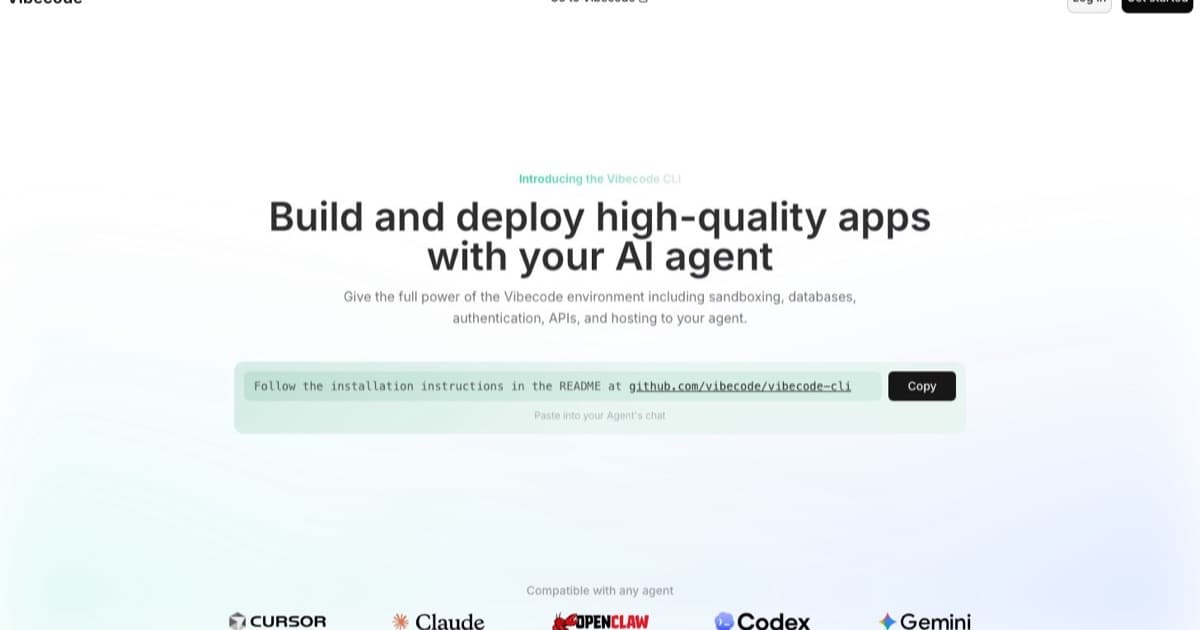
Build and deploy high-quality apps with your AI agent. Give the full power of the Vibecode environment including sandboxing, databases, authentication, APIs, and hosting to your agent. CLI-first platform with 30+ pre-authenticated APIs, built-in DB and auth, and App Store deploy. Works with Claude Code, Cursor, Codex, and Gemini as a multi-agent execution layer.

agent-infraread review ↗
#cli

Related Articles

The Complete Guide to Running AI Agents in Production

Where Frameworks End and Infrastructure Begins

The agent-framework tools (CrewAI, AutoGen, LangChain Hub, Agent Zero) define how the agent thinks: planning loops, tool calling, memory schemas, multi-agent coordination. They do not, by themselves, provide a place for the agent to actually run code, call APIs, or persist work between sessions. That gap is what agent infrastructure fills. Most production agent setups in 2026 combine one of each: a framework from AI Development Tools for the brain, and a runtime from this category for the body.

What "Sandbox" Actually Means

When a tool advertises a sandbox, the relevant questions are: what filesystem can the agent touch, what network can it reach, and what happens when the process crashes? A good agent sandbox isolates the agent from your laptop (so a buggy code-generation step can't rm-rf your projects directory), gives it a writable working directory it can build inside, allows outbound HTTPS to the model provider and a configurable allowlist for other services, and exits cleanly when the session ends. Vibecode CLI handles all of this on managed infrastructure. Hermes Agent lets you pick your sandbox per-task: lightweight Docker for quick scripts, Modal or Vercel Sandbox for compute-heavy work, SSH for running directly on a remote server.

Persistent Memory: What Actually Persists

"Persistent memory" is one of the most-overloaded phrases in the agent space. In practice it can mean: (1) chat history across sessions, (2) generated skills that the agent can re-use, (3) embeddings of past work for semantic recall, (4) a key-value store the agent writes to between runs, or (5) the agent's actual long-running process state. Hermes Agent does all five, which is one reason the project gets attention. Most cloud runtimes give you (1) and (2) but require you to wire up (3) and (4) yourself using a separate vector DB or object store from the Deployment & Databases category.

Messaging Gateways: Agents That Page You

The Hermes Agent feature most teams underestimate is the messaging-gateway layer (Telegram, Discord, Slack, WhatsApp, Signal). The pattern is: you DM the agent with a task, the agent works in the background on your hardware, and you get a DM when it finishes or when it needs input. This converts the agent from a foreground tool you babysit into a background worker you delegate to. The latency is high (minutes, not seconds), but the cognitive cost is near zero. For long-running refactors, scheduled maintenance, or research-and-summarize loops, this is the killer feature.

Pre-Wired APIs: What Vibecode Bundles

Most of the time spent setting up an agent is not the coding, it's the key wrangling. Vibecode CLI ships with 30+ APIs already authenticated inside the sandbox: Stripe for payments, Twilio for SMS, Resend for email, Anthropic and OpenAI for models, plus storage, search, analytics, and auth providers. The agent calls them via a unified interface without ever seeing the underlying API key. For prototyping, this collapses what used to be a half-day of setup into one prompt.

Deploy and Hosting

Vibecode CLI includes a one-click deploy path: the agent builds the app inside the sandbox, you ship it to Vibecode's App Store with a custom domain, and the same sandbox graduates to production. For self-hosted agents, deployment is whatever you already use; pair Hermes Agent with Vercel or Render from the Deployment & Databases category, and have the agent push the build artifact at the end of a session.

Pricing Overview

Vibecode CLI is credit-based: Plus, Pro, and Max tiers run roughly $20-$200/mo depending on usage. Hermes Agent is free and open source (MIT); your only costs are the model provider you point it at (Claude, GPT, or local Ollama) and the hardware to run it on. Hermes WebUI is also MIT-licensed and free. For teams pricing this out: managed cloud is predictable and scales with usage; self-hosted is variable (your model bill swings with prompt volume) but has no markup on top of the underlying APIs.

Recommended Setups

  • Solo builder, shipping fast: Vibecode CLI + Claude Code or Cursor as the brain. Idea to App-Store deploy in one session.
  • Solo builder, owns their stack: Hermes Agent on a local Docker backend + Ollama for free local models, with the Telegram gateway for "DM the agent and check back in an hour."
  • Small team, mixed workloads: Hermes Agent on a shared server with Modal or Vercel Sandbox for compute-heavy tasks + Hermes WebUI so non-CLI teammates can use it.
  • Enterprise: Self-hosted Hermes Agent on your own hardware, gateway access restricted to internal Slack, paired with a framework like AutoGen from AI Development Tools for multi-agent coordination.

What This Category Doesn't Cover

This is the smallest category on the site and that's deliberate. Agent-building frameworks (CrewAI, AutoGen, LangChain Hub) live in AI Development Tools. Coding-agent IDEs and CLIs (Claude Code, Cursor, Windsurf, Aider) live in Developer IDEs & Agents. The vector DBs and model APIs that agents depend on live in Deployment & Databases and Cloud AI Platforms. This page is specifically about the runtime layer that wraps an agent and gives it a place to work.

New tools in this category land monthly. If you ship one or run one in production, the submit page is open.

Frequently Asked Questions

What's the difference between an agent framework and agent infrastructure?

Frameworks like CrewAI, AutoGen, and LangChain define how an agent thinks: planning, tool calling, multi-agent coordination. Infrastructure tools like Vibecode CLI and Hermes Agent provide where and how the agent runs: sandboxes, persistent memory, terminal backends, deploy targets. Production agent setups usually combine one of each.

When should I use Vibecode CLI vs Hermes Agent?

Vibecode CLI when you want zero setup and your agent to ship to production in one session. The trade-off is your agent runs on managed infrastructure with credit-based pricing. Hermes Agent when you want self-hosted, persistent, free (MIT) execution with your data on your hardware. The trade-off is you provision and operate the runtime yourself.

Can I run Hermes Agent with local models for $0 API cost?

Yes. Hermes Agent is model-agnostic, so you can point it at Ollama running a local model (Llama, Qwen, DeepSeek) for fully zero-cost operation. You give up some capability vs Claude or GPT, but for background loops and skill generation it's a workable setup.

Does Vibecode CLI work with any AI coding agent?

It documents support for Claude Code, Cursor, Codex (OpenAI), and Gemini. The pattern is: install the CLI, paste it into your agent's working directory, the agent now has the full sandboxed environment with pre-authenticated APIs, DB, auth, and deploy. You can also SSH from Cursor into the sandbox after the agent has done its initial build.

Why is the messaging-gateway feature important?

It turns the agent from a foreground tool you babysit into a background worker. You DM the agent a task on Telegram, Discord, Slack, WhatsApp, or Signal; it works on your hardware, and you get a message back when it's done or stuck. For long refactors, scheduled jobs, or research loops, this changes how you use the agent from minute-to-minute interaction to fire-and-forget delegation.

Is this category going to grow?

Yes, but slowly. The agent space is mostly framework innovation right now (more orchestration libraries, more multi-agent patterns). Runtime infrastructure is consolidating: there are clear leaders for managed cloud (Vibecode) and self-hosted persistent (Hermes), and most new tools either layer on top of these or carve narrow niches. Expect this page to stay small and curated rather than expand into hundreds of entries.

Find the best AI Agent Infrastructure tool for your workflow

Use this category page as a curated shortlist of AI Agent Infrastructure tools. You can explore each tool’s features on its tool page, then compare options via their alternatives pages. If you want to browse everything, head back to All Tools.

Popular starting points in this category include Vibecode CLI, Hermes Agent and Hermes WebUI.

// the brief · zero fluff

one brief.
// what shipped · what broke · what to watch.

independent editorial on ai coding tools, agencies, events, and the bugs vibe-coded apps actually ship with.

no spam · unsubscribe anytime