

Vibecode CLI Alternatives & Competitors
Explore 20 powerful alternatives to Vibecode CLI. Compare features, pricing, and capabilities to find the perfect agent-infra tool for your needs.
Looking for the best Vibecode CLI alternatives? Our top picks include Hermes Agent, Hermes WebUI and VibeKit (Superagent). These top Vibecode CLI alternatives offer a range of features, pricing, and capabilities to suit your needs.
Looking for Vibecode CLI?
Build and deploy high-quality apps with your AI agent. Give the full power of the Vibecode environment including sandboxing, databases, authentication, APIs, and hosting to your agent. CLI-first platform with 30+ pre-authenticated APIs, built-in DB and auth, and App Store deploy. Works with Claude Code, Cursor, Codex, and Gemini as a multi-agent execution layer.
Best Vibecode CLI Alternatives
Looking for Vibecode CLI alternatives? Our best Vibecode CLI alternatives include Hermes Agent, Hermes WebUI and VibeKit (Superagent). Explore up to 20 alternatives below, with the best options from the same category first.
Hermes Agent
agent-infra
Self-hosted autonomous agent from Nous Research with a built-in learning loop. Creates skills from experience, persists memory across sessions, and runs 24/7 on your own hardware with sandboxed terminals and messaging-app gateways.
Key Features:
- Persistent memory and auto-generated skills
- Scheduled cron automations via natural language
- Isolated subagents for parallel workstreams
- Seven terminal backends: local, Docker, SSH, Singularity, Modal, Daytona, Vercel Sandbox
Hermes WebUI
agent-infra
Lightweight dark-themed browser interface for Hermes Agent with full parity to the CLI. Three-panel layout with sessions sidebar, chat, and workspace file browser. Community project that runs against any existing Hermes install.
Key Features:
- Three-panel layout: sessions, chat, workspace files
- Full parity with the Hermes Agent CLI
- Multi-profile support with gateway status
- Session projects, tags, pin and archive
VibeKit (Superagent)
agent-infra
Looking for the mobile AI app builder at vibekit.bot? That is a different product: see VibeKit at /tools/vibekit-bot. This page covers superagent-ai/vibekit, the open-source sandbox. MIT-licensed CLI wrapper and SDK from Superagent (YC) that runs Claude Code, Gemini CLI, Codex, Grok CLI, and OpenCode inside an isolated sandbox, redacting secrets from completions and logging every file change, shell command, and outbound call. Install with npm and prefix your usual command: `vibekit claude`. The local path uses Docker and needs no cloud account; the `@vibe-kit/sdk` package embeds the same sandboxing in your own app across E2B, Dagger, Daytona, Northflank, Cloudflare, Modal, and Fly.io. Development has been quiet since November 2025: no commits to the default branch since 2025-11-10, no npm publish since 2025-10-14, and Superagent's recent work has shifted to its grok-cli and gateway projects. The code is MIT and still installs, so treat it as forkable rather than actively supported. Naming history, and there are three collisions worth knowing. First: in July 2025 the team shipped an open-source v0 clone called vibe0, built on VibeKit. That name has been retired and the project is now just VibeKit, with the template surviving in the repo as templates/v0-clone. Second: VibeKit at vibekit.bot is an unrelated mobile-first AI app builder by Brian Boisjoli, still actively shipping, and its own about page states it is not affiliated with this project. Third: Vibe Scan at vibe0.com.au is a security scanner from a Perth consultancy that happens to share the vibe0 name.
Key Features:
- Wraps any coding agent CLI in an isolated sandbox
- Strips secrets and API keys out of completions
- Logs file changes, shell commands, and outbound calls
- Local Docker path runs with no cloud account

Pilot Protocol
agent-infra
Open-source overlay network that gives AI agents permanent virtual addresses, encrypted UDP tunnels, NAT traversal, mutual-trust handshakes and a signature-verified app store, with native MCP setup for Claude Code, Cursor and Codex.
Key Features:
- Permanent virtual addresses that survive IP changes and restarts
- X25519 plus AES-256-GCM encrypted tunnels with STUN, hole punching and relay fallback
- Private by default: agents connect only after a mutual handshake
- Agent App Store with SHA-256-pinned, signature-verified apps installed in one command
Repo Prompt
ai-dev-tools
macOS-native context engineering app that lets you visually select files and code from local repos, build structured AI prompts, and apply model-generated edits with reviewable diffs.
Key Features:
- Visual file tree for precise context selection from local repos
- AI-powered Context Builder auto-identifies relevant files
- CodeMaps reduce token usage via structural analysis
- MCP server with 15+ tools for Claude Desktop, Cursor, and Claude Code
GPT Engineer
ai-dev-tools
Open-source CLI tool that generates entire codebases from natural-language prompts. Supports OpenAI, Anthropic, and open-source models with customizable agent identity and vision input for diagrams.
Key Features:
- Generate an entire codebase from a single natural-language prompt via CLI
- Multi-model support, OpenAI, Anthropic, Azure, and open-source models like WizardCoder
- Vision input for architecture diagrams and UX mockups as additional context
- Customizable agent identity via preprompts for tailored code generation behavior
Agent Zero
ai-dev-tools
Open-source multi-agent AI framework that runs in a Dockerized sandbox with code execution, browser automation, subordinate agents, and a memory system for building autonomous coding and research workflows.
Key Features:
- Spawns subordinate agents to distribute complex tasks across a multi-agent hierarchy
- Runs in a Dockerized Linux sandbox with full code execution (Python, Node.js, Bash)
- Built-in browser and private search engine for autonomous web research and scraping
- Hybrid memory system learns from past interactions and adapts to your workflow over time

Paperclip
ai-dev-tools
Open-source framework for building AI agent teams organized as virtual companies, CEO, Engineer, and QA agents coordinate work through projects, issues, and heartbeat schedules.
Key Features:
- Agent teams structured as companies with CEO, Engineer, and QA roles
- 16 pre-built importable company templates to start immediately
- React dashboard at localhost:3100 for monitoring and controlling agents
- Embedded Postgres; no external database setup required
Alibaba Coding Plan
cloud-ai-platforms
Alibaba Cloud's flat-rate subscription for AI coding models. $50/month gets you 90,000 requests across Qwen3.5-plus, Kimi K2.5, MiniMax M2.5, and GLM-5. Works with OpenClaw, Cursor, Cline, and any OpenAI-compatible client via a dedicated API endpoint.
Key Features:
- Flat $50/mo for 90K requests across multiple models
- Access to Qwen3.5-plus, Kimi K2.5, MiniMax M2.5, GLM-5
- OpenAI-compatible API works with any client
- Saves 60-80% vs pay-per-token pricing for heavy users
Dify
ai-dev-tools
Visual platform for building LLM-powered applications, RAG pipelines, chatbots, agents, and workflows; without deep ML expertise. Self-hostable or cloud, with 148,000+ GitHub stars.
Key Features:
- Drag-and-drop workflow builder for LLM pipelines
- Built-in RAG engine: index PDFs, web pages, or databases
- Agent mode with tool calling and memory management
- 100+ model integrations: OpenAI, Anthropic, open-source LLMs
Other Tools to Consider
These are widely used mainstream tools that are often considered alongside Vibecode CLI.
Cursor
ide-agents
AI-native IDE (VS Code fork) with Composer for multi-file editing and Agent mode for autonomous coding. Agent picks files, runs terminal, iterates on errors, and supports up to 8 parallel agents via git worktrees. Background Agents, Bugbot PR autofix, MCP plugins, and .cursor/rules complete the picture.

Key Features:
- Agent mode: autonomous multi-file editing with terminal access
- Composer 1.5 model, ~4× faster turns, under 30 seconds
- Up to 8 parallel agents in isolated git worktrees
- Background Agents + Bugbot PR autofix (35%+ merge rate)

Bolt.new
app-builders
AI-powered, browser-based full-stack app builder that turns natural language prompts into working applications. Built on StackBlitz WebContainers with Supabase integration, Figma/GitHub imports, and one-click deployment; no local setup required.

Key Features:
- Chat-based full-stack app creation from natural language prompts
- Built-in Supabase integration for auth, database, and backends
- Import designs from Figma or code from GitHub repos
- One-click deployment and hosting to production

Lovable
app-builders
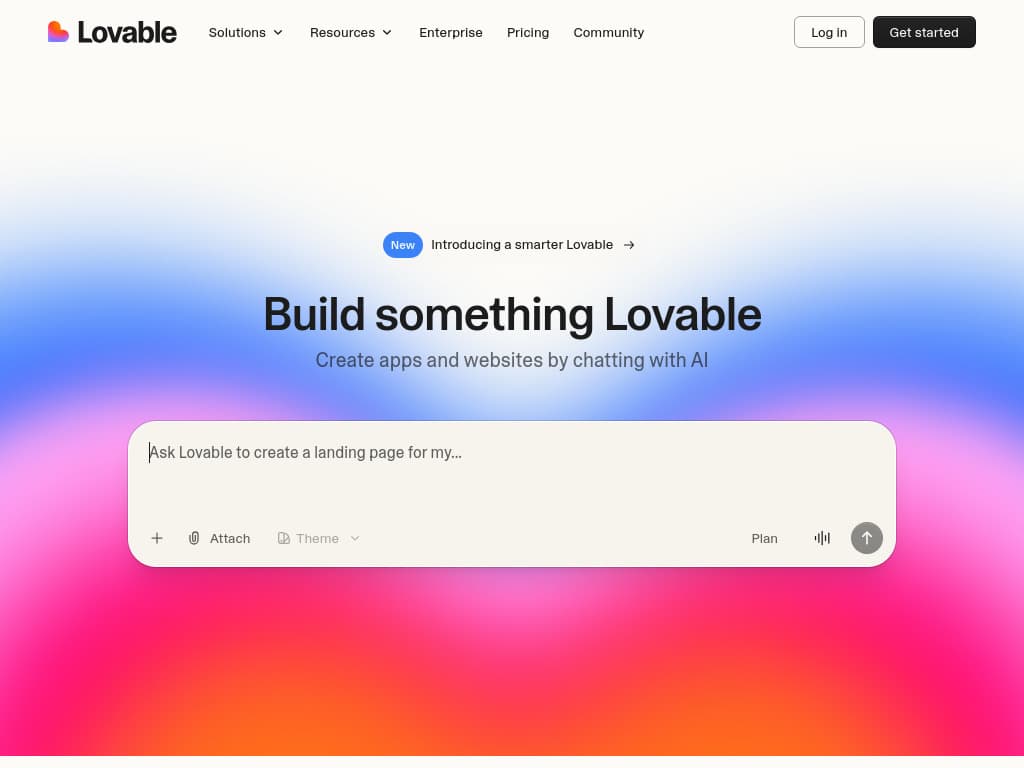
Prompt-first platform to build and iterate full-stack web apps through chat, producing real React/TypeScript/Tailwind code. Lovable adds Lovable Cloud (built-in backend with auth and data persistence), real-time collaboration with unlimited collaborators, agentic mode for multi-step autonomous edits, parallel AI subagents (May 2026) that research, review, and synthesise while the main agent keeps building, AI connectors (Perplexity, ElevenLabs, Firecrawl, Miro), visual CSS editing, themes, built-in analytics, and domain purchasing. Targets non-developers, designers, indie hackers, and agencies who want speed for prototypes, MVPs, and small production apps.
Key Features:
- No-code full-stack generation (React/TypeScript/Tailwind)
- Beautiful default UI designs
- Lovable Cloud, built-in backend with auth and data persistence
- GitHub sync, real code output, zero vendor lock-in

Google AntiGravity
ide-agents
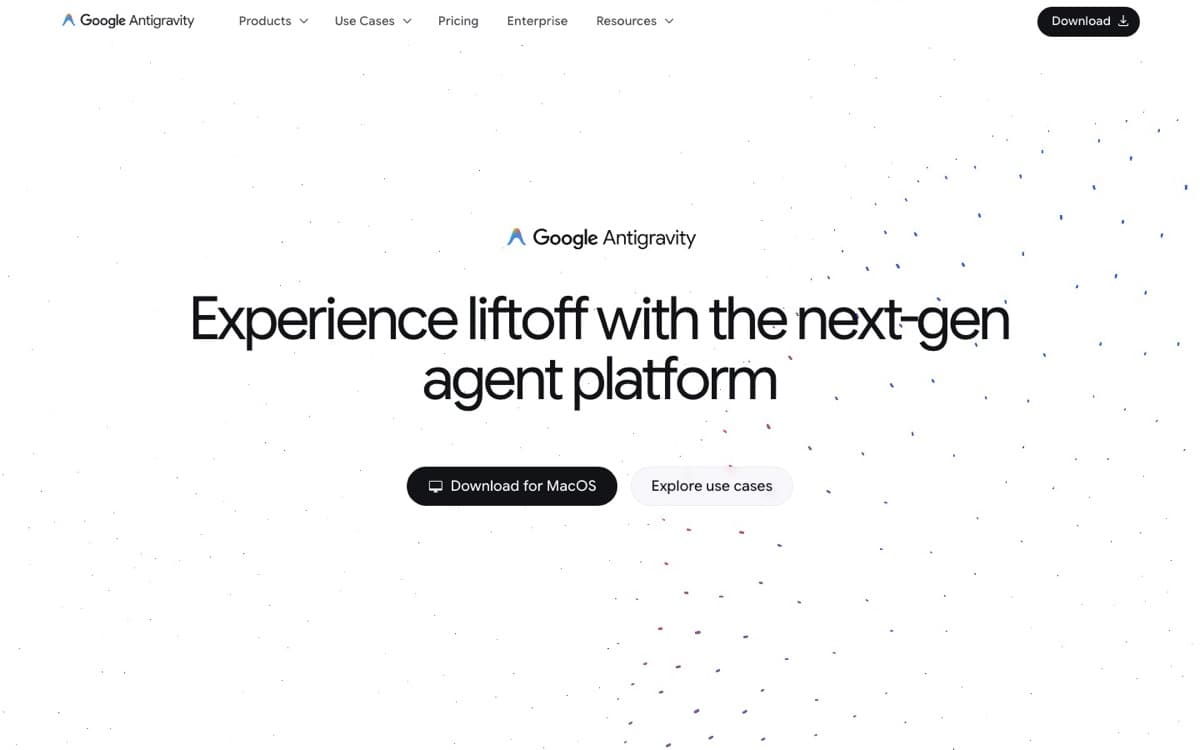
Google's agentic development platform, now split across four surfaces: the Antigravity IDE (VS Code fork), Antigravity 2.0 standalone desktop, the Go-based Antigravity CLI, and a Python SDK for custom agents.
Key Features:
- Four product surfaces in one platform: IDE, 2.0 desktop, CLI, SDK
- Antigravity 2.0 (May 2026) is a ground-up agent command center, not a VS Code fork
- Antigravity CLI is the Go-rebuilt successor to Gemini CLI for terminal workflows
- Antigravity SDK (Python) for building custom agents on the shared agent harness

GitHub Copilot
code-review
AI coding assistant integrated into GitHub and VS Code. Generates code, fixes bugs, merges PRs, and now supports agent workflows. The original mainstream AI code tool.

Key Features:
- Deep GitHub and VS Code integration
- Handles large codebases
- Autocomplete and code generation
- Pull request and bug fix support

v0
app-builders
AI-powered design-to-code tool from Vercel. Focuses on generating beautiful UIs and frontend components. Works with Figma imports and allows element-level editing. Best for UI-first web projects.

Key Features:
- Beautiful UI generation
- Integrates with Figma
- UI-first design flow
- Element-level editing

Devin Desktop (formerly Windsurf)
ide-agents
Devin Desktop (rebranded from Windsurf on June 2, 2026; originally Codeium) is Cognition's local AI coding editor. Brings the Agent Command Center, Spaces for parallel work surfaces, ACP support for plugging in Devin Cloud agents, and the SWE-1.6 proprietary model. Pairs with Devin Cloud (autonomous remote agent) and Devin CLI via the same Cognition account.

Key Features:
- Devin Desktop (formerly Windsurf) by Cognition, rebranded June 2, 2026
- Agent Command Center: orchestrate Devin Cloud agents from the editor
- Spaces: parallel work surfaces for multi-context coding sessions
- ACP (Agent Coding Protocol) support for plugging in remote agents

Replit
cloud-platforms
The complete browser-based development environment. Features Replit AI (Ghostwriter) for code generation, explanation, and autonomous agent capabilities. Zero setup required.

Key Features:
- Browser IDE
- Built-in deployment
- Collaboration
- Replit AI

Claude Code
ide-agents
Anthropic's agentic coding interface that lets users describe apps or tasks in natural language and have Claude autonomously plan, write, edit, debug, and iterate code. Available as web app (claude.ai/code) with GitHub integration, and as Desktop app with local file access, visual diffs, and Cowork background agents.
Key Features:
- Natural language prompt → plan → code generation & editing
- Visual diffs and session management (Desktop)
- Cowork background autonomous agent (Desktop)
- Cloud sandbox execution with GitHub repo cloning (Web)

Claude Code CLI
ide-agents
Anthropic's official terminal-based agentic coding tool that deeply understands your local codebase, autonomously edits files, runs terminal commands, handles git workflows, and iterates via natural language prompts. Now with Channels (Telegram/Discord remote messaging), Remote Control, Dispatch, and /loop scheduling for persistent autonomous agents. Designed for professional developers who live in the terminal.
Key Features:
- Direct local file read/write/edit across entire codebase
- Execute terminal commands & tests autonomously
- Git-aware workflows (commit, branch, PR)
- Channels: remote-control sessions via Telegram, Discord, or webhooks
How To Choose A Vibecode CLI Alternative
The right replacement depends on the job you need it to do, not on a single ranking. Use these checks to narrow the list above to two or three real candidates, then run the same task in each before you switch.
- Match the category first. Tools in the agent-infra space replace Vibecode CLI most directly; the closest fits are listed at the top.
- Check pricing against real usage. Compare free tiers and paid plans for the volume your team actually runs, not the headline price.
- Test the workflow you care about. Run one real task end to end and compare output quality, speed, and handoff friction.
- Confirm integrations and lock-in. Verify it fits your existing stack and that exporting your work later stays straightforward.
Still evaluating Vibecode CLI alternatives? Start with Hermes Agent, Hermes WebUI and VibeKit (Superagent), then compare the rest to find the right fit.