Deployment & Databases

Deployment & Databases

Deployment and database tools provide the backend infrastructure for AI applications, handling serverless compute, vector search for embeddings, real-time data sync, and one-click hosting so teams can ship without managing servers.

SupabaseAlibaba Cloud ECSVercelPlanetScaleNeonRender

Every great AI app needs a reliable backend. Deployment and database tools have evolved to support the specific needs of AI applications, including vector search for embeddings, real-time data sync, and edge functions for low-latency model proxying. Tools like Supabase have become the default backend for the vibe coding stack: open-source, scalable, and built to pair cleanly with frontend AI builders like Lovable and Bolt.

What to know about Deployment & Databases

<strong>Supabase</strong> is the default backend for the vibe coding stack, PostgreSQL plus pgvector for embeddings, auth, realtime, and edge functions in one open-source platform. <strong>Vercel</strong> owns frontend deployment, especially for Next.js apps, with instant preview URLs and edge network distribution. <strong>Cloudflare Pages</strong> offers the fastest global edge with Workers for serverless logic closest to users. <strong>Neon</strong> leads for serverless PostgreSQL with branching, ideal for AI apps with dynamic schema needs. <strong>PlanetScale</strong> handles high-traffic MySQL at scale. For dedicated vector databases, <strong>Pinecone</strong> and <strong>Weaviate</strong> outperform general databases on pure embedding search workloads. Most vibe-coded apps start with Supabase + Vercel and never need to migrate.

Top Deployment & Databases tools right now

If you want to start fast, try Supabase, Alibaba Cloud ECS and Vercel.

The Two Halves of the Backend: Database and Deploy

"Backend" hides two separate decisions: where your data lives, and where your code runs. Most teams pick one tool for each. The default pairing in 2026 is Supabase for data and Vercel for code, but the right answer depends on traffic shape, data model, and pricing constraints.

Database: PostgreSQL Is the Default Again

Five years ago the conversation was "PostgreSQL or NoSQL?" In 2026 it's mostly "which managed PostgreSQL?" Supabase bundles PostgreSQL with auth, realtime subscriptions, edge functions, and pgvector for embeddings, all in one open-source platform. Neon ships serverless PostgreSQL with branching (every preview deploy gets its own database branch), which is especially useful for AI apps with dynamic schema needs. PlanetScale serves MySQL at high traffic with non-blocking schema changes, which is the right pick if you're inheriting a MySQL codebase or need their specific scaling story.

Deploy: Edge Compute Beat Containers for Most AI Apps

AI apps live or die on perceived latency. Every extra millisecond between "user clicked" and "first token streamed" is a UX cost. Vercel dominates Next.js deployment with instant preview URLs, edge functions in 30+ regions, and one of the smoothest dev loops in the ecosystem. Render offers a broader runtime catalog (Docker containers, background workers, cron jobs, managed PostgreSQL and Redis) for apps that don't fit the serverless mold. Alibaba Cloud ECS is the regional pick for apps serving Asian markets where Vercel's edge network is thinner. Pick by the runtime your app actually needs: serverless functions for stateless work, containers for long-running processes, edge for latency-critical paths.

Vector Search: pgvector vs Dedicated Stores

Every AI app that does retrieval-augmented generation (RAG) needs a vector store. The simple answer: start with pgvector on whichever PostgreSQL you already have (Supabase and Neon both bundle it). Only move to a dedicated vector DB like Pinecone or Weaviate when you have a specific reason: billions of vectors, sub-100ms search at scale, or specialized ANN algorithms. For 90% of vibe-coded apps, pgvector keeps the architecture simpler and the bill lower.

Alibaba Cloud ECS logo

alibaba cloud ecs

paid · $4.5+

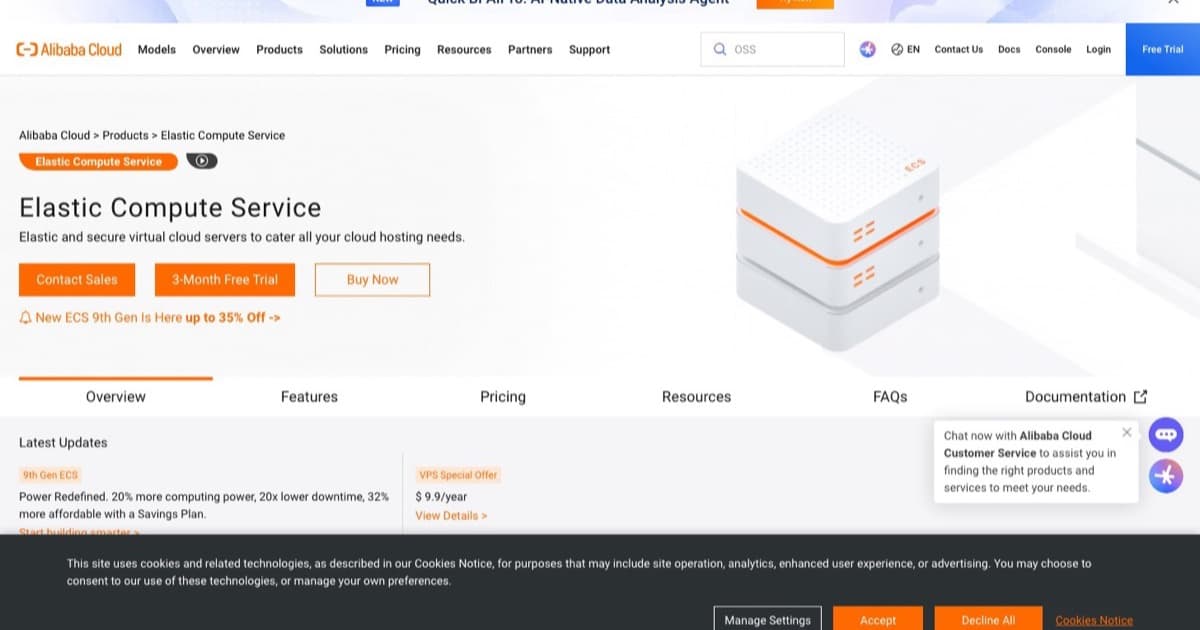
Elastic Compute Service from Alibaba Cloud for deploying and self-hosting AI tools, APIs, and full-stack apps. Popular in Asia-Pacific for OpenClaw hosting with pre-built images and competitive pricing.

deployment-dbread review ↗
Render logo
Render logo

render

freemium · $7-25

Cloud platform for deploying web services, static sites, background workers, cron jobs, and managed PostgreSQL, all with flat monthly pricing and a generous free tier. Render supports auto-deploys from Git, built-in SSL, and private networking with zero DevOps configuration.

deployment-dbread review ↗
#cli#open-source
PlanetScale logo
PlanetScale logo

planetscale

paid · $5-50
G2Rated 4.3 out of 5(4)

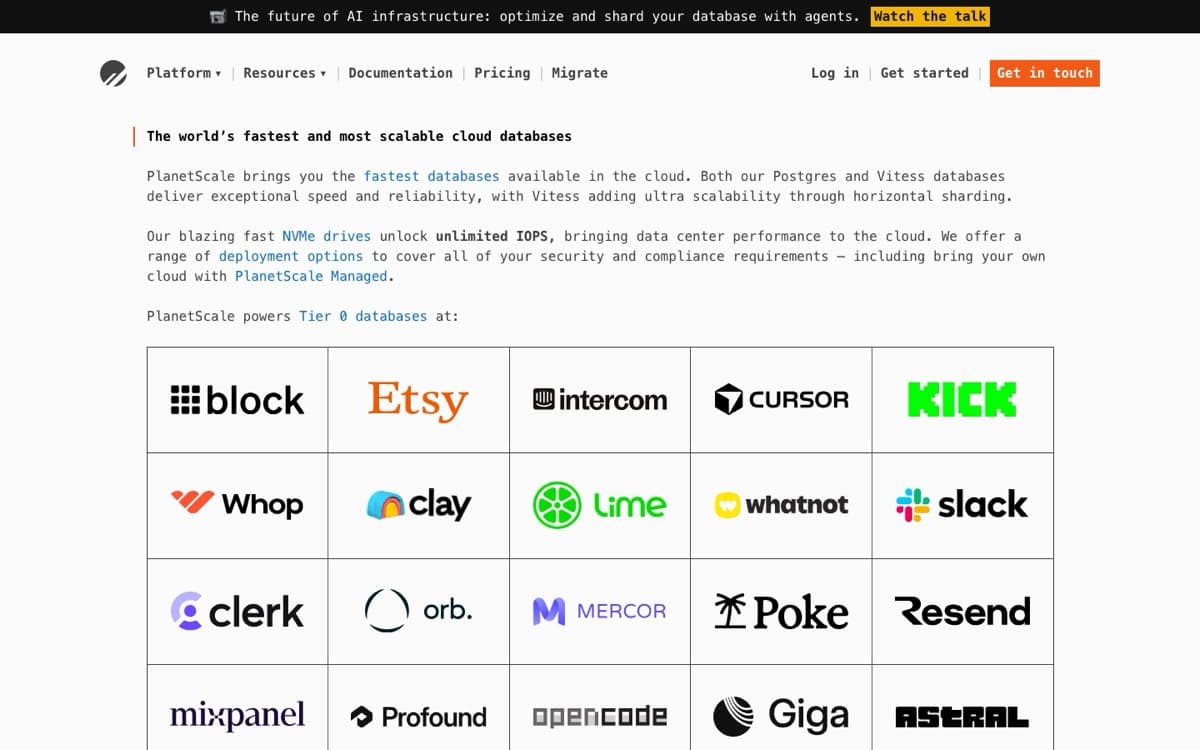
Managed MySQL and PostgreSQL platform built on Vitess with database branching, non-blocking schema changes, and zero-downtime deployments. Now offers PlanetScale Metal for NVMe-backed performance.

deployment-dbread review ↗
#enterprise
Neon logo
Neon logo

neon

freemium · $0.1-69
G2Rated 4.7 out of 5(3)

Serverless PostgreSQL with autoscaling, branching, and scale-to-zero. Usage-based pricing with a generous free tier and instant database provisioning for AI-powered development workflows.

deployment-dbread review ↗
#enterprise
Supabase logo
Supabase logo

supabase

freemium · $25-599
G2Rated 4.7 out of 5()

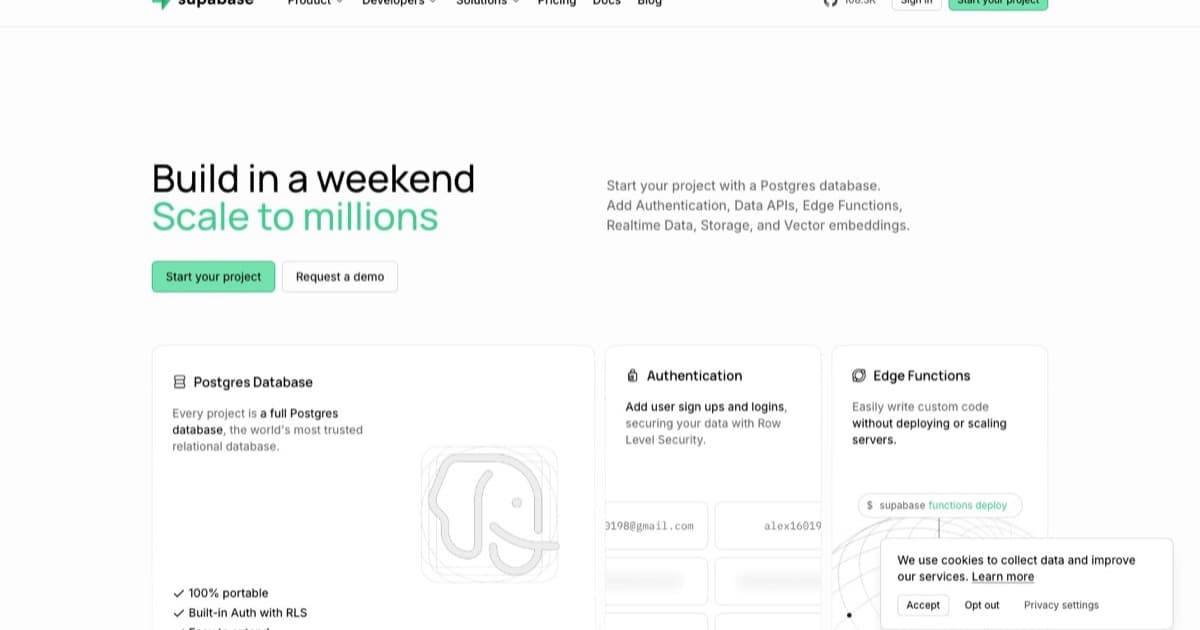
Open-source Firebase alternative built on Postgres. Supabase combines database, auth, storage, edge functions, realtime sync, and AI-ready vectors into a single backend platform for shipping full-stack products fast.

deployment-dbread review ↗
#open-source#enterprise
Vercel logo
Vercel logo

vercel

freemium · $20+
G2Rated 4.6 out of 5(101)

Frontend cloud platform for deploying web apps with global edge delivery, previews, analytics, and workflow integrations. Vercel is a top choice for Next.js and modern full-stack product teams.

deployment-dbread review ↗
#enterprise

Related Articles

The Backend for the AI Era

The Default Stack: Supabase + Vercel

The most common backend setup for vibe-coded apps in 2026 is Supabase for data (PostgreSQL, auth, realtime, storage, edge functions, pgvector) and Vercel for frontend deploy (Next.js with edge functions, preview URLs, instant rollbacks). The reason this combination wins: both are free to start, both are open-source-friendly (Supabase is open source; Vercel is built on the open Next.js framework), and both are wired into every AI app builder by default. Lovable, Bolt.new, and v0 all generate code that deploys cleanly to this pair.

Why Supabase Pulled Ahead of Firebase

Firebase pioneered the "backend in a box" pattern but stayed locked to NoSQL (Firestore) and Google's pricing model. Supabase took the same product shape (auth, realtime, storage, functions) and rebuilt it on PostgreSQL, which means: real SQL, real foreign keys, real transactions, real schema migrations, and the ability to self-host the whole stack on your own hardware if you ever want to. For AI apps specifically, the bundled pgvector support means RAG works out of the box without standing up a second database. The trade-off is that Supabase realtime is newer than Firebase realtime and has fewer client libraries, but for most use cases the gap is closed.

Neon: PostgreSQL Branching for AI Schema Velocity

Neon separates compute from storage, which lets it offer per-branch databases at near-zero cost. Every Git branch can have its own isolated PostgreSQL database that copies-on-write from main, so a preview deploy of an AI feature gets a real database with real data shape, not a stub. For AI apps where the schema changes constantly (new embedding columns, new metadata fields, new tool-call logs), this is a meaningful workflow improvement over the "single shared dev DB" pattern.

Edge vs Regional Deploy: When Each Wins

Vercel serves static assets and edge functions from 30+ regions automatically. For AI apps the win is the edge function pattern: a thin proxy at the edge that streams the model API response back to the user, keeping the API key server-side without adding a regional hop. Render runs everything in a region you pick (US East, US West, Europe, Asia), which is the right call when your data residency or your model provider lives in a specific region anyway. For apps serving primarily Chinese users, Alibaba Cloud ECS with Beijing or Shanghai regions is the only choice that meets ICP compliance without slowness from the great firewall.

What to Pick for Common AI App Shapes

  • RAG chatbot over uploaded docs: Supabase (PostgreSQL + pgvector + storage) + Vercel (edge function for streaming).
  • Multi-tenant SaaS with AI features: Supabase for auth and per-tenant row-level security + Vercel for the frontend.
  • Background agent that runs scheduled jobs: Render (background workers + cron) or self-hosted Neon + Modal for compute.
  • High-traffic chat app needing low latency: PlanetScale for MySQL scale + Vercel edge functions, or Cloudflare Workers + D1 if you're already on Cloudflare.
  • Region-locked deploy (China): Alibaba Cloud ECS with regional model providers.
  • Self-hosted, owns the whole stack: Self-hosted Supabase on Docker + Caddy or nginx + a single VPS. Free above the per-call AI costs.

Pricing Overview

Supabase free tier covers most hobby projects (500MB DB, 50K monthly active users, 1GB storage), with Pro at $25/mo for production. Vercel Hobby is free for personal projects, Pro at $20/mo per member adds team features and higher limits. Neon Free tier handles small apps, Launch at $19/mo unlocks branching and more compute. PlanetScale starts at $39/mo for the smallest production plan. Render Starter plans run $7/mo per service, with managed PostgreSQL from $7/mo. Alibaba Cloud ECS is pay-as-you-go starting around $5/mo for small instances. Most vibe-coded apps stay inside free tiers indefinitely; the bill only kicks in after meaningful traffic.

Migration Risk: How Easy Is It to Switch Later?

Migrating frontend deploy providers is cheap (Vercel to Cloudflare Pages or self-hosted Next.js is a one-day project). Migrating databases is expensive once you have production data, because every read path, write path, and schema change needs careful handling. Pick your database with this asymmetry in mind: it's the decision with the longest tail. PostgreSQL-based options (Supabase, Neon) give you the most exit options because you can export to any other PostgreSQL. PlanetScale (MySQL) is easier to migrate to other MySQL than to PostgreSQL. Firebase or DynamoDB-style NoSQL stores have the smallest exit option set.

What to Watch in 2026

Three shifts to keep an eye on: (1) Cloudflare D1 and similar edge SQLite databases are crossing into "ready for serious production" territory and may pressure managed PostgreSQL pricing, (2) every major database provider is adding native vector search, so the case for a dedicated vector store keeps weakening, and (3) the Lovable / Bolt / v0 generation has standardized on Supabase + Vercel hard enough that switching costs are now real, expect the next wave of AI app builders to either embrace this default or pick a deliberate alternative as a positioning move.

For a curated editorial guide, see our Best AI Deployment & Database Tools guide. For the AI model APIs that pair with these backends, see the Cloud AI Platforms category.

Frequently Asked Questions

Do I need a vector database for my AI app?

If your app does retrieval-augmented generation (RAG) over your own data, yes. The simple answer: start with pgvector on your existing PostgreSQL (Supabase and Neon both bundle it). Only move to a dedicated vector DB like Pinecone or Weaviate when you have billions of vectors or specific ANN performance requirements.

Is Supabase free?

Supabase has a generous free tier (500MB database, 50K monthly active users, 1GB storage) that covers most hobby projects and MVPs. The Pro plan at $25/mo unlocks daily backups, more storage, and production-grade limits. Most vibe-coded apps stay free until they hit real traffic.

What is the 'vibe stack'?

The vibe stack is the default toolchain for AI-assisted app development: Next.js or React for frontend, Tailwind CSS for styling, Supabase for backend (PostgreSQL + auth + realtime + pgvector), Vercel for deployment, and an AI coding tool like Cursor, Claude Code, or Lovable for generation. It's the path of least resistance for going from prompt to shipped product.

Should I use Supabase or Neon for an AI app?

Supabase if you also need auth, realtime, storage, and edge functions out of the box; it's a backend-in-a-box and most AI app builders generate code that targets it directly. Neon if you only need the database and you want serverless PostgreSQL with branching for preview deploys. Both bundle pgvector, so vector search works the same on either.

Vercel or Render: which one fits AI apps better?

Vercel for Next.js apps with edge function streaming, instant preview URLs, and the smoothest dev loop. Render for apps that need long-running processes, background workers, cron jobs, or non-Node runtimes; it offers a broader catalog at the cost of slightly more setup. Most teams use Vercel for the customer-facing app and Render for batch jobs or workers.

How hard is it to migrate databases later?

Hard once you have production data. Pick the database with exit options in mind: PostgreSQL (Supabase, Neon) migrates cleanly to other PostgreSQL. MySQL (PlanetScale) migrates to other MySQL. NoSQL stores like Firebase have the fewest exit paths. For most vibe-coded apps starting in 2026, PostgreSQL via Supabase or Neon is the default that keeps options open.

Find the best Deployment & Databases tool for your workflow

Use this category page as a curated shortlist of Deployment & Databases tools. You can explore each tool’s features on its tool page, then compare options via their alternatives pages. If you want to browse everything, head back to All Tools.

Popular starting points in this category include Supabase, Alibaba Cloud ECS and Vercel.

// the brief · zero fluff

one brief.
// what shipped · what broke · what to watch.

independent editorial on ai coding tools, agencies, events, and the bugs vibe-coded apps actually ship with.

no spam · unsubscribe anytime