

Guide
Mar 18, 2026
Guide
Best AI Coding Assistants & Code Review Tools (2026)
Discover the best AI assistants for code completion, refactoring, and automated reviews in 2026. From GitHub Copilot and CodeRabbit to Cline, Tabnine, and Snyk Code.
AI coding assistants provide real-time code completion, chat-based help, and automated refactoring inside your editor. Code review tools analyze pull requests automatically, catching bugs, security flaws, and style issues before human reviewers see the code.


AI coding assistants have become the standard for modern software development. In 2026, they've evolved far beyond autocomplete; they now generate tests, review pull requests, catch security vulnerabilities, and explain complex code in natural language. This category covers every major AI coding assistant and code review tool, from the ecosystem giants like GitHub Copilot to specialized PR reviewers like CodeRabbit and security-focused tools like Snyk Code. Whether you need an always-on pair programmer or an automated quality gate for your CI pipeline, you'll find it here.
Category pages map the full market. If you want a curated shortlist with ranked picks, read Best AI Assistants & Code Review.
Discover the best AI assistants for code completion, refactoring, and automated reviews in 2026. From GitHub Copilot and CodeRabbit to Cline, Tabnine, and Snyk Code.
<strong>GitHub Copilot</strong> remains the standard for inline completion with enterprise-grade security. <strong>CodeRabbit</strong> leads automated PR review across GitHub, GitLab, and Bitbucket. <strong>Qodo</strong> specializes in test generation and verification. <strong>Snyk Code</strong> catches security vulnerabilities that other tools miss. For open-source and bring-your-own-key, <strong>Cline</strong> and <strong>Continue.dev</strong> are the top choices. Teams using AI code review report cutting review time by 40–60% while keeping incident rates flat or lower.
If you want to start fast, try GitHub Copilot, Gemini Code Assist and Cline.
This category covers two distinct but complementary workflows: inline coding assistance (tools that help you write code faster) and automated code review (tools that verify code quality before it ships). Most teams benefit from having one of each.
These live inside your editor and provide real-time help as you type. GitHub Copilot is the industry standard with fast whole-line completions and the new Copilot Workspace for full-stack task planning. Sourcegraph Cody excels at understanding massive codebases. Augment Code focuses on enterprise context awareness. Tabnine offers on-premise deployment for privacy-sensitive teams.
For developers who prefer open-source, Cline and Continue.dev are both bring-your-own-key assistants that work with any model provider.
The most impactful shift in 2026 is the rise of AI-powered PR review. Instead of relying solely on human reviewers (who are expensive and sometimes slow), tools like CodeRabbit, Snyk Code, and Sourcery AI analyze every pull request automatically.
CodeRabbit generates line-by-line review comments and works across GitHub, GitLab, Bitbucket, and Azure DevOps: the only tool that covers all four platforms. Snyk Code focuses specifically on security, catching OWASP Top 10 vulnerabilities in real time. Sourcery AI is lightweight and fast, focusing on code quality and style.
The developer community consensus is clear: you don't need five AI tools. One high-quality inline assistant (Copilot, Cody, or Cline) plus one automated review tool (CodeRabbit, Qodo, or Snyk Code) covers most needs. The assistant helps you write code faster; the reviewer makes sure it's correct before it ships.
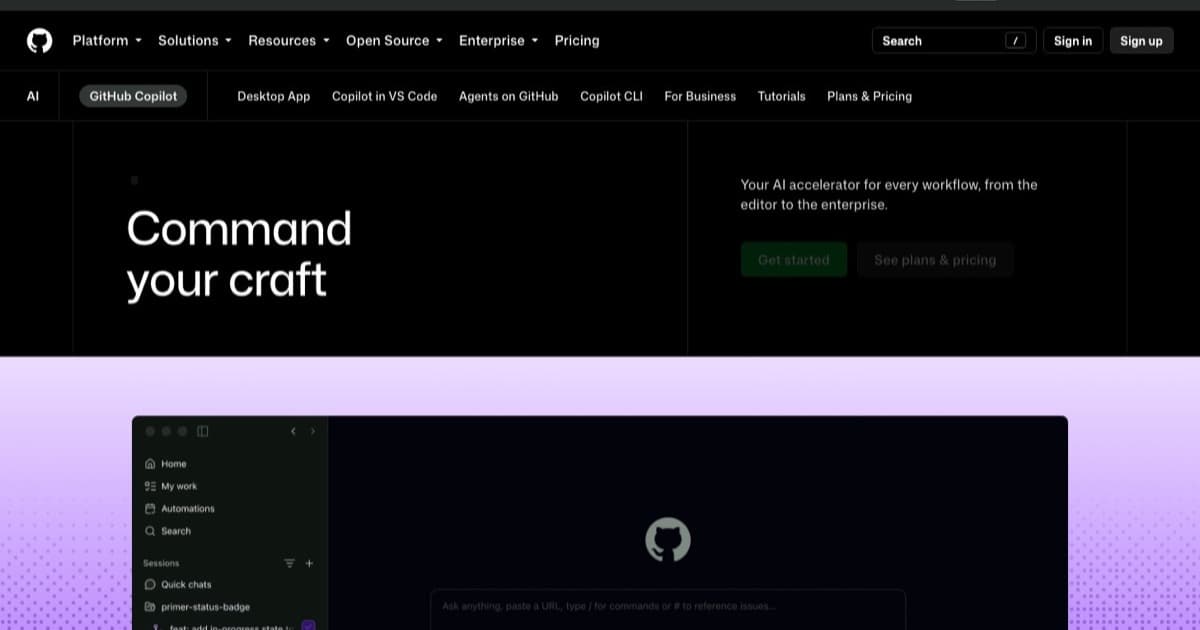

AI coding assistant integrated into GitHub and VS Code. Generates code, fixes bugs, merges PRs, and now supports agent workflows. The original mainstream AI code tool.
Free, no-login web scanner for vibe-coded apps, built by VibeZero, a Perth AI consultancy. Paste a live URL and it runs a read-only scan across six layers: transport and headers, exposed secrets, auth and access control, third-party surface, data exposure, and platform fingerprints. Most scans finish in 5 to 15 seconds. It fingerprints apps built on Lovable, Bolt.new, Cursor, Claude Code, Replit, Windsurf, v0, and Base44, then returns a graded plain-English report. It reads only what the site serves publicly: it does not log in, submit forms, or send attack payloads. The deeper Vibe Code Audit & Fix is a paid human engagement from the same firm, quoted per project rather than sold as a product. Name collision worth knowing: this scanner lives at vibe0.com.au and has nothing to do with either product called VibeKit. Superagent's July 2025 open-source v0 clone was also called vibe0; that name has since been retired and the project is simply VibeKit, now dormant, at /tools/vibekit. Separately, the mobile AI app builder at vibekit.bot shares that name too and is unrelated to both: see /tools/vibekit-bot.
AI-powered dynamic security testing for vibe-coded web apps. Paste a deployed URL and autonomous agents probe it like an attacker would, checking for missing Supabase/Firebase RLS, exposed API keys, auth bypasses, broken CORS, open storage buckets, and IDOR. Findings ship with a captured exploit and reproducible proof of concept, plus fix prompts ready for Claude Code, Cursor, or Lovable.


Free, no-login web scanner built for vibe-coded apps. Paste a web app or API URL and it checks security headers, TLS/SSL, authentication controls, and infrastructure configuration for common vulnerabilities and misconfigurations. Tuned for apps shipped from platforms like Replit, Databutton, and Cursor.
Specialized security scanner from AquilaX, built for AI-generated and vibe-coded software. Fingerprints LLM-written code, then runs SAST and taint analysis tuned to the insecure defaults, hallucinated APIs, and copy-pasted snippets that Copilot, Cursor, Claude, and ChatGPT introduce.
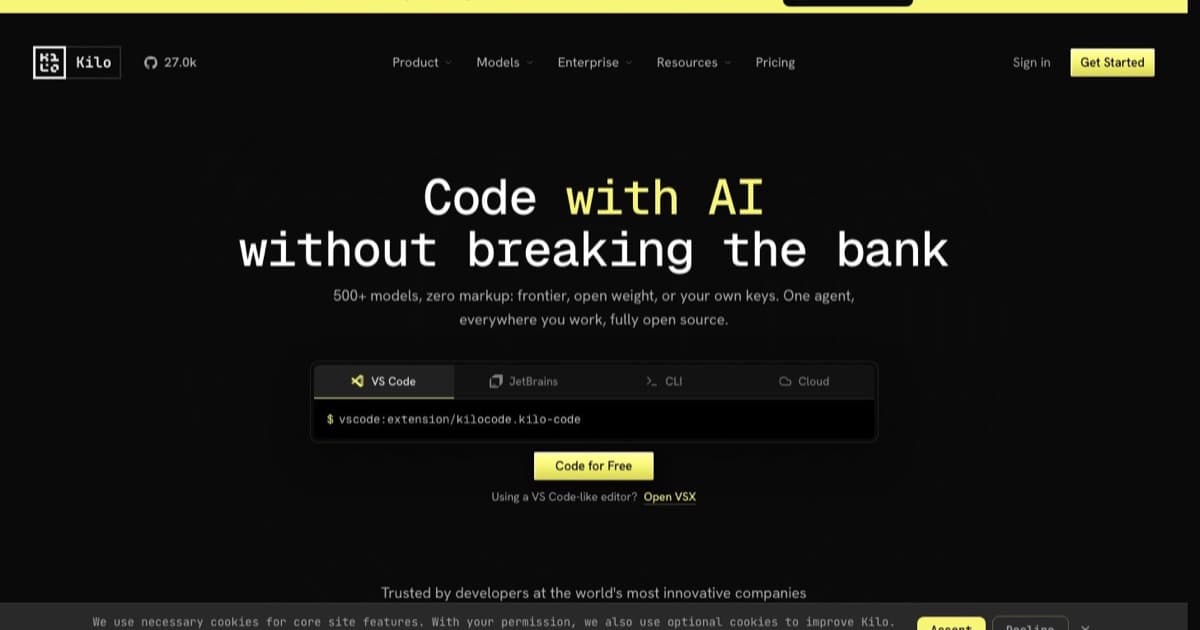
Open-source AI coding agent for VS Code, JetBrains, and CLI that supports 500+ AI models. Features agentic workflows, inline autocomplete, browser automation, and an orchestrator mode that breaks complex tasks into coordinated subtasks.
Free, open-source AI coding assistant built on a 13B-parameter multilingual model by Tsinghua University (THUDM). Provides code completion, generation, translation, commenting, intelligent Q&A, unit test generation, and repository-level chat across 100+ programming languages. Available as extensions for VS Code, JetBrains IDEs, Visual Studio, and HBuilderX.


Enterprise-grade AI code assistant with inline completions, autonomous agents, and an organizational Context Engine. Deploys SaaS, VPC, on-prem, or fully air-gapped with zero code retention. Gartner 2025 Magic Quadrant Visionary for AI Code Assistants.
Bring-your-own-key AI coding assistant for VS Code and JetBrains. Connect 15+ AI providers, run local models via Ollama, and keep full control of your data and costs.


AI-powered code review platform that automates pull request reviews across GitHub, GitLab, Azure DevOps, and Bitbucket. The most-installed AI app on GitHub with 2M+ repositories.
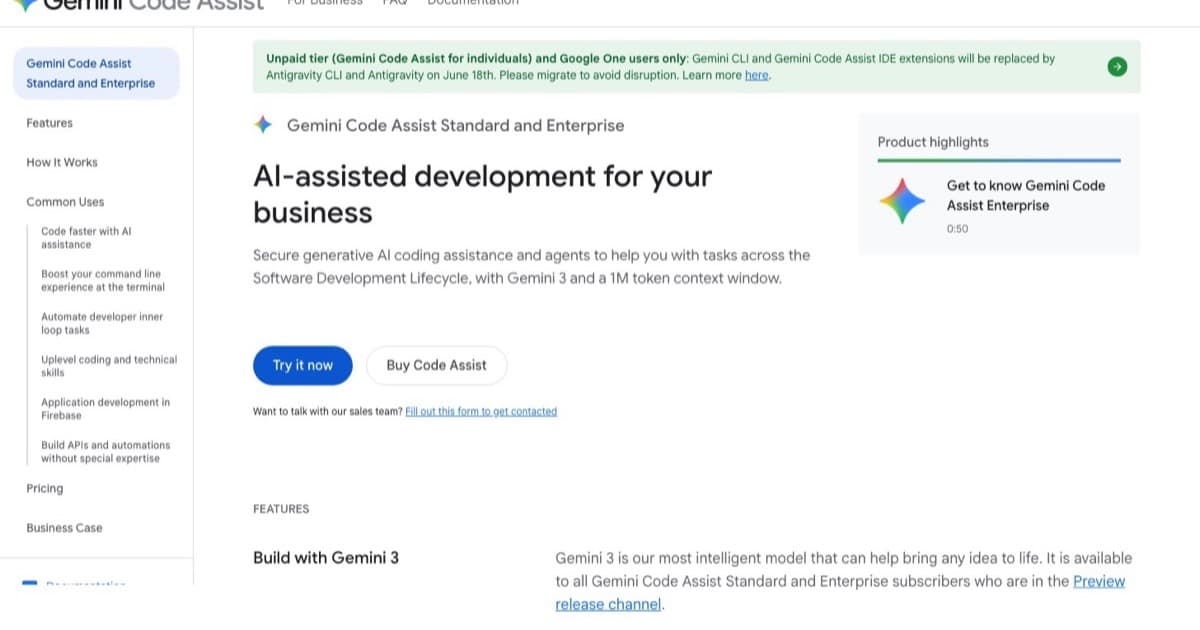

Google's AI coding assistant for supported IDEs and Google Cloud workflows.
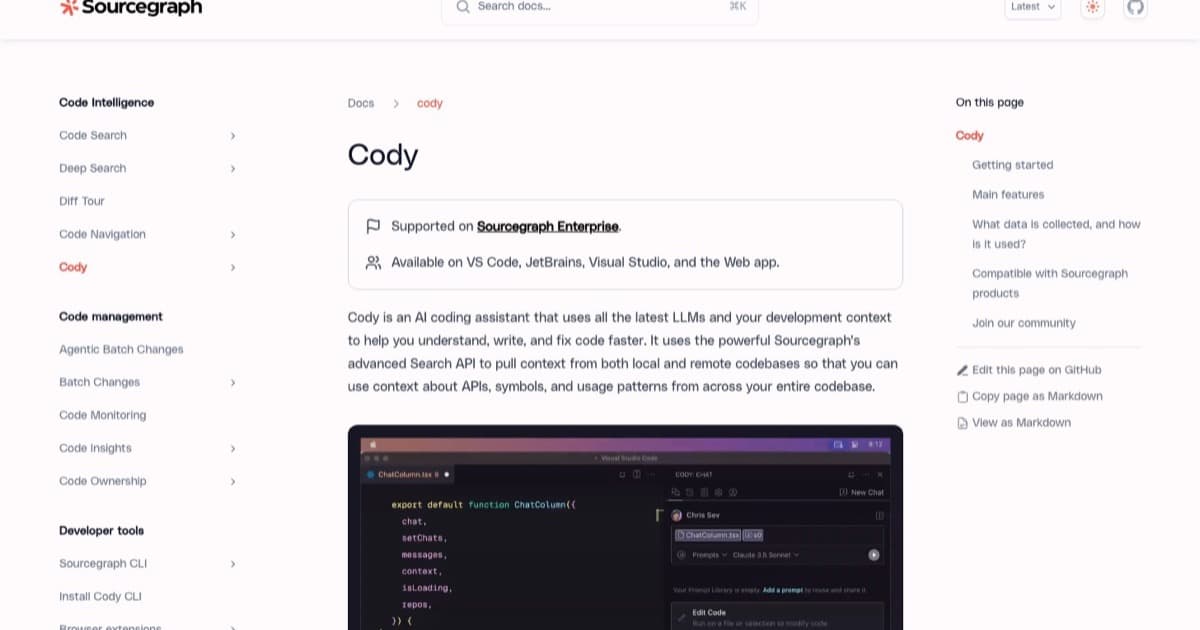

AI coding assistant that uses Sourcegraph's code graph to understand your entire codebase. Best-in-class for large enterprise repositories and precise context fetching.


AI-powered snippet manager and productivity tool. Saves, organizes, and explains code snippets. Works offline and integrates with your workflow.
Coding assistant focused on code quality: reviews, tests, and improvements.


Microsoft's AI-assisted development tool for Visual Studio and VS Code. Provides whole-line completions and API usage examples based on thousands of open-source projects.


Deeply integrated AI assistant for JetBrains IDEs (IntelliJ, PyCharm, WebStorm). Offers context-aware chat, refactoring, and code generation.


AI coding assistant specialized in refactoring and technical debt reduction. Can run on local or remote models, emphasizing privacy and code quality.
AI assistant focused on automating coding, debugging, testing, and code review for startup teams.
Coding assistant that uses your team's knowledge (code, docs, dependencies) via chat, completions, and suggested edits.
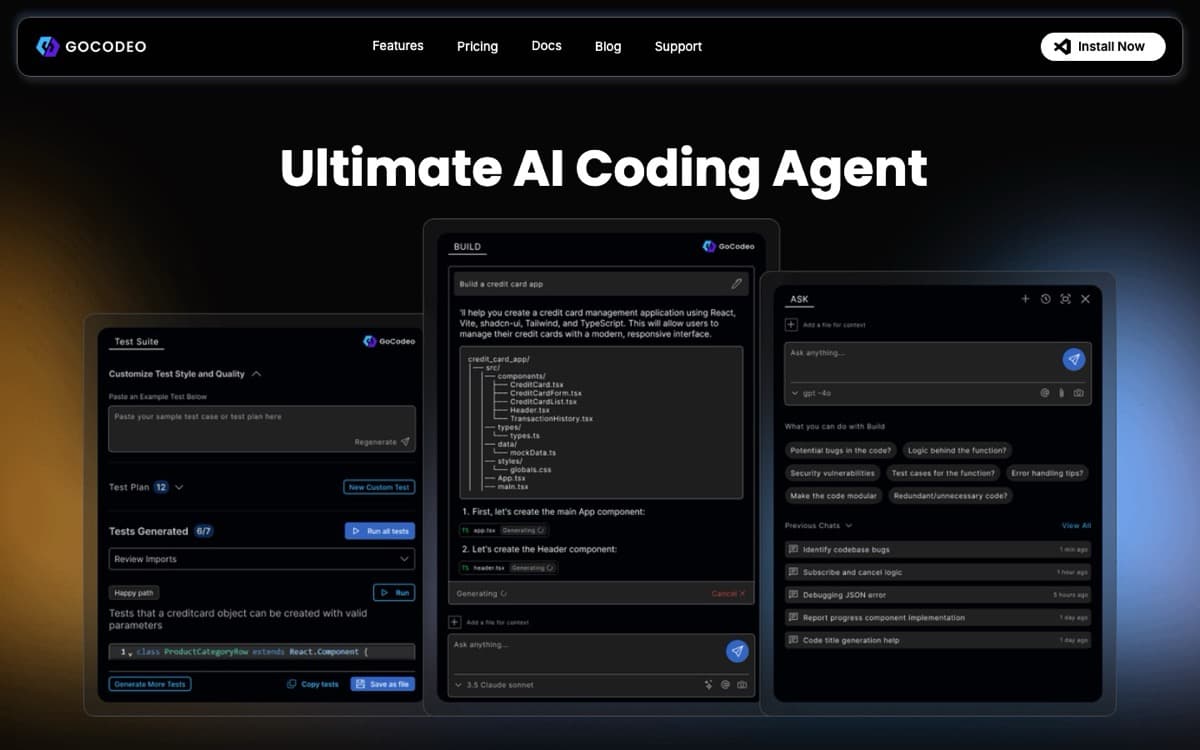
Tool focused on generating tests and helping debug issues quickly.
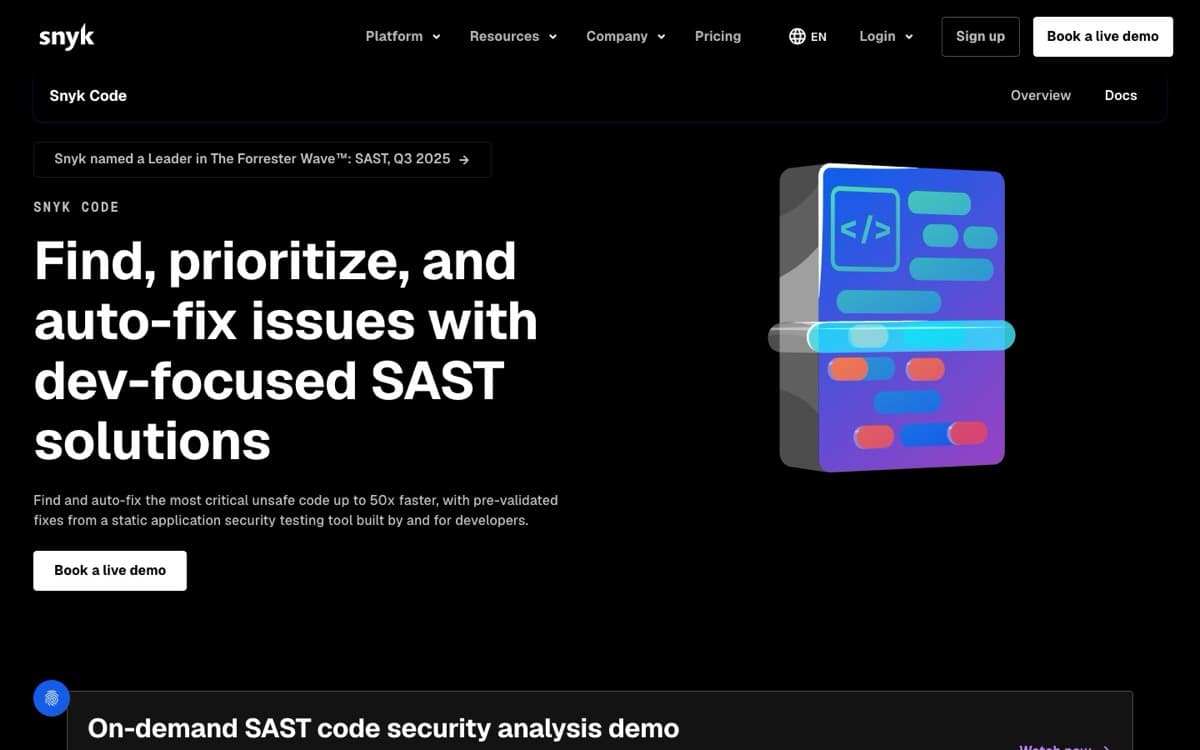
Developer-first static application security testing powered by DeepCode AI, with real-time IDE scanning, auto-fix suggestions, and data flow analysis across 19+ languages.
Automated code review and security scanning platform that provides instant PR reviews, real-time IDE feedback, and vulnerability detection, built for teams shipping AI-generated code at scale.


Autonomous AI coding agent for VS Code that handles complex software development tasks step-by-step, with tools for creating/editing files, executing commands, browser automation, and Model Context Protocol (MCP) integration.


Z.ai's GLM Coding Plan by Zhipu AI offers dedicated GLM-4.7 model access for code generation, debugging, and refactoring. Starting at $3/month, this budget-friendly Copilot alternative integrates with Cursor, Continue.dev, and Cline via OpenAI-compatible API.

Every AI coding agent priced from its official page in one comparison: Claude Code, Cursor, Codex, GitHub Copilot, Bolt, v0 and Lovable. The real difference is not the price, it is the meter: time windows, dollar allowances, tokens or credits.

The agentic engineering stack for 2026 in four layers: coding agents, orchestration frameworks, data and memory, observability. Live prices for Claude Code, Cursor, Codex, CrewAI, LangGraph, LangSmith and LlamaCloud, plus starter stacks by team size.
Agent Zero is a free, open-source AI framework that spawns subordinate agents in Docker sandboxes with code execution, browser automation, and persistent memory. Updated review covering v1.20, Time Travel, Codex OAuth, A0 CLI Connector, and the 100+ plugin Plugin Hub.

Local-only vibe coding stack for 2026: Qwen 3.6 27B and DeepSeek V4 Pro on Ollama or LM Studio, wired to Aider or Cline. Hardware requirements, config snippets, real walkthrough, and honest gap analysis vs Claude Code.

The Claude Code creator wants to retire "vibe coding." Simon Willison says the two terms are converging. Google Trends says the audience has not moved. Here is what is actually different between vibe coding and agentic engineering, and which one belongs in your job posts.
Honest Retool review for 2026: AppGen, AI agents, pricing, pros and cons, and how it compares to Appsmith and Superblocks.
What started as simple code completion has evolved into sophisticated reasoning engines. Modern AI assistants don't just guess the next word; they understand the intent behind your code. GitHub Copilot now includes Copilot Workspace, which can plan and implement entire features from issue descriptions. Sourcegraph Cody leverages code graph technology to answer complex questions about dependencies and internal APIs that generic models would miss.
In 2026, "the AI bot left comments" is no longer a meaningful outcome. What matters is measurable impact: teams using AI code review report cutting review time by 40–60% while improving defect detection rates. The best tools achieve high precision: meaning nearly every comment they leave is something worth acting on, rather than noise.
CodeRabbit is the leader in this space, generating contextual line-by-line feedback that learns your team's patterns over time. Snyk Code integrates static analysis directly into the PR flow, catching security issues that even experienced reviewers miss. Sourcery AI focuses on code quality metrics and style consistency.
GitHub Copilot is $10/month for individuals, widely considered the best value in the category. CodeRabbit offers a free tier for open-source projects, with paid plans starting at $15/month per developer. Snyk Code has a free tier with limited scans, with team plans starting at $25/month. Tabnine starts at $12/month with enterprise on-premise options.
Open-source alternatives like Cline and Continue.dev are free; you only pay for the underlying model API calls. For teams watching costs, Kilo Code provides transparent per-task token tracking so you know exactly what you're spending.
Integrating an AI assistant is often the highest-ROI action a development team can take. It flattens the learning curve for new languages and frameworks, reduces context switching, and acts as a rubber duck that actually responds with useful solutions. Around 85% of developers now use AI tools in their daily workflows.
But the real game-changer is automated review. When every PR gets an instant, thorough review that catches security issues, style violations, and potential bugs, human reviewers can focus on logic and architecture instead of syntax nits. The result is faster shipping with fewer production incidents.
Across developer communities, the most common recommendations in 2026 are: GitHub Copilot for "safe and reliable" inline completion, CodeRabbit for "the best automated PR reviewer," Qodo for "AI-powered test generation," and Cline for "best free open-source assistant." For teams with strict privacy requirements, Tabnine consistently comes up as the only major option with full on-premise deployment.
The most impactful setup is adding automated AI review to your existing CI/CD pipeline. CodeRabbit and Snyk Code both integrate as GitHub Apps, install once and every PR gets reviewed automatically. Sourcery AI works the same way for code quality. The setup takes minutes, and the ROI is immediate: faster reviews, fewer production bugs, and consistent quality standards across the team.
For a curated editorial guide with specific recommendations by use case, see our Best AI Assistants & Code Review guide.
No. While Copilot is the most widely used, tools like Sourcegraph Cody excel at large codebase context, Augment Code focuses on enterprise needs, and open-source options like Cline and Continue.dev let you bring your own API key. Claude Code CLI leads benchmarks for complex reasoning tasks.
CodeRabbit is the leader for general PR review: it works across GitHub, GitLab, Bitbucket, and Azure DevOps. For security-focused review, Snyk Code catches vulnerabilities that other tools miss. For test generation and quality verification, Qodo is the specialist.
They can often identify root causes and suggest fixes, but you should always review the solution. The best approach is using an assistant to generate fixes and a review tool to verify them. They are force multipliers, not replacements for human judgment.
Teams using AI code review consistently report cutting review time by 40–60% while maintaining or improving defect detection rates. The biggest gains come from catching low-hanging issues (style, security, obvious bugs) so human reviewers can focus on logic and architecture.
Most require an internet connection to access the LLMs that power them. Tabnine offers on-premise deployment for air-gapped environments. Some local-first models (via tools like Continue.dev with Ollama) allow fully offline operation, though with reduced capability compared to cloud models.
AI assistants (Copilot, Cody, CodeRabbit) fit into your existing editor and workflow. AI IDEs (Cursor, Windsurf) replace your editor entirely with deeper AI integration. Many developers use both: an AI IDE for coding and a separate review tool for PR quality. See our Developer IDEs & Agents category for the IDE tools.
Use this category page as a curated shortlist of AI Assistants & Code Review tools. You can explore each tool’s features on its tool page, then compare options via their alternatives pages. If you want to browse everything, head back to All Tools.
Popular starting points in this category include GitHub Copilot, Gemini Code Assist and Cline.
Tools that improve the developer workflow itself: automation, command runners, multi-agent orchestrators, productivity layers.
AI tools for marketing, websites, business operations, and non-developer workflows.
Prompt-to-app builders for non-engineers and rapid prototyping. Generates working apps from natural language.
Full-fledged code editors, agentic IDEs, and pair-programming environments for engineers.
AI assistants that review pull requests, suggest fixes, and act as a second pair of eyes on existing code.
Infrastructure for running, orchestrating, and observing autonomous AI agents (memory, tools, sandboxing).
Cloud-based development environments and prototyping platforms (StackBlitz, Replit-style).
Libraries, SDKs, frameworks, and dev kits that engineers use to build AI features into their own apps.
Hosting, deployment platforms, databases, and backend infrastructure for AI-powered apps.
Curated prompt libraries, skill packs, and reusable prompt frameworks.
Hyperscaler AI platforms (Bedrock, Vertex AI, Azure AI Foundry) — managed services for foundation models.
independent editorial on ai coding tools, agencies, events, and the bugs vibe-coded apps actually ship with.
no spam · unsubscribe anytime