AI app builders let anyone go from an idea to a working, deployed application using natural language. No traditional coding required, just describe what you want and iterate. This hub compares every major AI app builder with honest takes on their strengths, limitations, and ideal use cases.
Last reviewed: 2026-06-18
// section · ai-app-builders · editorial
What is an AI app builder?
An AI app builder is a platform that turns a natural-language prompt into a working, deployable application. You type "build me a habit tracker with email login and a weekly summary email," and the platform scaffolds the UI, wires up the database, sets up auth, and gives you a live URL. The next prompt edits the live app.
Three things separate an app builder from a coding agent. First, the surface: the builder hides the file tree by default. You see a chat panel, a preview, and a deploy button, not a repo. Second, the deploy loop is built in. Hosting, domains, environment variables, and TLS are handled by the platform. Third, the backend is bundled. Most app builders ship with a managed database (Postgres via Supabase or Convex), file storage, and an auth provider out of the box.
The category sits between no-code (Webflow, Bubble) and IDE-native agents (Cursor, Claude Code). Where no-code locks you inside a visual canvas and an agent assumes you own the repo, an app builder gives you real generated code that you can later export to GitHub if you outgrow the platform.
Who should use an AI app builder?
Four profiles dominate the buyer base in 2026.
Non-technical founders validating an idea. You can describe the product but you cannot write the code. An app builder gets you from a one-paragraph spec to a clickable, shareable prototype in an afternoon. Lovable is the dominant pick here because Supabase comes baked in and the deploy step is one click. Try Lovable's free tier first at https://lovablelabs.pxf.io/oN51XW before committing.
Designers and PMs prototyping internal tools. Instead of a Figma file that nobody can interact with, you ship a real app on a vibecoding.app subdomain or a custom domain. Stakeholders click around, give feedback, and you iterate by editing the prompt.
Engineers building throwaway internal apps. The dashboard nobody is going to maintain. The admin tool one team uses twice a week. The migration runner for a one-time data move. Building those by hand is expensive; an app builder makes them disposable.
Small agencies productising client deliverables. A landing page, a contact form, a booking flow, a member portal. If the brief is small and the budget is fixed, an app builder lets a single operator deliver what used to take a two-person team.
If you are building a high-traffic SaaS with intricate auth, custom data models, and a long lifespan, the calculus changes. The export path matters more than the build speed; pick a builder that exports clean code to GitHub from day one.
How to evaluate an AI app builder
Five axes get you most of the way to a confident pick.
Stack and code ownership. What framework does the builder generate? Lovable, Bolt, and Replit ship React/Next.js plus a Postgres-backed backend. Base44 and Softr lean further toward managed runtime where you do not see the code. Ask: can I export this repo to GitHub and run it locally without the vendor? If not, every future change is hostage to the platform staying online.
Backend depth. A button that generates HTML is not an app builder. A real builder generates a database schema, persists state, handles user accounts, and wires file uploads. Lovable's tight Supabase integration and Replit's bundled Postgres are the current bar. If the demo only shows a static landing page, push for a CRUD demo before paying.
Iteration loop quality. The first prompt is rarely the whole product. What matters is the second, fifth, and fiftieth prompt. Does the builder remember what it built? Does it scope the edit to the right file? Does the preview update fast? Run the same "add a settings page with a dark mode toggle" prompt on each candidate and compare the diff.
Pricing model and ceiling. Most builders meter on AI credits or messages. Lovable has a free tier and paid plans starting around $25/mo. Bolt sells tokens; Replit bundles compute and AI into seat pricing. Heavy users can spend $200 to $500/mo, so model your usage before signing up. Verify current pricing on the vendor site; this category moves fast.
Deployment surface. Where does the app live? Lovable deploys to Netlify and Lovable Cloud. Bolt deploys to Netlify or Cloudflare Pages. Replit hosts on its own platform. Custom domains, edge functions, and CI hooks vary by vendor. If you need a custom domain and SSL on day one, check that the free or starter tier supports it.
Common pitfalls when picking an app builder
Buyers make the same handful of mistakes.
Treating the demo as the product. Vendor demos run on a known prompt, a clean account, and a fast model. Your real product is messier. Build a real (small) feature on the free tier of two or three builders before committing.
Underestimating the auth and billing gap. App builders generate the happy path. The unhappy paths (password reset, refunds, multi-tenant isolation, GDPR deletion) need work the AI cannot guess at. Budget human time for these even if the rest of the build is automated.
Locking yourself into a platform that cannot export. The export-to-GitHub feature is the seatbelt. Even if you never use it, the option to leave keeps the vendor honest. Builders without a clean export path are riskier bets.
Skipping the data model conversation. The AI will happily generate a schema based on your first prompt, then fight you when you try to restructure it three weeks in. Ten minutes sketching the data model up front saves days of rework later.
Believing "production-ready" marketing copy. Most builder output is MVP-ready, not production-hardened. You will still need to add monitoring, tighten RLS policies, add tests, and review the generated SQL before shipping to paying customers.
What changed in AI app builders in 2026
The market matured rapidly across the first half of 2026.
Lovable Cloud launched as a managed runtime layer. Instead of always exporting to Netlify, you can now keep apps on Lovable's own infrastructure with bundled databases, queues, and scheduled jobs. The pitch is end-to-end ownership for non-technical founders, paired with a clean export path when you outgrow it. Start a project at https://lovablelabs.pxf.io/oN51XW; pricing is on https://lovablelabs.pxf.io/m4jAae.
Bolt shipped a mobile app target. Generated Expo / React Native apps with a real preview on your phone via QR code, plus EAS-backed builds for App Store and Play submission. This pulled the builder category into mobile prototyping, which used to be exclusively the domain of FlutterFlow and Glide.
Base44 doubled down on enterprise rapid MVPs. Their pitch in 2026 is "internal tools for finance and ops teams in a regulated company," with SSO, audit logs, and on-prem deployment options that consumer-grade builders skip.
Replit Agent went background-first. You can now hand the agent a multi-step ticket and walk away; it builds, tests, and reports back through Replit's mobile app. This is the closest the app-builder category has come to "Devin for non-coders."
v0 (Vercel) expanded from UI generation into full-stack templates with Next.js App Router, Server Actions, and Drizzle ORM out of the box, narrowing the gap with Lovable for developer audiences.
Can it actually ship to an app store?
Most AI builders produce a web app. A few produce something you can put on the App Store. The difference is rarely visible on a pricing page, so every row below is classified against the vendor's own documentation rather than its marketing.
Ships to the App Store for you
You end up with: A native app under your own developer account. Submission: The tool builds and submits; you supply the developer account.
Generates Expo (React Native). One Publish flow covers preview in Expo Go, TestFlight beta, and App Store submission. Formerly Create.xyz, which is why the docs still live on that domain.
Builds web, iOS and Android from one app. You supply the Bundle ID, Team ID and store credentials, then press Release in App Store Connect. Google Play only; no alternative Android stores.
Not a builder: Lance takes a codebase you already have and gets it into the store. It builds and signs on its own cloud Mac, uploads to TestFlight and App Store Connect, and reads Apple's rejection feedback to fix and resubmit. The complement to any tool that hands you React Native or Flutter source and stops there.
Uses Expo and React Native, with a guided App Store submission from the web app. You need an Apple Developer account. Google Play has no guided flow yet and is done manually.
Retool Mobile publishes to both stores or as a PWA, with over-the-air updates. Built for internal tools: every app requires authentication and there is no public distribution, and own-brand store listing is Enterprise-only.
Rork Pro builds on React Native and Expo. Rork produces the build and submits it; you supply an Apple Developer account and finish the App Store Connect product page yourself.
Scaffolds an Expo React Native project. Bolt cannot run EAS builds or ship to a store, so the build and submission are yours to run via Expo Application Services.
Generates React Native and Expo running natively on both platforms, with full export of the project and no lock-in. Capacity states you can deploy to both stores; the build and submission are yours to run.
Outputs React Native and Expo alongside web, desktop and backends. Real Android and iOS builds go through EAS, which you run, and EAS Submit hands off to the stores.
Generates Flutter code the docs describe as ready for App Store and Google Play submission, downloadable or via GitHub. The submission itself is yours to make.
Primarily a visual builder for React web apps; mobile arrives through an Expo and React Native integration added later. The build and store release happen outside Tempo.
Generates React web apps, then packages them in a native WebView shell and produces store files for you to submit through App Store Connect yourself. Content changes ship without a new store review, but it is a wrapper around a web app rather than native code, and thin wrappers draw App Review scrutiny. Store file download needs the Builder plan.
Jotform Apps are progressive web apps. They install to the home screen, and Jotform states they cannot be uploaded to the Apple App Store or Google Play.
Capability reflects what each vendor documents, checked on the date recorded against each entry. We have not built and submitted an app with every tool ourselves. Vendors add and remove mobile export regularly, so confirm against the linked documentation before you commit to one.
// section · ai-app-builders · full-stack ai builders
Full-Stack AI Builders
Generate complete web applications from natural language prompts.
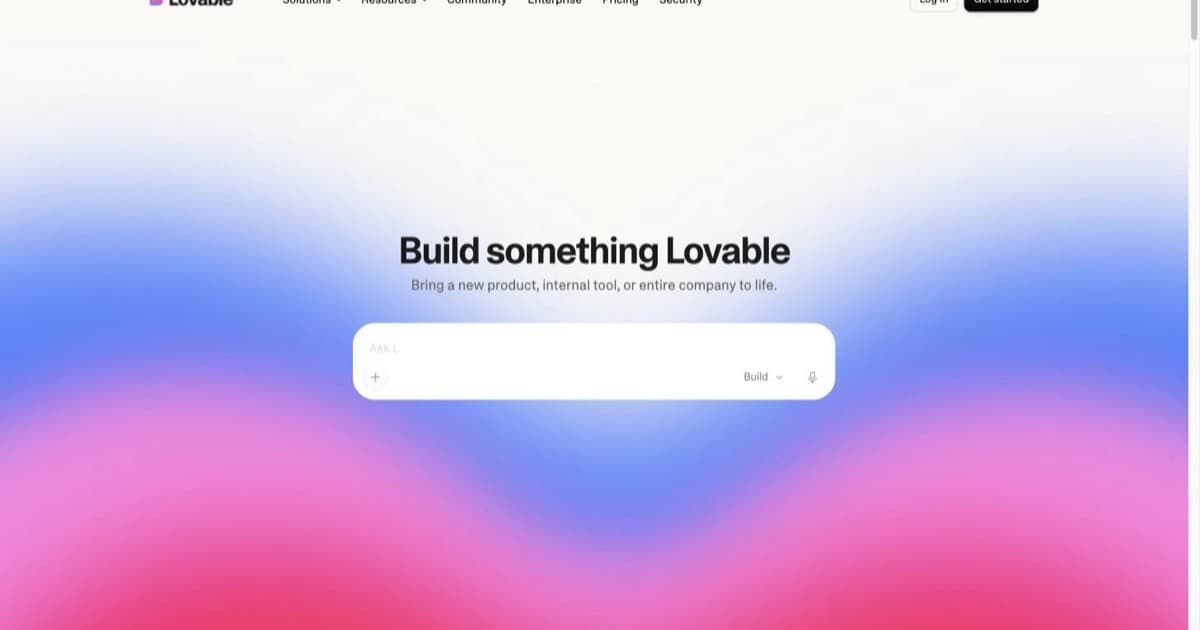
Prompt-first platform to build and iterate full-stack web apps through chat, producing real React/TypeScript/Tailwind code. Lovable adds Lovable Cloud (built-in backend with auth and data persistence), real-time collaboration with unlimited collaborators, agentic mode for multi-step autonomous edits, parallel AI subagents (May 2026) that research, review, and synthesise while the main agent keeps building, AI connectors (Perplexity, ElevenLabs, Firecrawl, Miro), visual CSS editing, themes, built-in analytics, and domain purchasing. Targets non-developers, designers, indie hackers, and agencies who want speed for prototypes, MVPs, and small production apps.
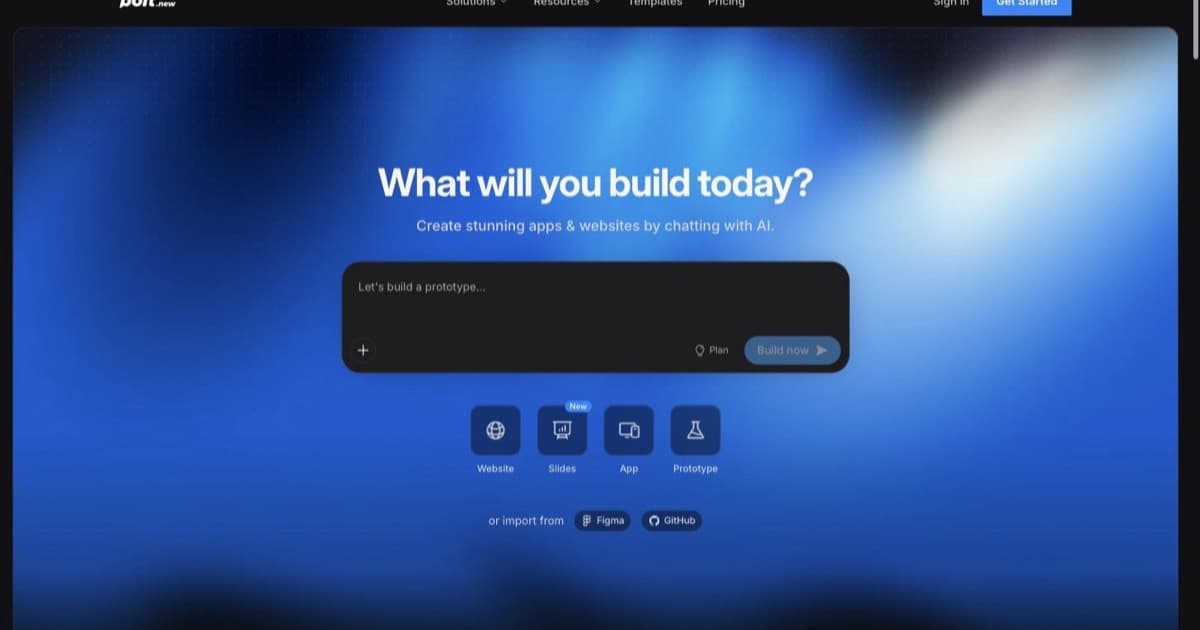
AI-powered, browser-based full-stack app builder that turns natural language prompts into working applications. Built on StackBlitz WebContainers with Supabase integration, Figma/GitHub imports, and one-click deployment; no local setup required.
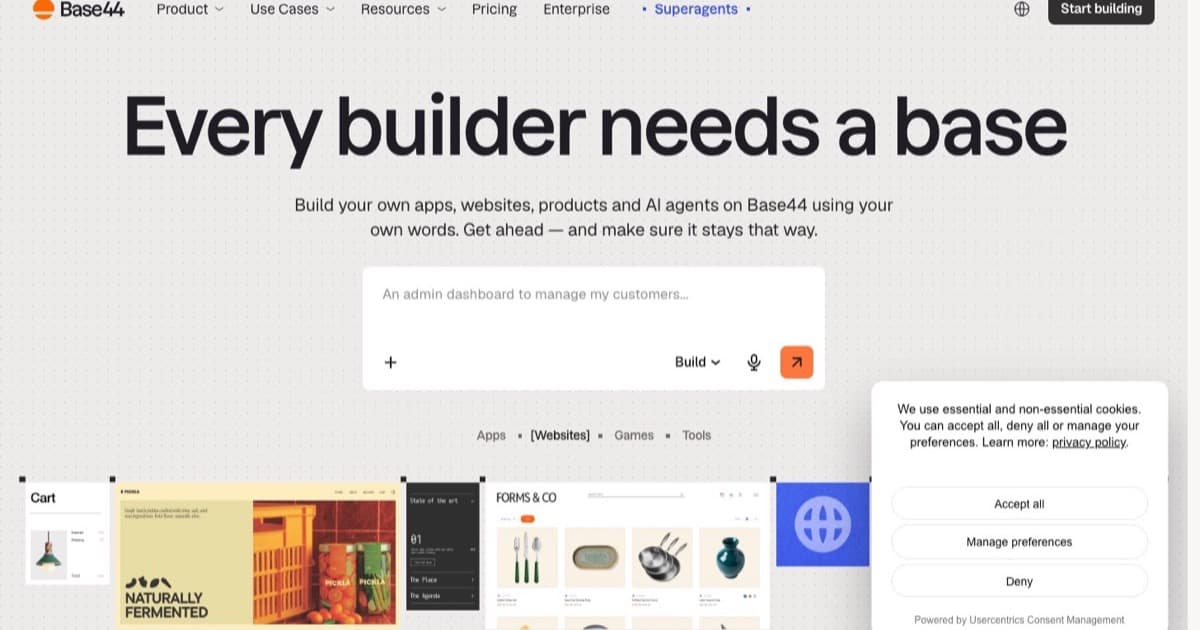
Pure natural-language AI app builder that generates a complete app, backend, database, auth, hosting, and integrations, from a single prompt. Ranked #1 in multiple 2025-2026 vibe-coding roundups for its end-to-end automation and beginner friendliness. Acquired by Wix in 2025 in a solo-founder $80M exit, and still shipping (Base 1 model, Superagents, GitHub sync).
The complete browser-based development environment. Features Replit AI (Ghostwriter) for code generation, explanation, and autonomous agent capabilities. Zero setup required.
ide-agentsread review ↗
#browser-based#mobile
// section · ai-app-builders · no-code & low-code ai builders
No-Code & Low-Code AI Builders
Visual builders enhanced with AI for non-technical creators.
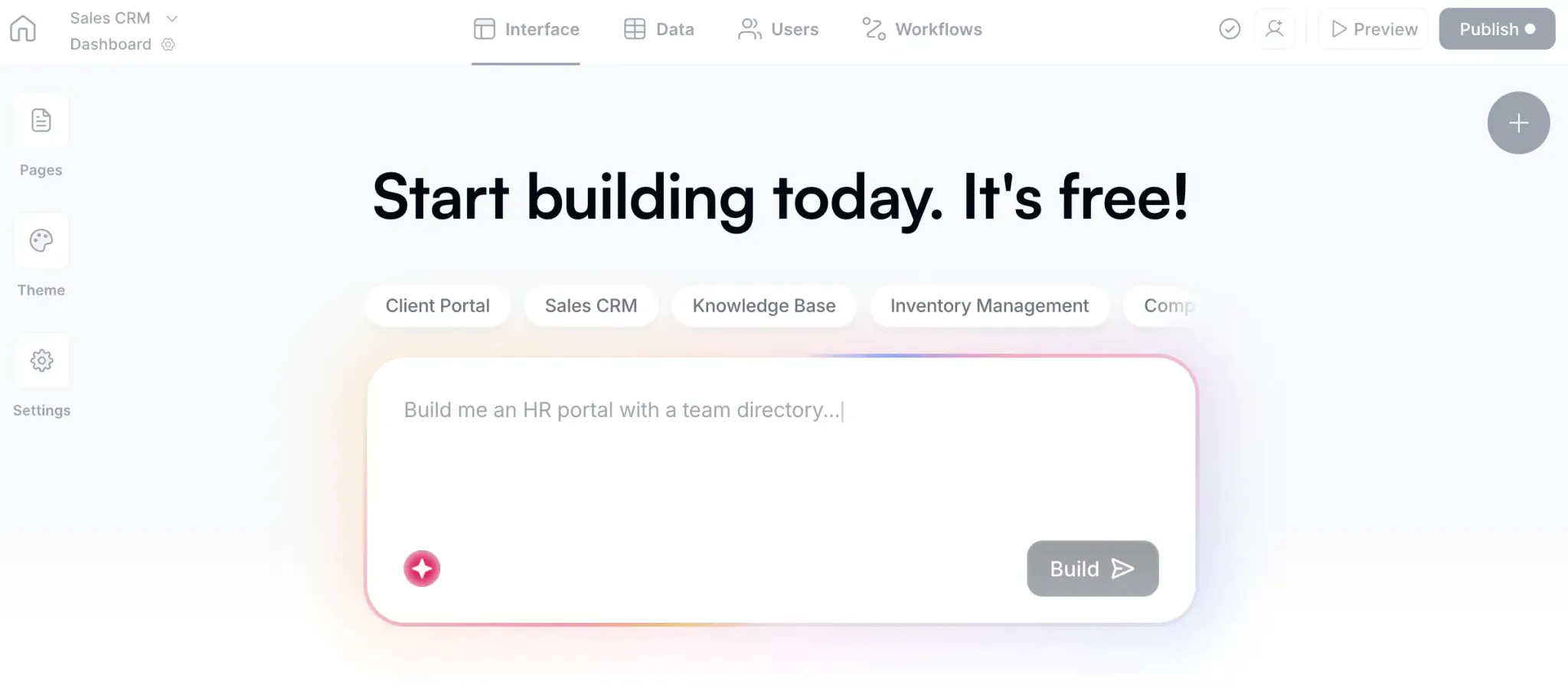
Softr is an AI platform for building the working software your business runs on — client portals, internal tools, dashboards, and operational systems — without relying on developers. Describe what you need, and Softr's AI Co-Builder builds a fully functional app with database structure, business logic, permissions, and interfaces already connected, secure, and ready for real users.
Visual app builder that generates production-ready Flutter code. FlutterFlow provides a drag-and-drop UI designer, Firebase and Supabase integrations, code export, GitHub sync, branching, and AI-powered page generation, enabling vibe coders to ship cross-platform mobile and web apps without writing Dart manually.
AI builders targeting specific platforms or use cases.
google stitch
free
Experimental Google Labs tool that turns prompts and images into UI designs, supports fast iteration with variants, and offers handoff via Paste to Figma plus front-end code export.
app-buildersread review ↗
figma make
freemium · $15-120
AI-powered app builder inside Figma that turns text prompts into interactive prototypes and full app layouts. Figma Make combines prompt-to-UI generation, design-to-code via MCP integration, context-aware design system usage, and interactive prototyping, all within the Figma platform vibe coders already use for design.
An AI app builder is a platform that generates functional web or mobile applications from natural language descriptions. You describe what you want, the AI generates the code, and you can iterate, customize, and deploy, often without writing code manually.
Some can. Tools like Lovable and Replit generate real, deployable code with database backends. However, complex production apps typically need human refinement for security, performance, and edge cases. AI builders excel at MVPs and prototypes.
Use an AI app builder (Lovable, Bolt) if you want to generate a complete app from a description without managing code. Use an AI coding agent (Cursor, Claude Code) if you want AI assistance while maintaining full control over your codebase and architecture.
For most non-technical founders in 2026, yes. Lovable's bundled Supabase backend, one-click deploy, and Lovable Cloud runtime mean you can get to a live app with database, auth, and email working in under an hour. Bolt is stronger for engineers who want StackBlitz-style in-browser editing and tighter control over the generated code. Try Lovable's free tier first at https://lovablelabs.pxf.io/oN51XW.
Yes. Both Lovable and Bolt support pushing the generated project to your own GitHub repo, where you can clone it, edit it in Cursor or Claude Code, and deploy it yourself. This is the escape hatch that makes the lock-in risk manageable. Verify the export flow on the free tier before paying for a project that you might want to migrate later.
Free to about $50 for a one-evening MVP if you use the free tier and a generous starter plan. A working private beta with real users typically runs $25 to $100/mo across the builder, the database, and hosting. A live SaaS with a few hundred users settles around $100 to $500/mo depending on AI usage and infrastructure. Verify current pricing on each vendor's pricing page; the category moves quickly.
For MVPs, internal tools, and private betas, yes. For a public SaaS with paying customers, the generated code is a strong starting point but needs human hardening: tighter RLS policies, error boundaries, observability, tests, and a real CI pipeline. Tools like Lovable produce clean Next.js + Supabase code that survives review; treat the builder as an accelerator, not a finished product.
A no-code tool (Bubble, Webflow, Glide) locks you inside a visual canvas; the platform owns the runtime and the data model. An AI app builder generates real code (React, Next.js, Postgres) that you can export, version, and own. If you ever want to hire an engineer to extend the product, the app-builder path keeps that option open.
For most ideas worth testing in 2026, the app builder wins on cost and speed. A working prototype in an afternoon beats a four-week freelance engagement for the validation phase. Bring in a freelancer or hire an engineer when the prototype has real users, a real data model, and a real reason to harden the code beyond what the builder generated.
// the brief · zero fluff
one brief. // what shipped · what broke · what to watch.
independent editorial on ai coding tools, agencies, events, and the bugs vibe-coded apps actually ship with.

 featured