
free-tier Tag
Free AI Coding Tools - No Credit Card Required
Discover AI coding tools with meaningful free tiers you can use without a credit card, from code editors to app builders.

free-tier Tag
Free AI Coding Tools - No Credit Card Required
Free-tier AI coding tools let you build, test, and ship without upfront cost, making them ideal for students, side projects, and evaluations.
Free-tier tools remove the barrier to entry for developers exploring AI-assisted coding. Look for tools that offer generous usage limits, not just trials.
Related resources
free-tier Tools (29)
 featured
atoms
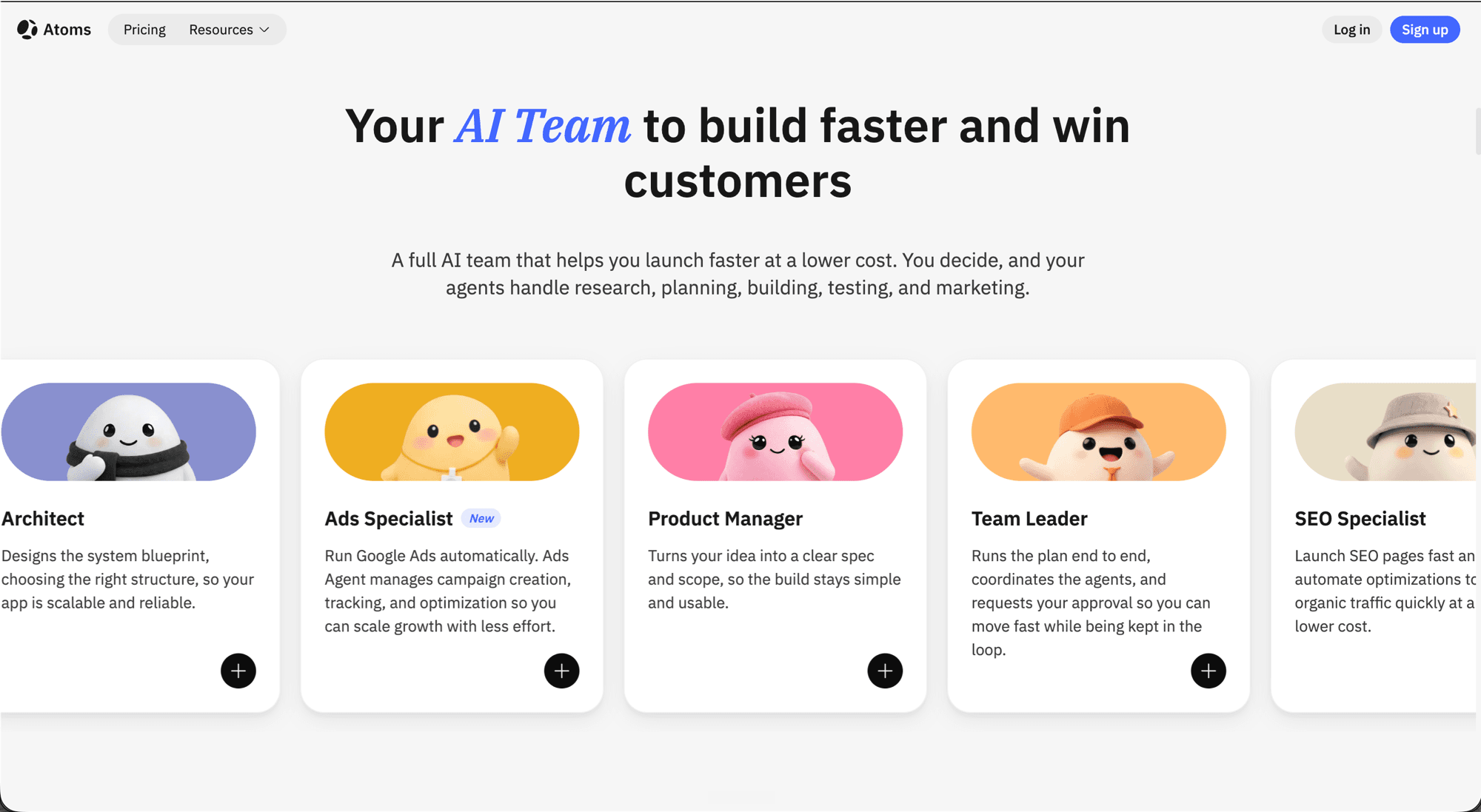
AI employees that validate ideas, build products, and acquire customers in minutes, without coding. A multi-agent crew runs research, planning, full-stack build (frontend, backend, database, auth, Stripe), deployment via Atoms Cloud, and post-launch growth with built-in SEO and ads agents. Designed for founders who want a faster path from idea to a launchable product, not just another prototype generator.


marble
A deliberately small headless CMS for a blog and its media, with an API and an MCP server. The MCP server is the reason it appears here: it lets a coding agent create posts, update content and manage media without leaving the editor, which closes the loop for anyone whose agent writes the copy as well as the code. Free tier is real rather than a trial.


openworker
Andrew Ng's open-source desktop agent that hands back finished work instead of chat. It runs on your machine, connects to the tools you already use, and checks in before anything consequential. The August 2026 release added three security coworkers: one drives semgrep and secret scans and triages findings by reachability rather than severity, one checks Terraform against the live cloud read-only and opens infrastructure pull requests, and one audits dependencies. Bring your own API key, or run a local model through Ollama and nothing leaves the machine.


appwizzy
Flatlogic Generator, renamed AppWizzy: an AI builder for business apps such as CRMs, ERPs and admin panels that hands you the full source code to host and extend yourself.


kliv
Agentic app builder that turns a conversation into a deployed React, TypeScript and Tailwind app with auth, database, payments and free hosting on kliv.site included on every plan.


capacity
AI app builder with two modes: Vibe Coding for fast iteration and Spec Coding that writes the brief and user stories first. Ships web and native mobile apps, exports the full codebase, and has a desktop app that runs on your own Claude, GPT or Gemini subscription.


pipilot
Prompt-to-project builder that outputs web, Expo mobile, desktop, Python or Node backends, CLIs and packages, with a built-in Postgres, agent teams, 130+ MCP integrations and code synced to your own Google Drive.


vibe80
Apache-2.0 web workspace that orchestrates Codex and Claude Code over your Git repositories in sandboxed parallel worktrees, with a PTY web terminal and a mobile companion app that picks up a session by QR code.


pilot protocol
Open-source overlay network that gives AI agents permanent virtual addresses, encrypted UDP tunnels, NAT traversal, mutual-trust handshakes and a signature-verified app store, with native MCP setup for Claude Code, Cursor and Codex.
tokens forge
Multi-model API gateway that puts GPT, Claude, Gemini and lower-cost routes behind one OpenAI-compatible key, with per-key model scopes, balance tracking, request-level receipts and fallback routing.

vibekit
Looking for the open-source agent sandbox on GitHub? That is a different product: see VibeKit by Superagent at /tools/vibekit. This page covers vibekit.bot. Mobile-first AI app builder where every app you create gets its own persistent AI agent, a real GitHub repo under your account, and a live URL at yourapp.vibekit.bot. Describe what you want and the agent builds it, deploys it to a managed container, then keeps working: health checks every 60 seconds, auto-diagnosis and redeploy when something breaks, and AI QA that browses the live app and files bug reports. The agent runs server-side, so the iOS app is a remote control rather than the thing doing the work, and closing your phone does not stop a run. Drive it from the iOS app, the web dashboard, a CLI, a REST API, or an MCP server. Pricing is BYOK-first: connect your own Anthropic or OpenAI key and the agent bills that provider at standard rates with no platform margin. Without a key, requests route through OpenRouter against a credit balance at a platform markup the privacy policy puts at 20 percent, with OpenRouter's data-discount setting enabled on that path only; a free model option keeps building at $0, and the free tier runs $0.50 a session past its first ten. Built and run by one person, Brian Boisjoli, and actively shipping. There is no enterprise tier, no published SOC 2 or SSO, and no Android app.


orca
Open-source Agent Development Environment for running a fleet of AI coding agents at once. Every task gets its own git worktree, its own agent terminal, and its own browser tab, so you can fan one prompt across several agents, compare the diffs, and merge the winner. It drives roughly 30 CLI agents you already pay for, including Claude Code, Codex, OpenCode, Cursor and Copilot, and ships on macOS, Windows, Linux, iOS and Android.


conductor
macOS app for running Claude Code, Codex, Cursor, and OpenCode side by side, each in its own isolated workspace, without wrangling git worktrees by hand. You bring your own agent subscriptions and keys. The paid Conductor Cloud tier moves those workspaces into Vercel sandboxes so agents keep running after you shut the laptop, and adds shared multiplayer workspaces plus an API.


vibe kanban
Open-source kanban board for orchestrating AI coding agents. Plan tasks as issues, run Claude Code, Codex, or Gemini CLI in isolated git worktrees, review diffs inline, and open pull requests from one local UI. The company behind it (bloop) shut down in April 2026, but the project lives on as community-maintained open source and local workspaces keep working.


parallel code
Free, open-source desktop app that dispatches AI coding agents in parallel, each in its own git worktree. It runs the real CLI agents you already trust (Claude Code, Codex, Gemini) side by side, then lets you review the diffs, merge the wins, and toss the rest.

vibe scan
Free, no-login web scanner for vibe-coded apps, built by VibeZero, a Perth AI consultancy. Paste a live URL and it runs a read-only scan across six layers: transport and headers, exposed secrets, auth and access control, third-party surface, data exposure, and platform fingerprints. Most scans finish in 5 to 15 seconds. It fingerprints apps built on Lovable, Bolt.new, Cursor, Claude Code, Replit, Windsurf, v0, and Base44, then returns a graded plain-English report. It reads only what the site serves publicly: it does not log in, submit forms, or send attack payloads. The deeper Vibe Code Audit & Fix is a paid human engagement from the same firm, quoted per project rather than sold as a product. Name collision worth knowing: this scanner lives at vibe0.com.au and has nothing to do with either product called VibeKit. Superagent's July 2025 open-source v0 clone was also called vibe0; that name has since been retired and the project is simply VibeKit, now dormant, at /tools/vibekit. Separately, the mobile AI app builder at vibekit.bot shares that name too and is unrelated to both: see /tools/vibekit-bot.


vibe eval
AI-powered dynamic security testing for vibe-coded web apps. Paste a deployed URL and autonomous agents probe it like an attacker would, checking for missing Supabase/Firebase RLS, exposed API keys, auth bypasses, broken CORS, open storage buckets, and IDOR. Findings ship with a captured exploit and reproducible proof of concept, plus fix prompts ready for Claude Code, Cursor, or Lovable.


vibecodesecure
Free, no-login web scanner built for vibe-coded apps. Paste a web app or API URL and it checks security headers, TLS/SSL, authentication controls, and infrastructure configuration for common vulnerabilities and misconfigurations. Tuned for apps shipped from platforms like Replit, Databutton, and Cursor.
jotform ai app builder
No-code AI app builder from Jotform that turns a prompt, file, URL, screenshot, or voice note into a working web and mobile app with pages, navigation, forms, workflows, and dashboards. Built on Jotform's form and data components, so it is strongest for form-heavy internal tools, client portals, and data-driven apps. Free to use, with form, submission, and user limits set by your underlying Jotform plan.


google antigravity
Google's agentic development platform, now split across four surfaces: the Antigravity IDE (VS Code fork), Antigravity 2.0 standalone desktop, the Go-based Antigravity CLI, and a Python SDK for custom agents.
wix harmony
Wix's hybrid editor that pairs the Aria AI agent with traditional drag-and-drop. Describe a site in natural language, get a working layout, then refine pixel-by-pixel on a responsive canvas. Sites run on Wix's managed infrastructure (multi-cloud hosting, technical SEO, accessibility tooling).
hermes agent
Self-hosted autonomous agent from Nous Research with a built-in learning loop. Creates skills from experience, persists memory across sessions, and runs 24/7 on your own hardware with sandboxed terminals and messaging-app gateways.
hermes webui
Lightweight dark-themed browser interface for Hermes Agent with full parity to the CLI. Three-panel layout with sessions sidebar, chat, and workspace file browser. Community project that runs against any existing Hermes install.
aquilax vibe
Specialized security scanner from AquilaX, built for AI-generated and vibe-coded software. Fingerprints LLM-written code, then runs SAST and taint analysis tuned to the insecure defaults, hallucinated APIs, and copy-pasted snippets that Copilot, Cursor, Claude, and ChatGPT introduce.


retool
Low-code platform for building internal tools, admin panels, and dashboards. Retool combines 90+ drag-and-drop UI components with JavaScript extensibility and AI app generation to connect any database or API.
codegeex
Free, open-source AI coding assistant built on a 13B-parameter multilingual model by Tsinghua University (THUDM). Provides code completion, generation, translation, commenting, intelligent Q&A, unit test generation, and repository-level chat across 100+ programming languages. Available as extensions for VS Code, JetBrains IDEs, Visual Studio, and HBuilderX.

ntm (named tmux manager)
NTM (Named Tmux Manager) is a free, open-source tool that transforms tmux into a multi-agent command center. Spawn, tile, and coordinate Claude Code, OpenAI Codex, and Gemini CLI agents across named panes with broadcast prompts, a TUI command palette, conflict tracking, context monitoring, and persistent sessions that survive SSH disconnections.
cmux
cmux is a free, open-source native macOS terminal built on libghostty (Ghostty rendering engine) with vertical tabs, split panes, notification rings, and a built-in scriptable browser, designed for managing multiple parallel AI coding agents like Claude Code, Codex, and Gemini CLI.


intellicode
Microsoft's AI-assisted development tool for Visual Studio and VS Code. Provides whole-line completions and API usage examples based on thousands of open-source projects.
Related Articles
Base44 Review 2026: What It Builds, What It Costs
Hands-on Base44 review: verified pricing from $16/mo, Superagents, the Base 1 model, credit limits, security after the Wix deal, and how it compares to Lovable and Bolt.
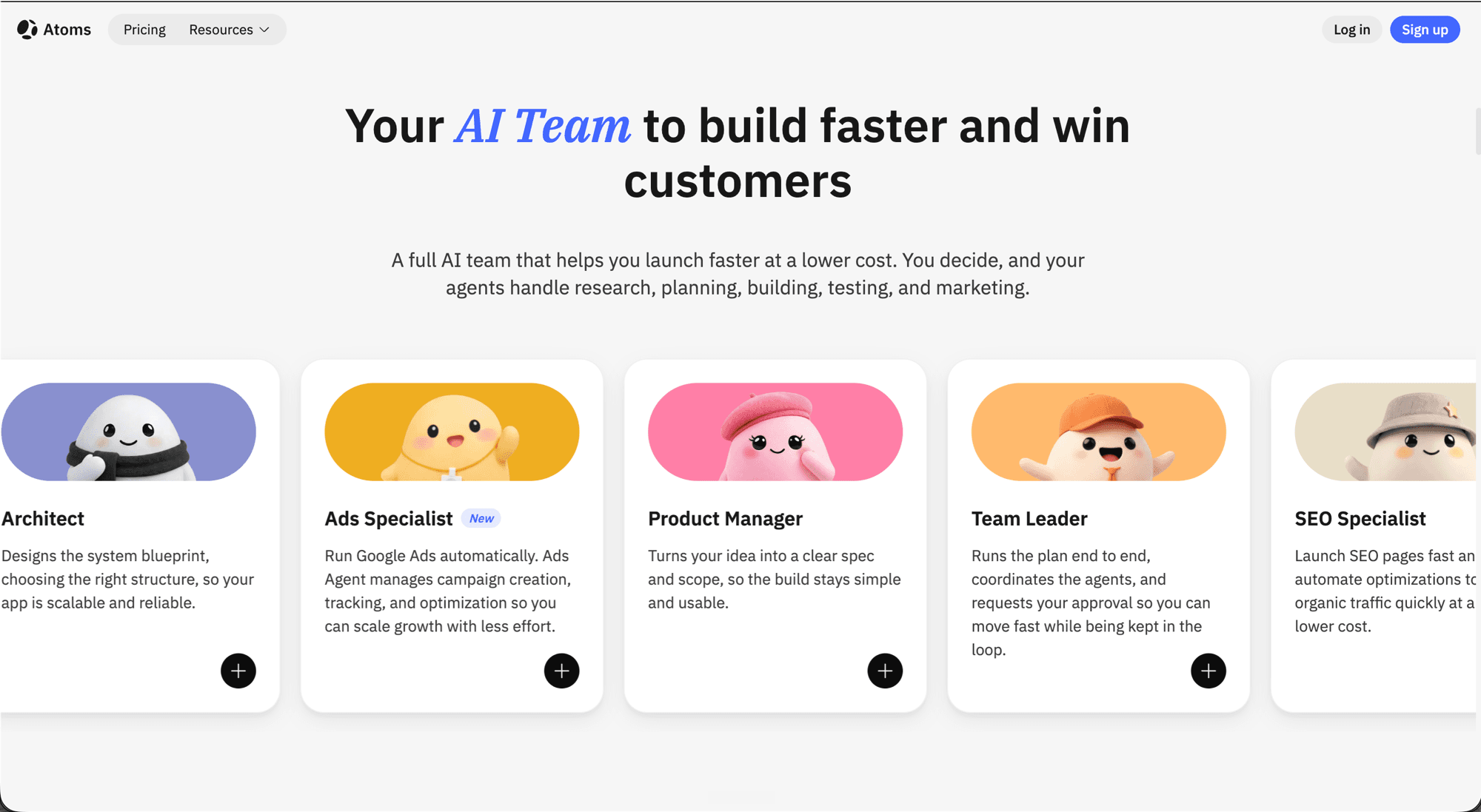
Atoms Review 2026: AI Team Past the Prototype
Atoms (atoms.dev) review: multi-agent AI team, pricing, Race Mode, and where it beats Lovable, Bolt, and Base44.
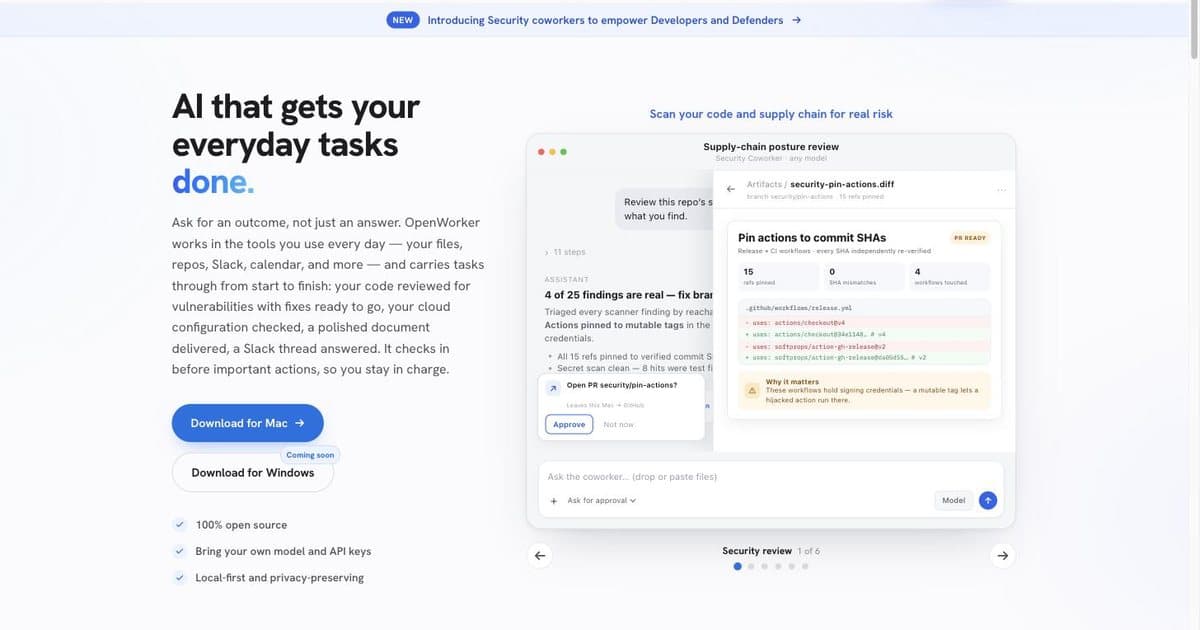
AI Agent Code Security Scanning: How to Check Code You Did Not Write
You shipped something an AI wrote and nobody reviewed it. Here is the five-minute free check, the tools worth paying for, and the point where scanning stops helping.
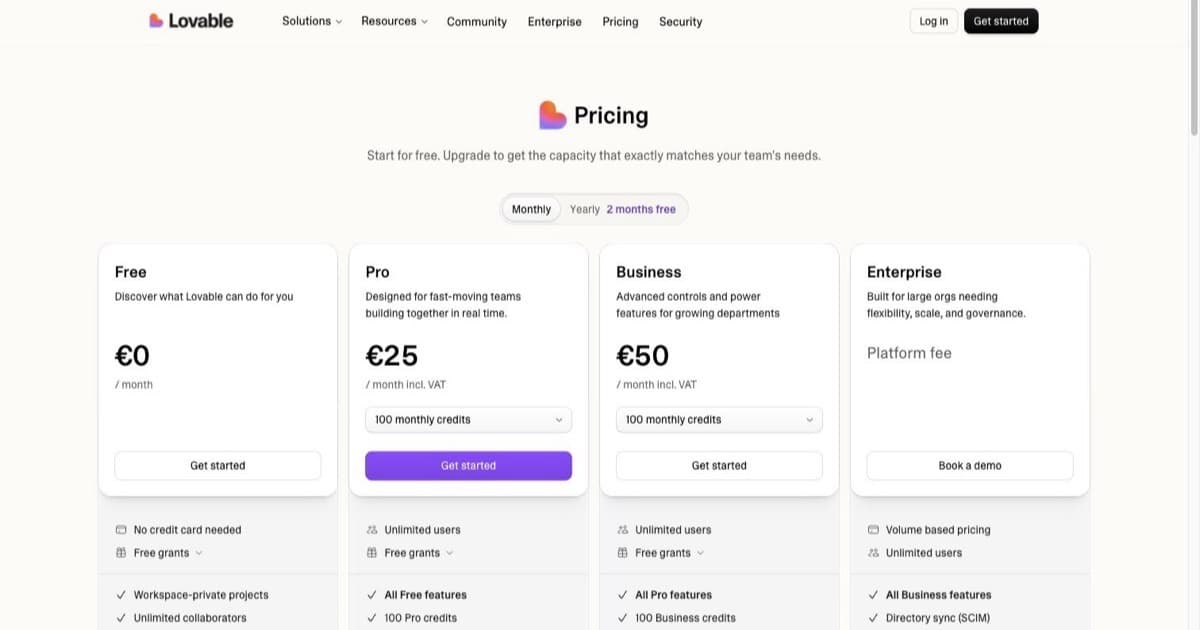
Lovable Credits Explained (2026): What a Message Costs and When Credits Die
Lovable's credit system decoded from the official pages: what messages cost (0.5 to 1.7 credits by Lovable's own examples), what one balance covers, every expiry rule, and how far each plan's credits actually go.
Lovable vs Bolt (2026): Credits or Tokens, Same $25
Lovable and Bolt both charge $25/mo and build full-stack apps from prompts. The real difference is the meter (credits vs tokens), the backend path (Supabase vs your choice), and what each free tier actually lets you ship.
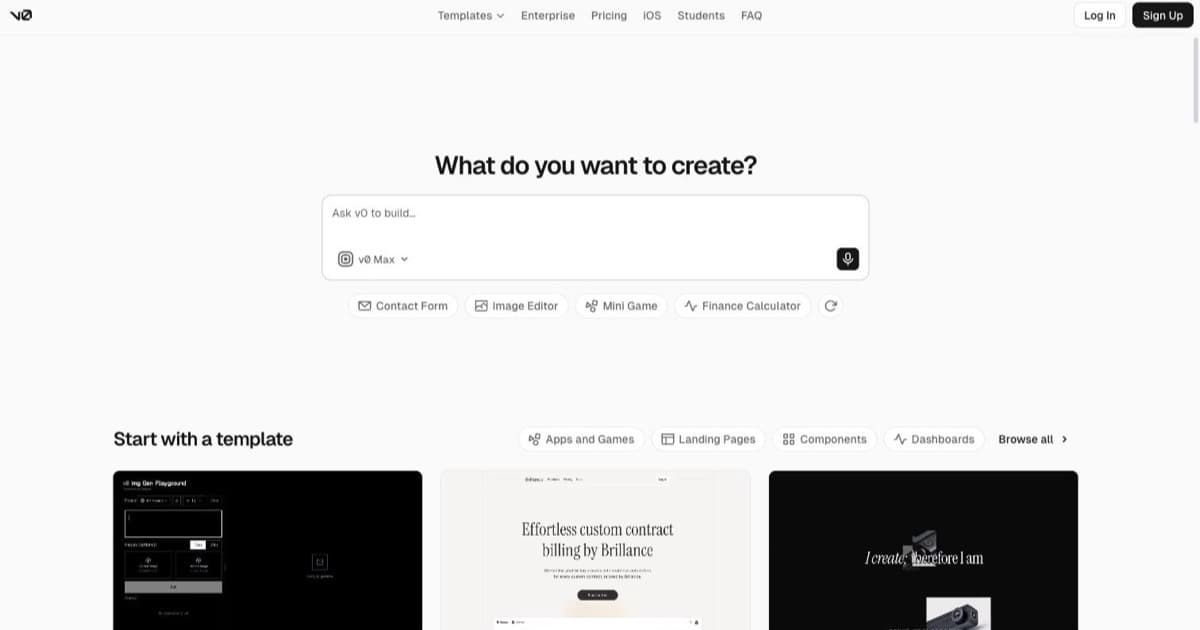
Lovable vs v0 (2026): Whole App or Perfect Components
Lovable builds and hosts the whole product; v0 generates world-class React UI inside the Vercel ecosystem. Live pricing ($25 vs $30), the different credit meters, and the workflow where the two combine.