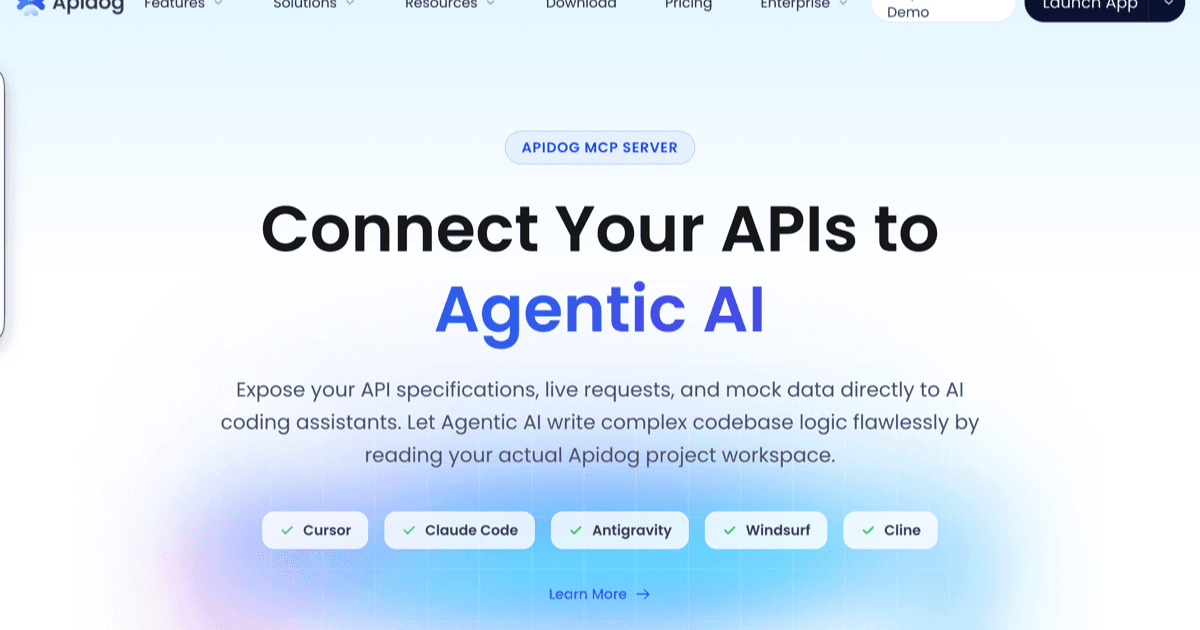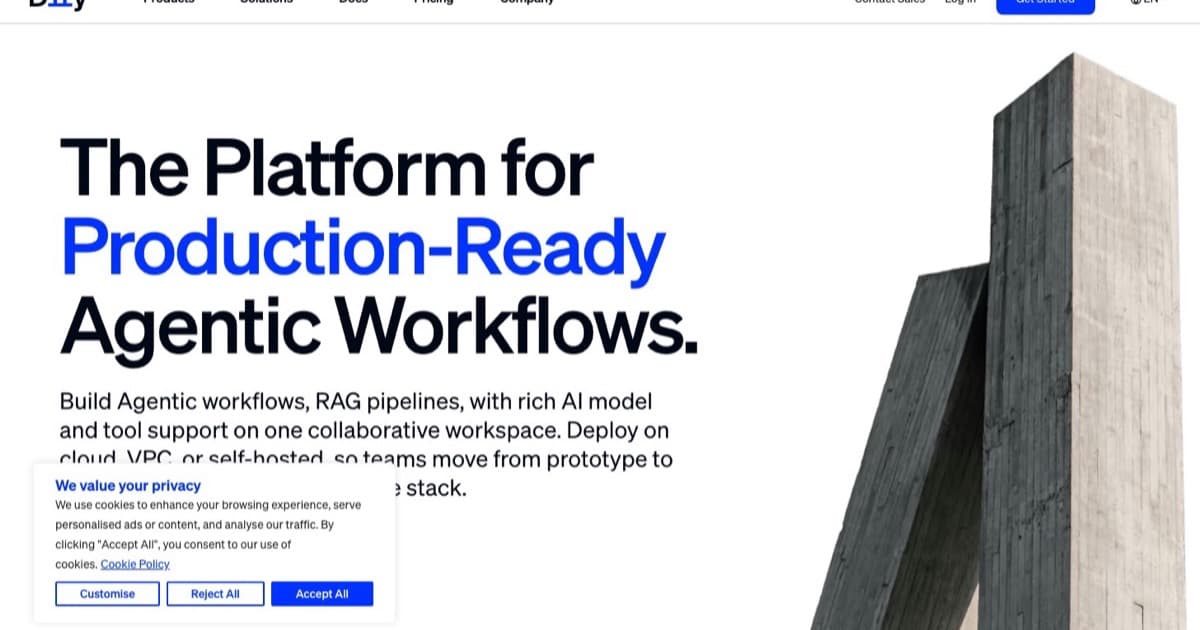
dify
Visual platform for building LLM-powered applications, RAG pipelines, chatbots, agents, and workflows; without deep ML expertise. Self-hostable or cloud, with 148,000+ GitHub stars.
ai-dev-toolsread review ↗
#open-source
AI development tools are the SDKs, orchestration frameworks, evaluation suites, and monitoring platforms that help developers build production-grade AI features, covering everything from prompt chaining and RAG pipelines to quality testing and cost tracking.


AI development tools sit between your product idea and production code. They help you move from “cool demo” to a reliable feature your users trust. This category curates the best AI development tools for teams that want to ship quickly, measure quality, and iterate without breaking things.
<strong>LangChain</strong> and its graph-based sibling <strong>LangGraph</strong> dominate orchestration, offering the largest ecosystem of integrations for chaining prompts and building multi-step agents. <strong>LlamaIndex</strong> is the go-to for RAG pipelines, connecting your data to LLMs with built-in chunking, retrieval, and indexing. For evaluation, <strong>LangSmith</strong> (built by the LangChain team) and <strong>Arize Phoenix</strong> let you test prompt versions against fixed datasets before shipping. <strong>PromptLayer</strong> adds observability and version control for teams managing many prompts in production. The right stack depends on complexity: a single prompt feature needs only an SDK and basic monitoring, while multi-agent workflows benefit from LangGraph's stateful execution and a dedicated eval tool.
Visual platform for building LLM-powered applications, RAG pipelines, chatbots, agents, and workflows; without deep ML expertise. Self-hostable or cloud, with 148,000+ GitHub stars.
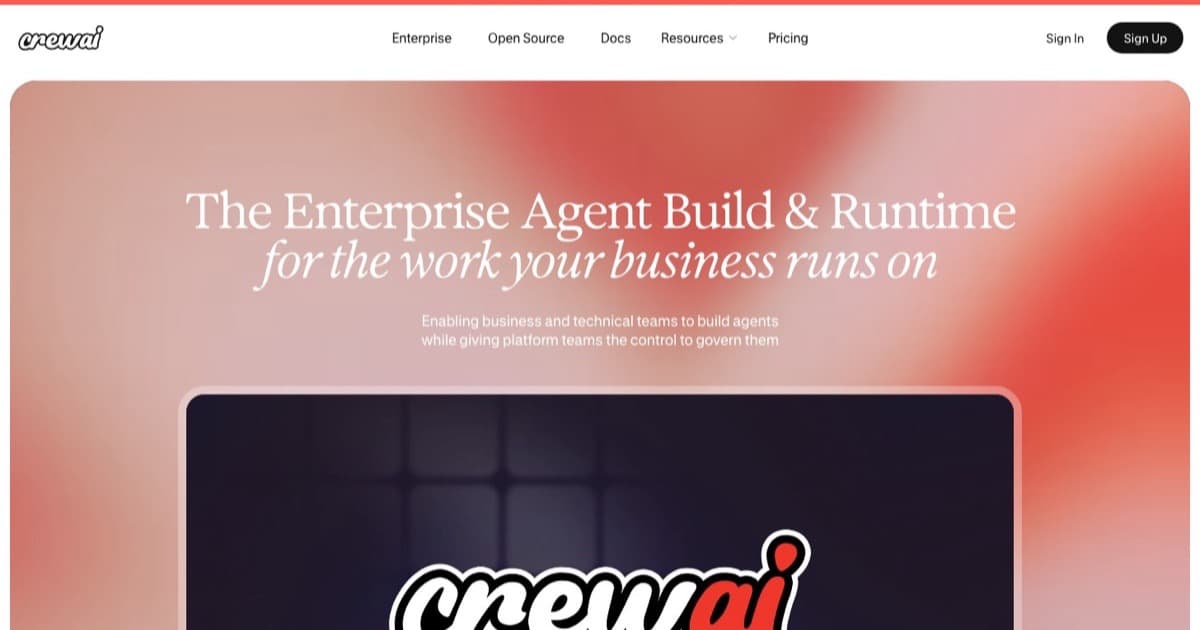

Python framework for orchestrating role-playing AI agents that collaborate to complete complex tasks. Define a crew of specialized agents with goals and tools, then let them work together autonomously. 54,000+ GitHub stars and a thriving enterprise tier.
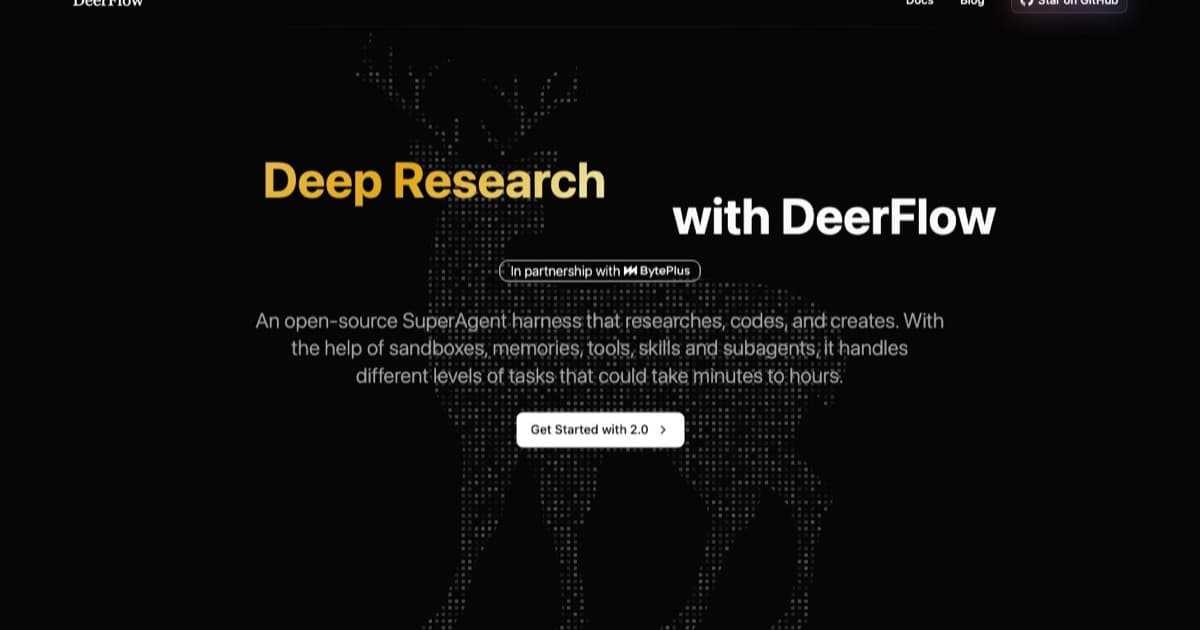

Open-source SuperAgent harness from ByteDance that orchestrates sub-agents, long-term memory, extensible skills, and Docker-based sandboxes to execute complex, long-horizon tasks like deep research, coding, and content creation.


Open-source framework for building AI agent teams organized as virtual companies, CEO, Engineer, and QA agents coordinate work through projects, issues, and heartbeat schedules.
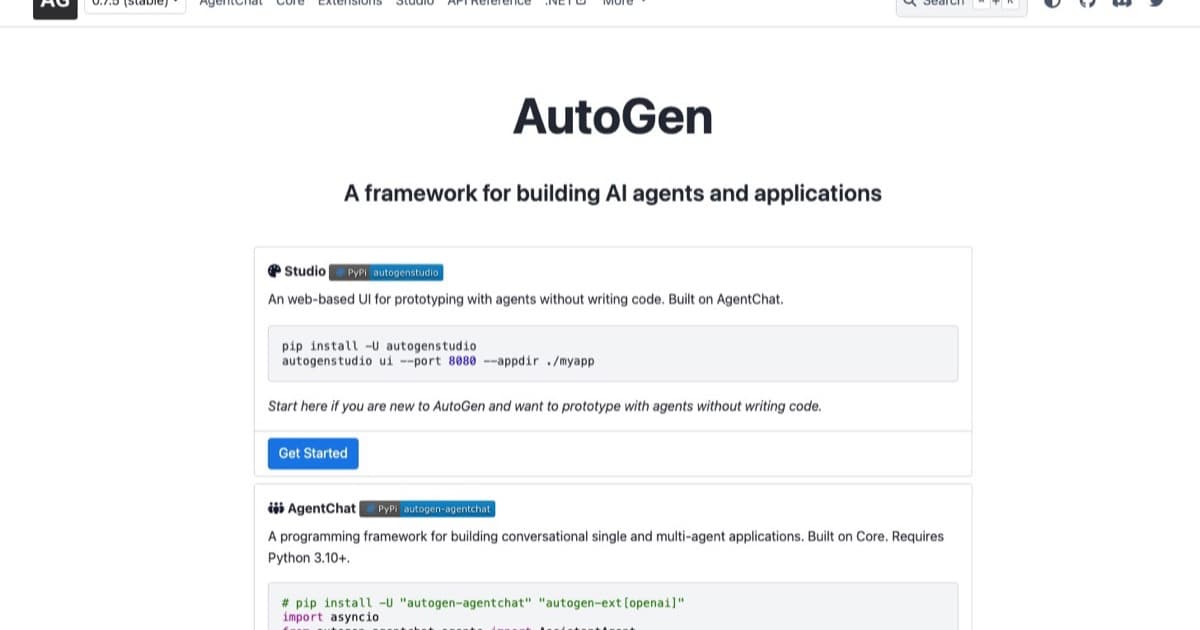

Open-source Python framework from Microsoft Research for building multi-agent AI systems (now AG2). Agents converse, write and execute code, call tools, and collaborate to solve complex tasks, with human-in-the-loop support.
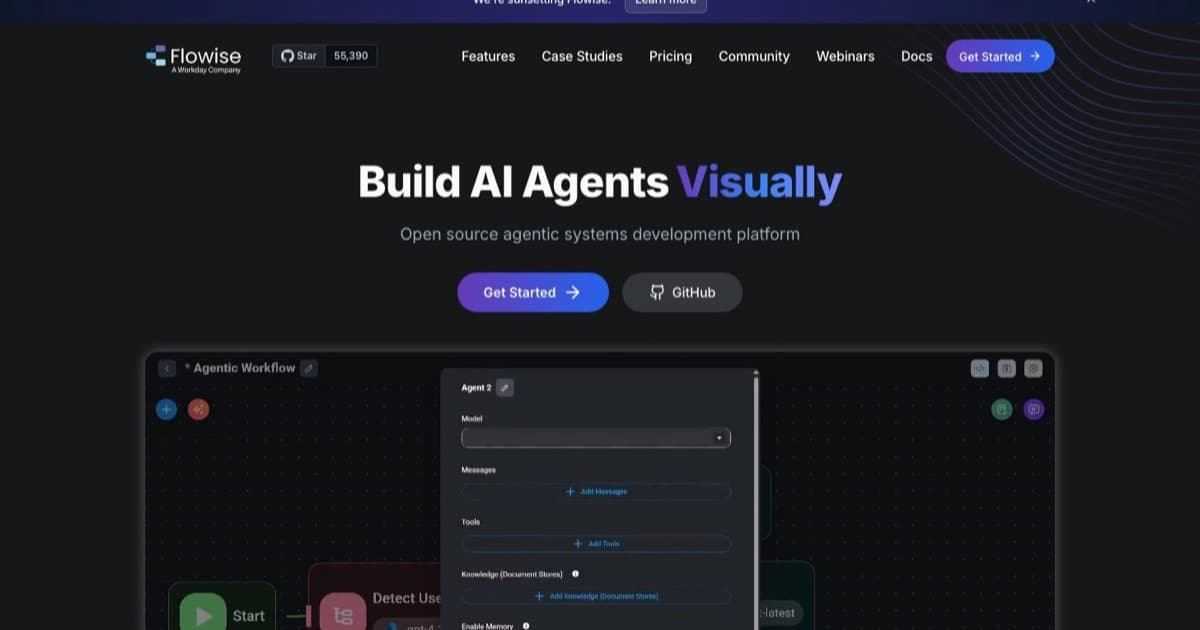
Open-source drag-and-drop tool for building LLM flows and AI agents using LangChain and LlamaIndex nodes. Connect models, memory, tools, and data sources visually, then expose as an API or embed as a chat widget.

Open directory and leaderboard for reusable AI agent skills. Discover and install modular capabilities that enhance AI coding agents with procedural knowledge through simple one-command installation.

Open registry for verified agent skills with 3,500+ skills. Discover and install quality-focused skills for Claude Code, Cursor, Windsurf, and other AI coding agents with community verification.
Massive agent skills marketplace with 71,000+ skills compatible with Claude Code, OpenAI Codex CLI, and ChatGPT. Uses the open standard SKILL.md format with smart search and category filtering.
Agent skills directory with focus on Claude, ChatGPT, and Codex. Discover, retrieve, and install reusable AI agent capabilities with step-by-step installation guides for multiple AI platforms.
Web scraping API that converts any webpage into clean Markdown or structured JSON for AI consumption. Features intelligent crawling, AI-powered extraction, and JavaScript rendering for building AI-ready data pipelines.
Open-source CLI tool that generates entire codebases from natural-language prompts. Supports OpenAI, Anthropic, and open-source models with customizable agent identity and vision input for diagrams.

Open-source multi-agent AI framework that runs in a Dockerized sandbox with code execution, browser automation, subordinate agents, and a memory system for building autonomous coding and research workflows.
Unified LLM gateway providing OpenAI-compatible API access to 500+ models from 60+ providers. Pay-as-you-go pricing with no markup on model rates, automatic fallbacks, and routing optimizations.
Open-source LLM observability and engineering platform for tracing, evaluating, and debugging AI applications. Langfuse provides production-grade monitoring with trace spans, cost tracking, prompt management, evaluation datasets, and a playground, all with no per-seat fees and a self-hostable MIT-licensed core.
Community prompt and chain repository integrated with LangSmith. LangChain Hub lets developers discover, share, and version-control prompt templates, agent configurations, and chain definitions: a prompt registry that connects directly to the LangChain ecosystem for rapid AI prototyping.
Official collection of Jupyter notebooks and code recipes from Anthropic for building with the Claude API. Covers tool use, MCP integration, agent patterns, extended thinking, RAG, prompt caching, multimodal capabilities, and production patterns.
Official collection of guides, quickstarts, and Jupyter notebooks from Google for building with the Gemini API. Covers multimodal prompting, function calling, grounding with Google Search, context caching, audio/video understanding, and agent patterns.
Open-source SDK from Microsoft for integrating LLMs into applications using C#, Python, and Java. Semantic Kernel provides an agent framework, plugin architecture, prompt template engine, planner, and memory connectors, designed for enterprise AI orchestration with Azure OpenAI and other providers.

Every AI coding agent priced from its official page in one comparison: Claude Code, Cursor, Codex, GitHub Copilot, Bolt, v0 and Lovable. The real difference is not the price, it is the meter: time windows, dollar allowances, tokens or credits.

The agentic engineering stack for 2026 in four layers: coding agents, orchestration frameworks, data and memory, observability. Live prices for Claude Code, Cursor, Codex, CrewAI, LangGraph, LangSmith and LlamaCloud, plus starter stacks by team size.
Agent Zero is a free, open-source AI framework that spawns subordinate agents in Docker sandboxes with code execution, browser automation, and persistent memory. Updated review covering v1.20, Time Travel, Codex OAuth, A0 CLI Connector, and the 100+ plugin Plugin Hub.

Local-only vibe coding stack for 2026: Qwen 3.6 27B and DeepSeek V4 Pro on Ollama or LM Studio, wired to Aider or Cline. Hardware requirements, config snippets, real walkthrough, and honest gap analysis vs Claude Code.

A practical 30-minute security audit for vibe-coded apps. Covers the 7 gaps AI tools consistently miss (exposed keys, disabled RLS, missing JWT checks, client-side auth, XSS, LLM cost runaway, open CORS) with 2-minute fixes for each.

The Claude Code creator wants to retire "vibe coding." Simon Willison says the two terms are converging. Google Trends says the audience has not moved. Here is what is actually different between vibe coding and agentic engineering, and which one belongs in your job posts.
Think of this as your "AI product toolkit." It includes the software that helps you go from first prompt to a feature that's safe, measurable, and fast enough for real users.
Start with the outcome you need. If you're exploring an idea, choose tools that let you iterate quickly. If you're shipping to customers, choose tools that help you test and monitor quality.
Not always. Many teams start with a single SDK or API gateway and add evaluation and monitoring tools once usage grows.
SDKs focus on calling models and handling auth, while orchestration tools help you chain steps, call tools, and manage multi-step workflows.
Use evaluation tools to compare prompt versions on a fixed dataset, then track accuracy and feedback after release.
Look for platforms that combine embeddings, vector search, and easy data ingestion, plus monitoring to catch retrieval issues.
Use this category page as a curated shortlist of AI Development Tools tools. You can explore each tool’s features on its tool page, then compare options via their alternatives pages. If you want to browse everything, head back to All Tools.
Popular starting points in this category include Dify, CrewAI and DeerFlow.
Tools that improve the developer workflow itself: automation, command runners, multi-agent orchestrators, productivity layers.
AI tools for marketing, websites, business operations, and non-developer workflows.
Prompt-to-app builders for non-engineers and rapid prototyping. Generates working apps from natural language.
Full-fledged code editors, agentic IDEs, and pair-programming environments for engineers.
AI assistants that review pull requests, suggest fixes, and act as a second pair of eyes on existing code.
Infrastructure for running, orchestrating, and observing autonomous AI agents (memory, tools, sandboxing).
Cloud-based development environments and prototyping platforms (StackBlitz, Replit-style).
Libraries, SDKs, frameworks, and dev kits that engineers use to build AI features into their own apps.
Hosting, deployment platforms, databases, and backend infrastructure for AI-powered apps.
Curated prompt libraries, skill packs, and reusable prompt frameworks.
Hyperscaler AI platforms (Bedrock, Vertex AI, Azure AI Foundry) — managed services for foundation models.
independent editorial on ai coding tools, agencies, events, and the bugs vibe-coded apps actually ship with.
no spam · unsubscribe anytime