
Aug 10, 20269 min read@zane
how to vet a vibe coding agency (2026): 7-step checklist
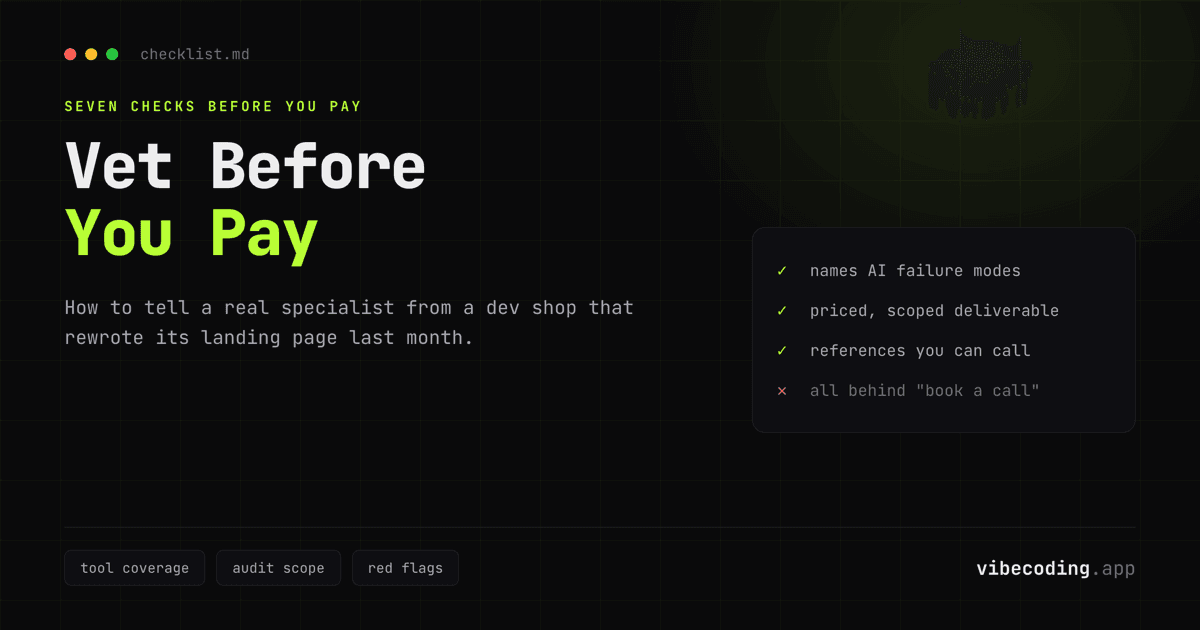
A 7-step checklist to vet a vibe coding agency before you pay: tool coverage, audit scope, pricing transparency, references, and the red flags to avoid.
Page 3 of blog articles on vibe coding tools, workflows, and AI-powered development.
A 7-step checklist to vet a vibe coding agency before you pay: tool coverage, audit scope, pricing transparency, references, and the red flags to avoid.
Most MCP roundups list thirty servers. Four do the real work. The starter stack for coding agents, with verified install commands and honest caveats.
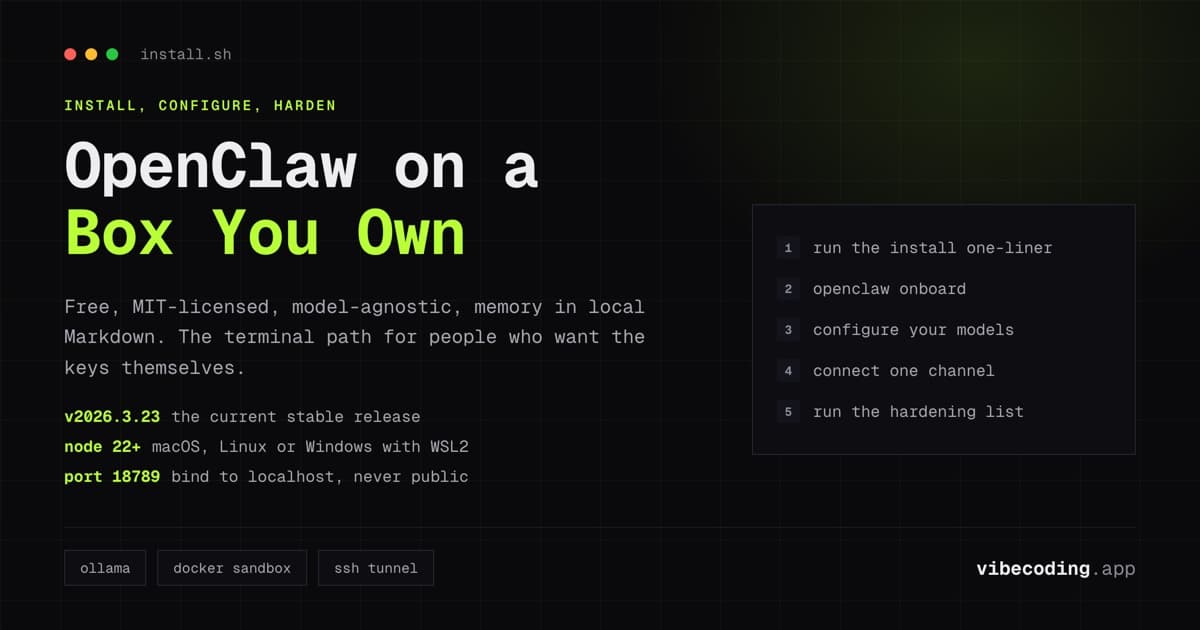
OpenClaw setup guide for v2026.3.23: prerequisites, one-liner install, model and messaging app configuration, cost breakdown, and troubleshooting for common 2026 issues.

A neutral, security-first workflow for vibe coding a SaaS: stack choice, spec prompts, Supabase auth and RLS, Stripe subscriptions, the hardening checklist, and what it actually costs per month.

How Claude Code subagents actually work: isolation mechanics, built-in types, custom frontmatter, nesting limits, and the signals that tell you delegation is worth the tokens.
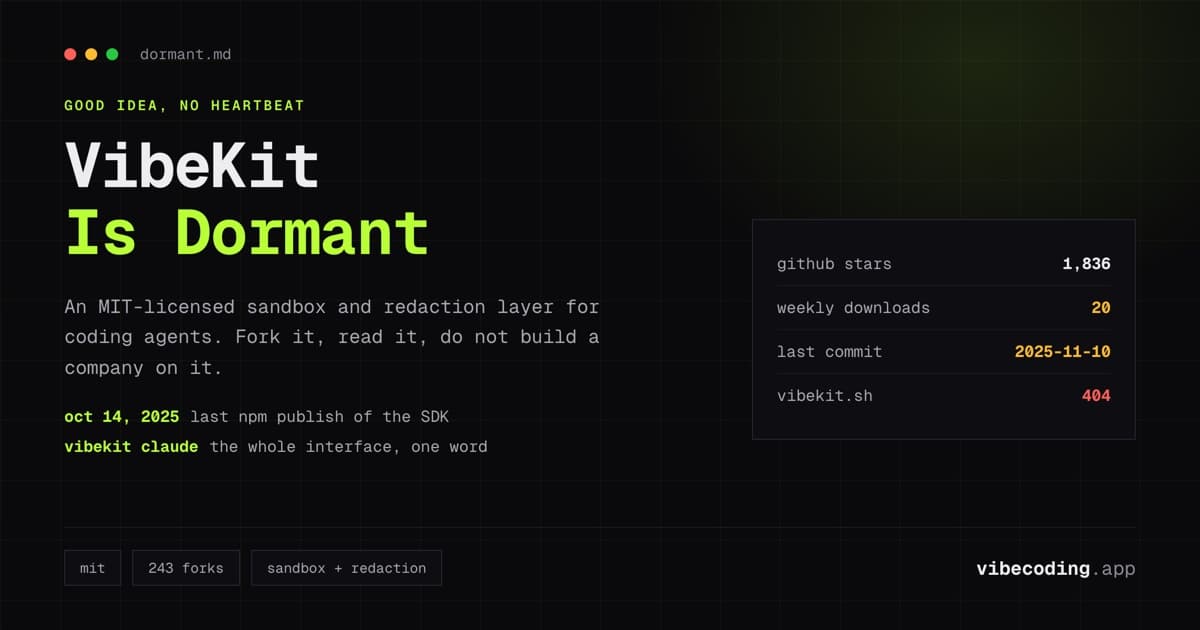
VibeKit runs Claude Code, Gemini, and Codex in an isolated sandbox with secret redaction. The engineering is sound. The maintenance signals are not. What the commit history and npm data actually show.

MCP explained for developers: what the Model Context Protocol is, how the host/client/server architecture works, why coding agents rely on it, and how to connect your first server.
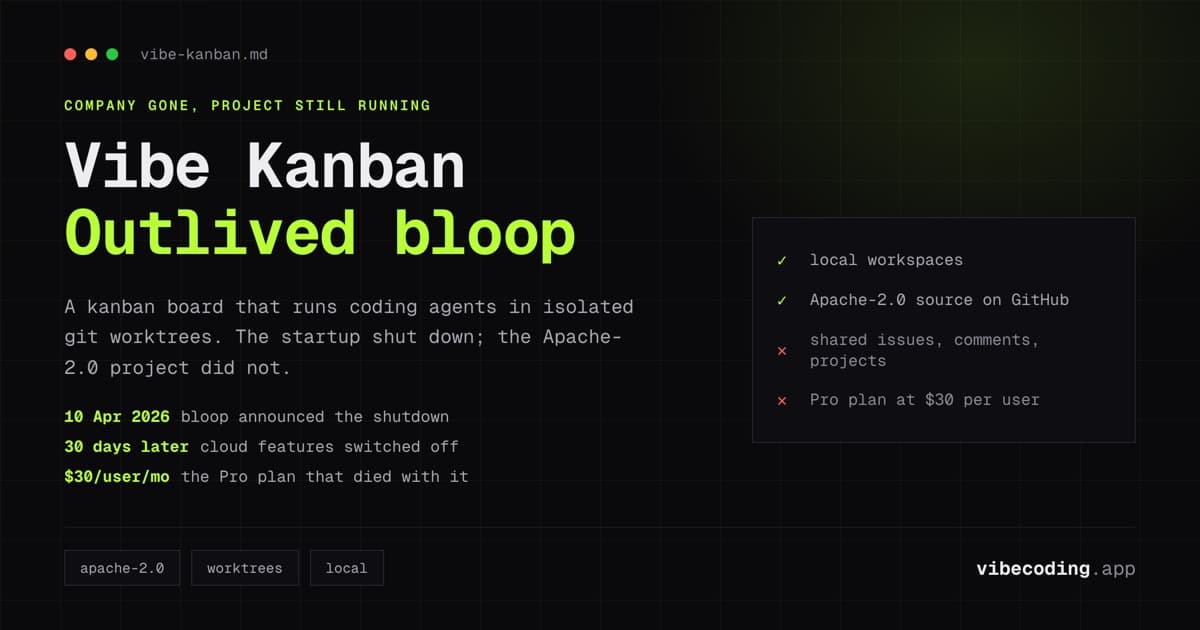
Vibe Kanban review after the April 2026 shutdown: what still works locally, what cloud features are gone, and whether the open-source project is worth installing.
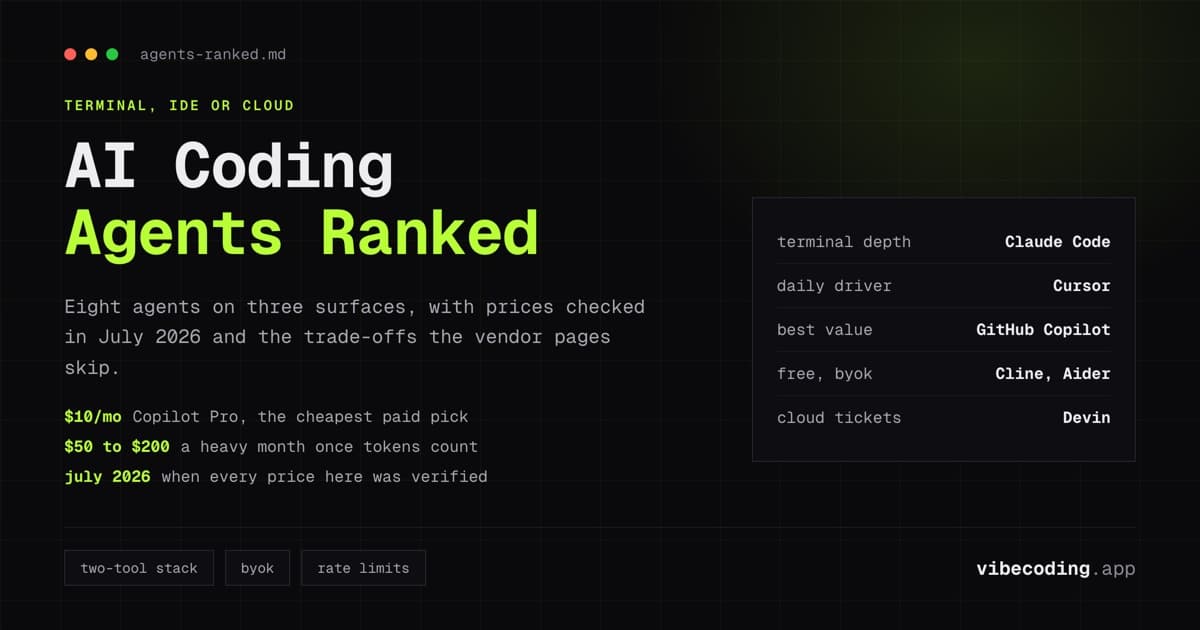
The best AI coding agents in 2026, ranked for real workflows: Claude Code, Cursor, Codex, Copilot, and the open-source picks, with verified pricing and a decision framework for choosing your stack.

Agentic engineering is the discipline of directing AI coding agents that plan, write, run, and verify software under human oversight. Here is the definition, how it differs from vibe coding, the skills it needs, and the tools that power it.

Claude Code vs Cursor in 2026, compared honestly. Current pricing, real timing data, feature-by-feature breakdown, and the both-tools setup most builders end up with.
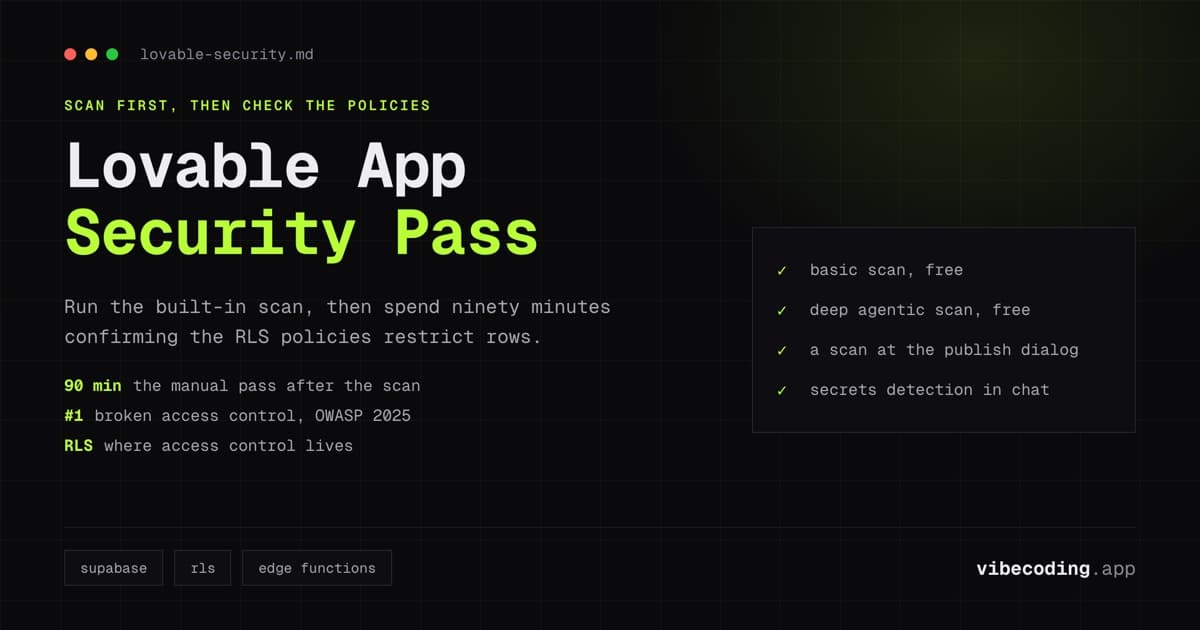
Fix the most common security gaps in Lovable-built apps. Covers Supabase RLS, API key exposure, input validation, authentication, and a 90-minute self-audit checklist.
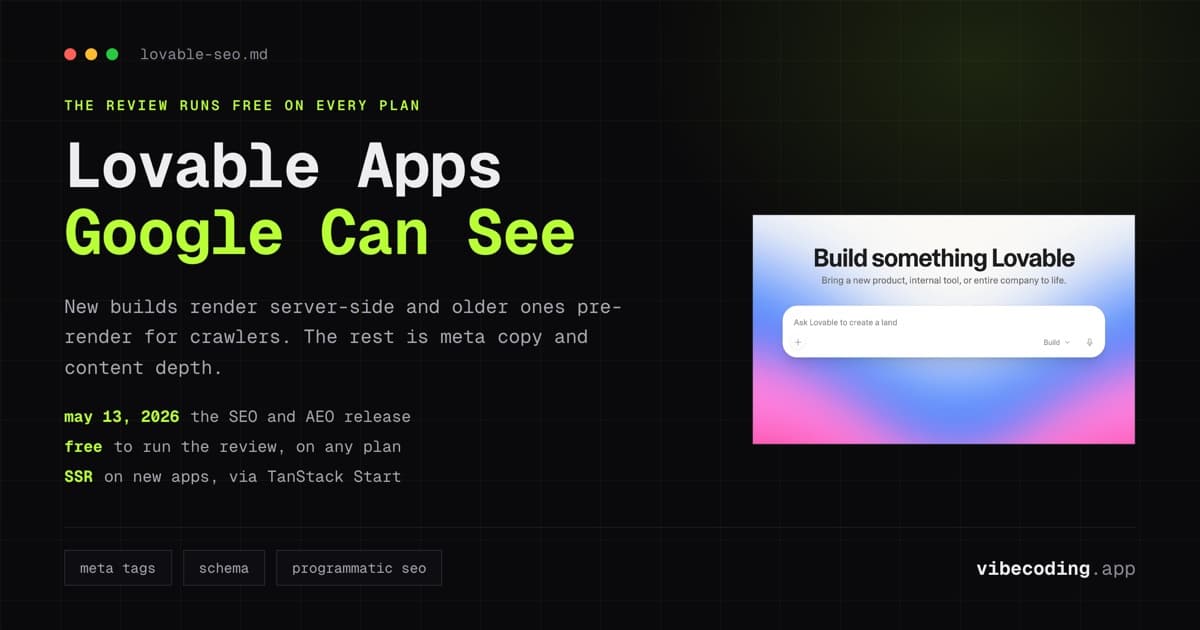
Complete guide to SEO for Lovable-built apps: built-in SEO review, SSR, meta tags, structured data, Core Web Vitals, and programmatic SEO.
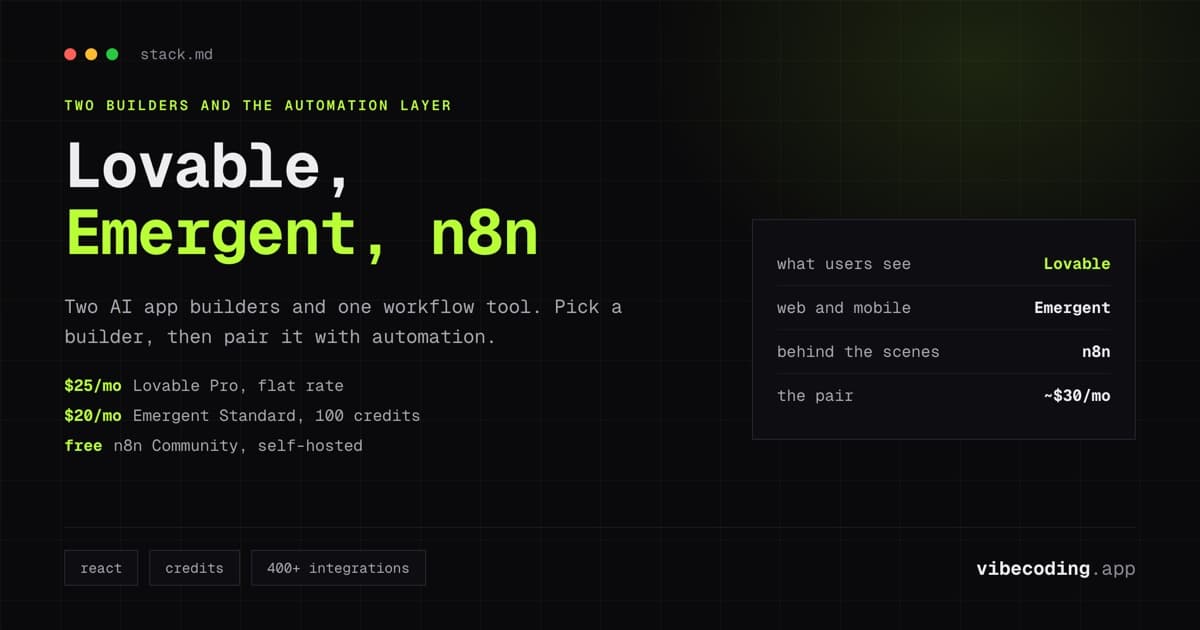
Lovable vs Emergent vs n8n compared. When to use an AI app builder, when to use workflow automation, and the combo approach that actually works best.
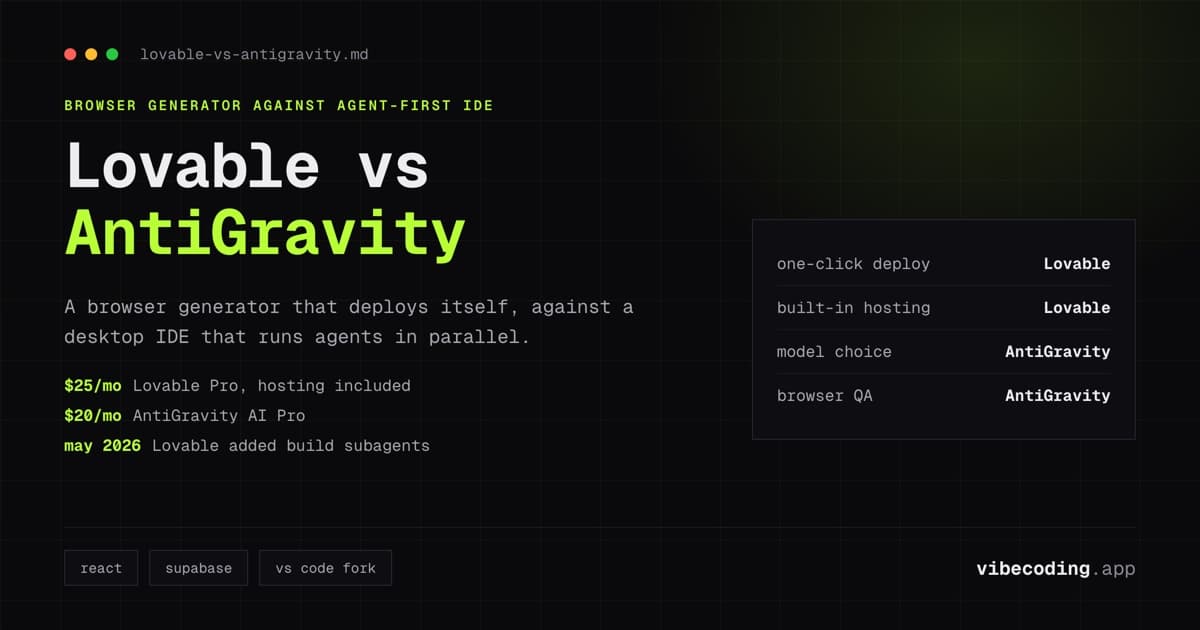
Lovable vs Google AntiGravity compared for 2026: pricing, features, code quality, target audience, and honest recommendations for builders who want to pick the right tool.
Lovable vs Replit in 2026: honest comparison of features, pricing, code quality, and use cases. Which AI builder is right for your project?
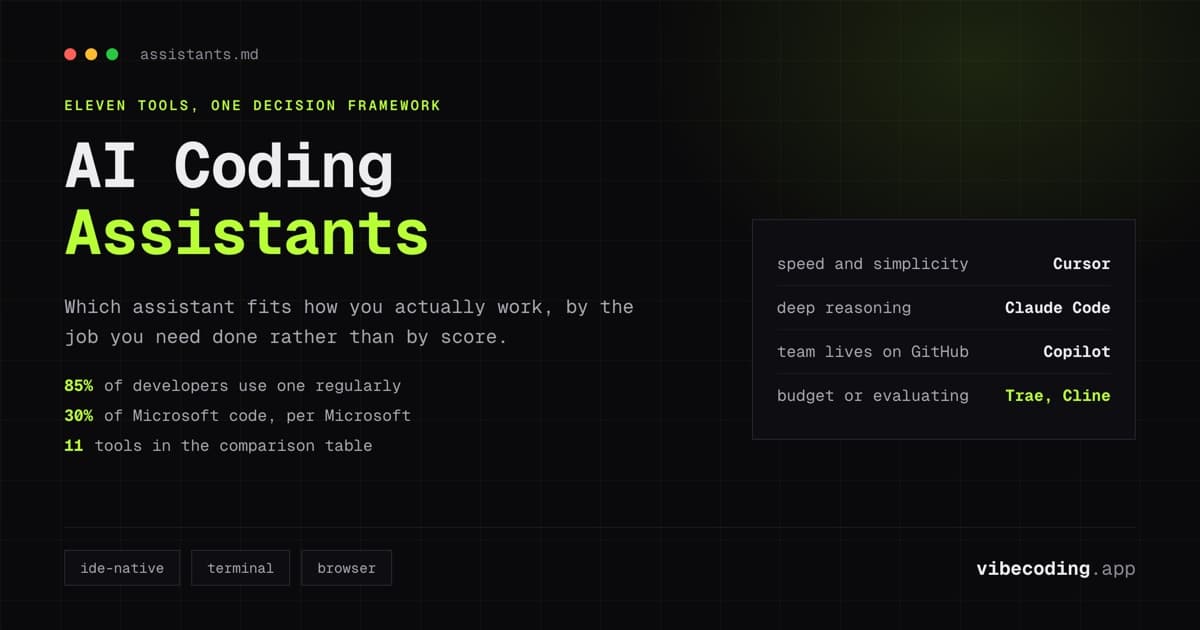
An honest comparison of the best AI coding assistants for developers in 2026. Cursor, Claude Code, GitHub Copilot, Windsurf, and more – with real pricing, trade-offs, and recommendations.
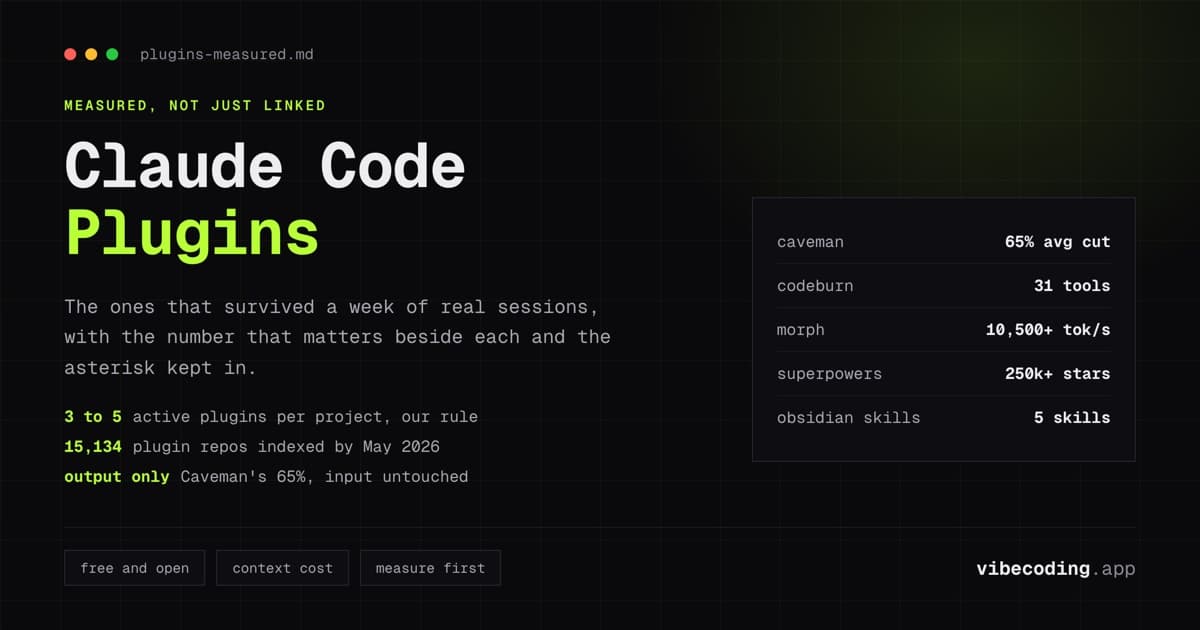
The best Claude Code plugins and skills, actually tested. Caveman (65% output token cut), Morph, CodeBurn, Superpowers, plus the official picks worth installing.
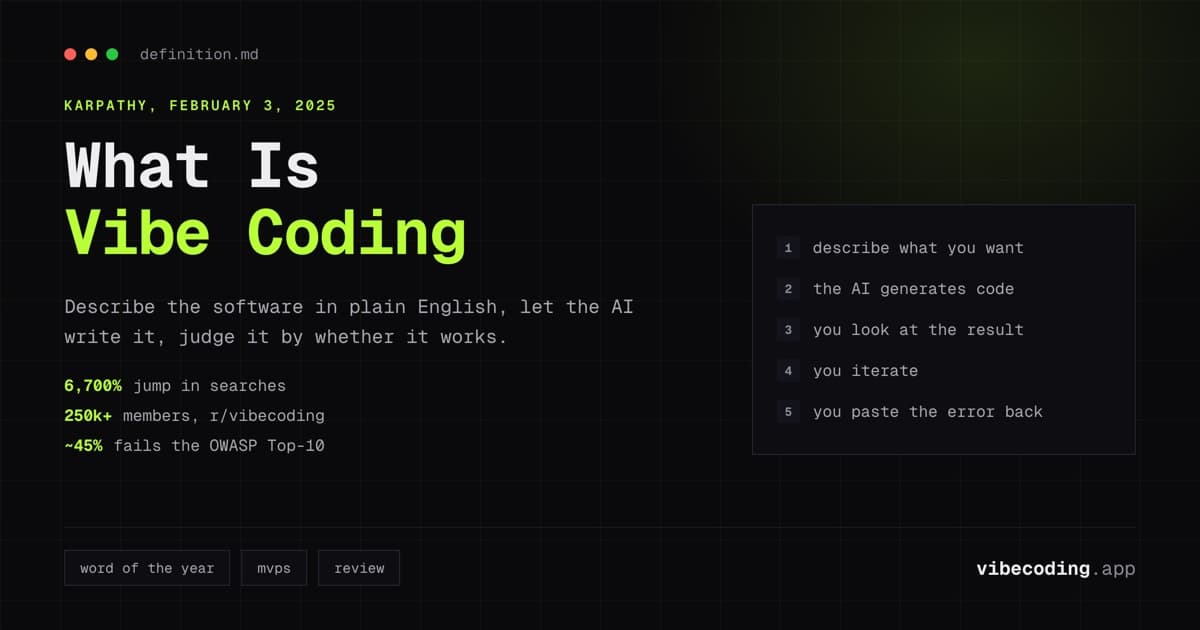
Vibe coding is the AI-driven development approach coined by Andrej Karpathy where you describe what you want and let AI write the code. Here's what it actually is, who's using it, and whether you should care.
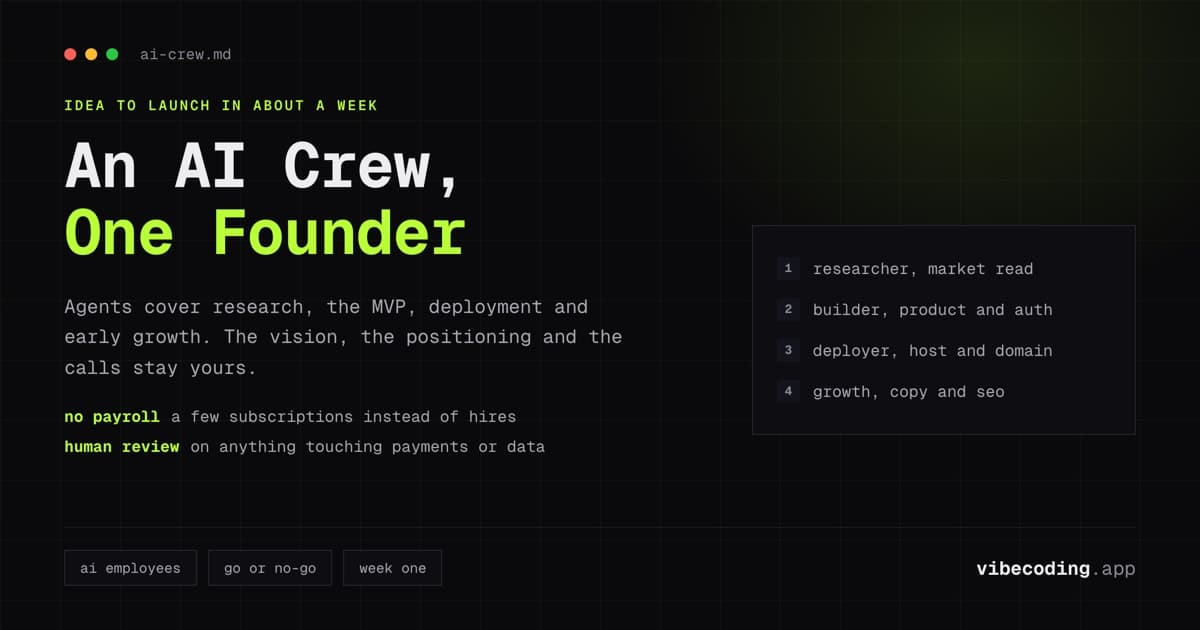
AI agents can now research a market, build the product, and run early growth, acting like AI employees for solo founders. Here's how to use them to go from idea to launch, the tools, and where they still fall short.

Want a real website without paying a developer or a big monthly fee? Here are the cheapest ways to build one with AI, the genuinely free options, and the budget pick that still looks professional.
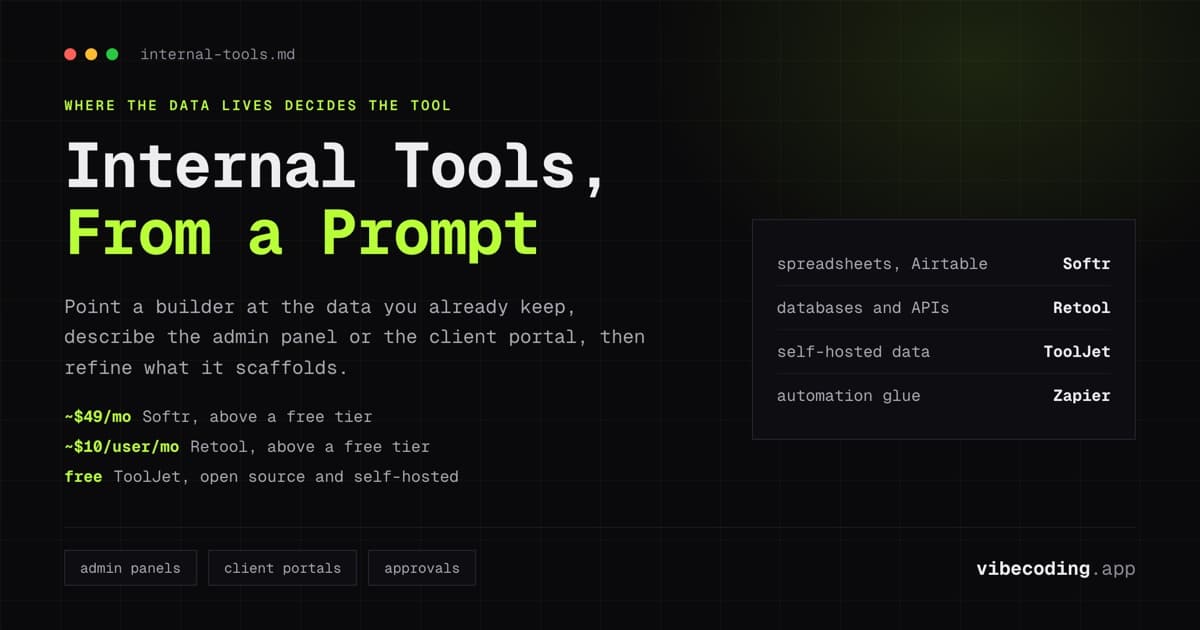
The best AI internal tools builders for dashboards, admin panels, and client portals, compared for ops teams, founders, and non-technical builders, with honest picks for technical vs no-code.

Vibe coding a website means describing what you want and letting AI build it. Here's the exact step-by-step process, the tools to use, and the prompts that actually work, even if you've never written code.
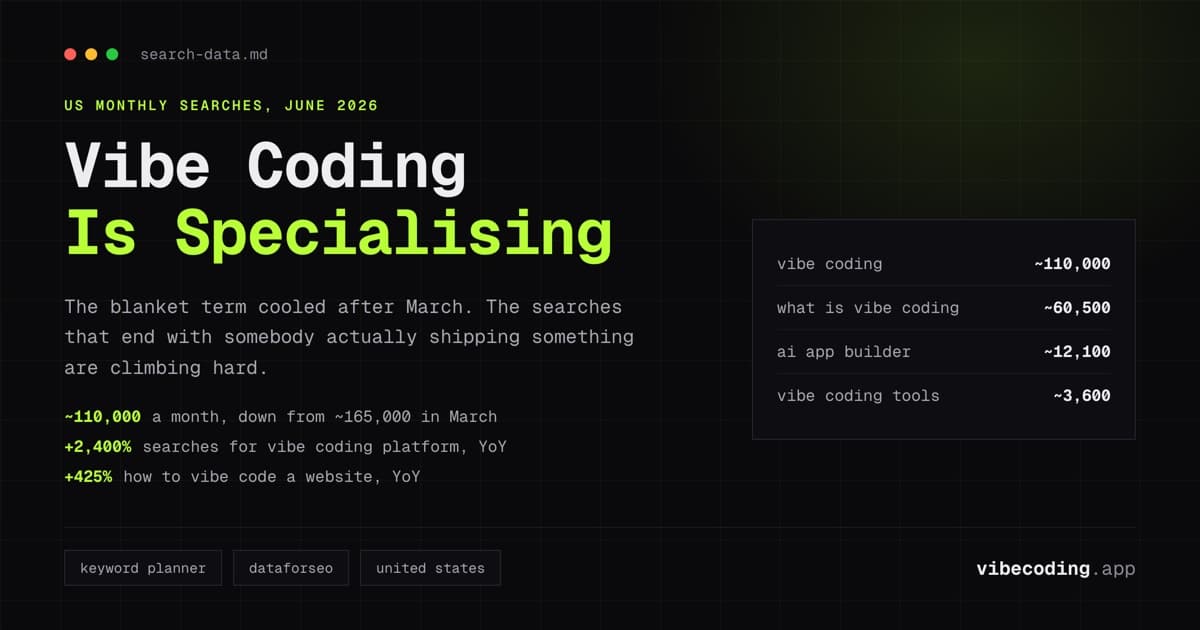
We pulled the Google search data on vibe coding. The headline term peaked in March 2026 and cooled, but the practical terms are surging. Here's what the numbers actually say about where vibe coding is heading.