LangChain Hub Review 2026: Vibe Coding Tool Guide & Comparison

TL;DR
LangChain Hub is a community-driven prompt marketplace within LangSmith for browsing, sharing, and managing prompts across any LLM provider.
- Best For: AI teams who need centralized prompt management, LLM observability, and evaluation tools across multiple models.
- Pricing: Free tier (1 seat, 5K traces/mo). Plus at $39/seat/mo. Hub browsing is free.
- Verdict: The most complete prompt management and LLM observability platform, with a growing community marketplace.
Quick definition: LangChain Hub is a community-driven prompt marketplace within the LangSmith platform. It lets developers browse, share, fork, and version-control prompts and chains that work across any LLM provider. The broader LangSmith platform adds LLM observability, evaluation, and deployment management.
One-minute highlights
- Community prompt marketplace: browse and share prompts across any LLM.
- Centralized prompt versioning with A/B testing and deployment management.
- LLM observability: detailed tracing of agent reasoning and action sequences.
- Evaluation framework: test and score agent behavior on production and offline datasets.
- Model-agnostic: works with OpenAI, Anthropic, Google, Hugging Face, and local models.
- Free tier available with 5K traces/month.
Jump to the specs? Visit the dedicated LangChain Hub tool page for feature lists, pricing, and related reads.
Introduction to LangChain Hub
The AI prompt ecosystem has a fragmentation problem. OpenAI has its cookbook, Anthropic has its cookbook, Google has its cookbook: each provider maintains examples for their own models. If you work across multiple LLMs (and most production teams do), you need a model-agnostic layer for prompt management.
LangChain Hub fills this gap. It's a community-driven marketplace where developers share prompts, chains, and agent configurations that work across any LLM provider. Built into LangSmith (LangChain's commercial platform), the Hub combines community discovery with enterprise prompt management features.
The broader LangSmith platform wraps the Hub with observability (see exactly how your agent thinks), evaluation (test agent behavior systematically), and deployment management. For teams building production AI applications, this combination addresses the lifecycle from prompt discovery through production monitoring.
Core Features
Prompt Marketplace
The Hub is a browsable, searchable collection of community-contributed prompts and chains. Each entry includes the prompt template, metadata about intended use cases, and compatibility information. You can fork any prompt, modify it for your use case, and publish your version back to the community.
This community-first approach means the Hub grows organically with practical patterns from real developers, not just official examples from AI providers.
Prompt Versioning & Management
Beyond the marketplace, LangSmith provides centralized prompt management for teams:
- Version control: Track prompt changes over time with full history.
- A/B testing: Run multiple prompt versions simultaneously and compare performance.
- Deployment management: Deploy specific prompt versions to specific environments (staging, production).
- Team collaboration: Multiple team members can contribute and review prompt changes.
This is the enterprise layer that turns ad-hoc prompt engineering into a managed, repeatable process.
LLM Observability
LangSmith's tracing shows exactly how your agent processes a request: every LLM call, tool invocation, retrieval step, and decision point. Aggregate metrics reveal trends in latency, cost, token usage, and error rates.
For debugging production AI applications, this observability is essential. When an agent gives a bad answer, you can trace the exact reasoning chain that led to it.
Evaluation Framework
LangSmith provides tools for systematic evaluation:
- Dataset creation: Build evaluation datasets from production traffic or manual curation.
- Automated scoring: Score agent outputs against expected results using custom metrics.
- Regression detection: Catch quality degradation when prompts or models change.
- Comparison views: Side-by-side evaluation of different prompt versions or model configurations.
Pricing
Developer (Free)
- 1 seat
- 5,000 base traces/month
- Access to Hub browsing and prompt management
Plus ($39/seat/month)
- Up to 10 seats (unlimited seats available)
- 10,000 base traces/month included
- Extended features for team collaboration
Enterprise (Custom)
- Advanced administration, security, and support
- Custom deployment options
- Contact sales for pricing
Trace Pricing
- Base traces (14-day retention): $2.50 per 1,000 traces
- Extended traces (400-day retention): $5.00 per 1,000 traces
Hub Access
Browsing the Hub is free. You don't need a paid plan to discover and use community prompts.
Pros and Cons
What we like
- Model-agnostic marketplace. The only major prompt marketplace that works across all LLM providers, not locked to one vendor.
- Observability is excellent. Tracing agent reasoning chains is critical for debugging and improving production AI applications.
- Evaluation framework is comprehensive. Systematic testing of agent behavior is underserved in most AI tools: LangSmith makes it practical.
- Free tier is useful. 5K traces/month is enough for development and light production use.
- Growing community. The marketplace benefits from LangChain's large developer community.
What could be better
- Pricing adds up for teams. $39/seat/month plus trace overage charges can be significant for larger teams.
- LangChain coupling. While the Hub is useful standalone, the full value requires buying into the LangChain/LangSmith ecosystem.
- Prompt quality varies. Community-contributed prompts have inconsistent quality and maintenance.
- Learning curve. The platform's breadth (Hub + observability + evaluation + deployment) takes time to learn fully.
How LangChain Hub Compares
LangChain Hub vs Vendor Cookbooks
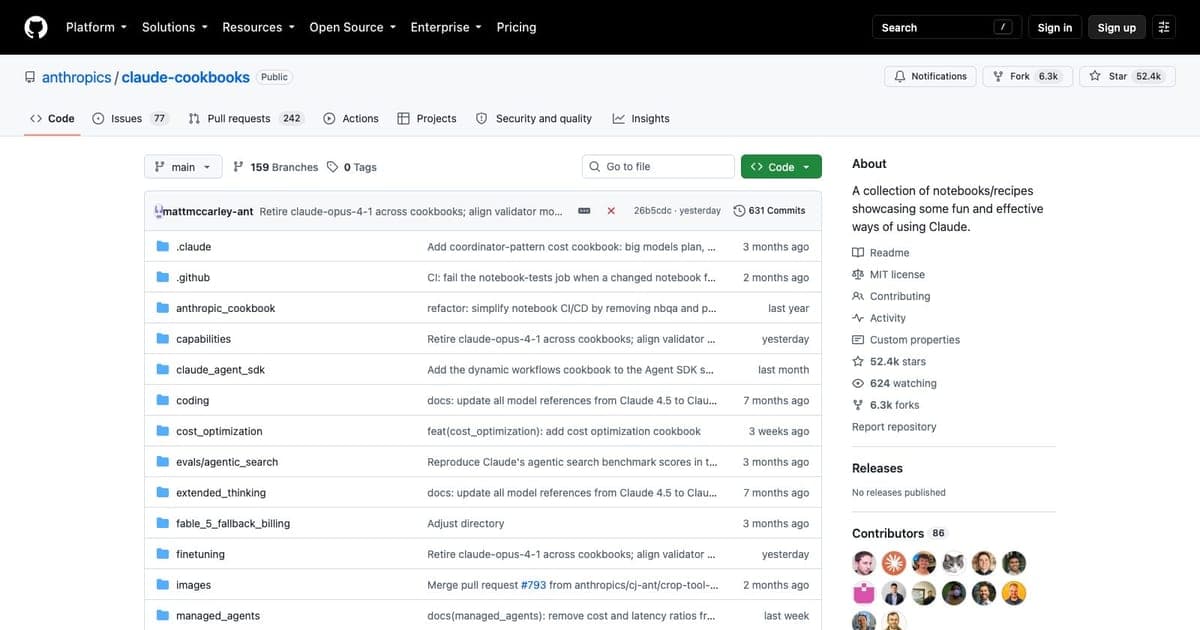
The Claude Cookbook, OpenAI Cookbook, and Gemini Cookbook are official, curated resources for specific models. LangChain Hub is community-driven and model-agnostic. Vendor cookbooks are higher quality for their specific models; LangChain Hub provides breadth across all providers.
LangChain Hub vs Langfuse
Langfuse is an open-source LLM observability alternative. LangSmith offers more features (prompt management, evaluation, deployment) but at a higher price point. Langfuse is better for teams who want self-hosted observability; LangSmith is better for teams who want the full managed platform.
Who Should Use LangChain Hub
Best for
- AI teams working across multiple LLM providers who need model-agnostic prompt management.
- Production AI applications that need observability, evaluation, and systematic prompt management.
- Prompt engineers looking for community-tested patterns and a platform for version-controlled iteration.
- Vibe coders using Cursor or Claude Code who want proven prompt templates for common AI tasks.
Not ideal for
- Solo developers on a budget: the free tier is limited and paid plans add up.
- Single-model teams: if you only use one LLM provider, their official cookbook may be sufficient.
- Teams wanting self-hosted solutions: LangSmith is cloud-hosted; consider Langfuse for self-hosting.
Getting Started
- Browse the Hub at smith.langchain.com/hub, no account needed.
- Create a free account for prompt saving and version management.
- Fork a prompt: find one close to your use case and customize it.
- Install LangSmith SDK:
pip install langsmithfor tracing and evaluation. - Enable tracing: add your LangSmith API key to start capturing agent traces.
Tips for Vibe Coders
- Start by browsing the Hub. Before writing prompts from scratch, check if a community template exists for your use case.
- Use the free tier for development. 5K traces/month is enough for building and testing: upgrade when you go to production.
- Enable tracing early. The sooner you start capturing traces, the sooner you can identify and fix agent quality issues.
- Pair with Supabase for data. LangChain Hub handles prompts and observability; Supabase handles your application data.
FAQ
What is LangChain Hub? LangChain Hub is a community-driven prompt marketplace within the LangSmith platform that lets developers browse, share, fork, and version-control prompts and chains that work across any LLM provider.
How much does LangChain Hub cost? Browsing the Hub is free. The LangSmith platform offers a free tier (1 seat, 5,000 traces/month), a Plus plan at $39/seat/month with up to 10 seats, and custom Enterprise pricing.
Does LangChain Hub have a free plan? Yes, browsing the Hub requires no account or payment. The LangSmith Developer plan is free with 1 seat and 5,000 base traces per month.
What are the best LangChain Hub alternatives? The main alternatives are vendor-specific cookbooks (OpenAI Cookbook, Claude Cookbook, Gemini Cookbook) for model-specific guidance, and Langfuse for open-source self-hosted LLM observability at a lower price point.
Verdict
LangChain Hub is the model-agnostic prompt marketplace that the AI ecosystem needs. Combined with LangSmith's observability and evaluation tools, it provides the most complete platform for managing the prompt-to-production lifecycle.
The community marketplace, version-controlled prompt management, and systematic evaluation framework address real pain points that vendor-specific cookbooks don't. The trade-offs are pricing at scale and LangChain ecosystem coupling: both manageable for teams who need cross-provider prompt management.
For AI teams building production applications, LangChain Hub earns its spot in the Vibe Coding directory.
Rating: 7.5/10
Disclosure: This review reflects our honest assessment. We only recommend tools that align with the Vibe Coding methodology. See the full LangChain Hub tool page for feature details and pricing.

Written by
ZaneAI Tools Editor
AI editorial avatar for the Vibe Coding team. Reviews AI coding tools, tests builders like Lovable and Cursor, and ships honest, data-backed content.