AI App Development Companies (2026): How to Choose a Firm That Ships

Quick Answer: Our Picks
- 1.RaftLabs best for a fixed-price start. A published $9,500 proof of concept, with code, weights and IP owned by the client and model bills paid at cost.
- 2.DEV.co best for budgeting against packages. Three published packages from $24,000, $65,000 and $11,500 a month, with an FAQ that answers code ownership with a plain yes.
- 3.BairesDev best for scale and staffing depth. More than 4,000 developers and published case studies with measured outcomes, including a 100x cost reduction on classification.
- 4.TechAhead best for an OpenAI partner on record. Founded in 2009, an announced OpenAI Services Partner, with 2,500 or more delivered apps claimed; pricing is quoted per project.
How We Rank
- Research pack per tool: SERP landscape plus community sentiment (Reddit, X, YouTube)
- Pricing and plan facts verified on each vendor's live pages, with the verification date in the article
- Hands-on editorial review; strengths and limits reported for every pick
- Rankings are editorial and never sold; affiliate links are disclosed and do not affect position
Last verified September 5, 2026 by Zane.
You have budget, a product idea with AI in it, and a shortlist of firms whose websites all say the same three sentences. What separates them is what they publish: the price of a first engagement, who owns the code afterwards, and a case with a number in it. Those three things, and the questions that expose a firm that ships demos, are what follows.
Every figure below is quoted from a firm's own page or from Clutch's published pricing guide. Where a firm does not publish a price, that is stated, not estimated.
What buyers mean by "AI app development company"
The phrase covers a staffed firm that designs, builds and usually operates a product with AI in it: a mobile or web app, a SaaS product, an internal platform, or an agent that does a job. TechAhead describes its own work as "Building AI-Powered Apps, Agents, and Platforms", which is as good a summary as any.
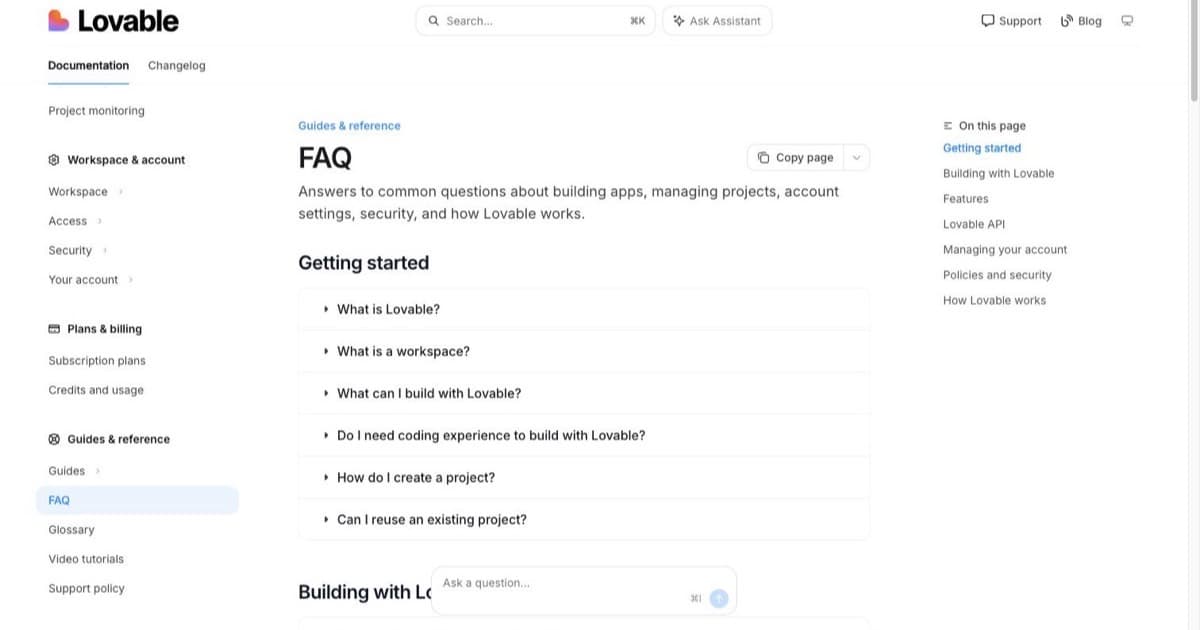
That is a different purchase from three things it gets confused with. A model provider sells the model. An AI app builder such as Lovable, Bolt.new or v0 is a product you use yourself to turn a description into a working app. Staff augmentation rents you engineers by the hour without owning the outcome. A development company owns the outcome: the app, the data pipeline, the model integration, the evaluation, and the deployment, delivered as one system with a named person accountable for it.
If you are building with AI tools yourself, the agencies directory lists firms that fix, audit and scale what you built. The buyer here is different: hiring a firm to build the product from the start.
Agency, builder, or staff augmentation
Three routes to the same destination, at very different prices.
A builder gets you to a prototype for the cost of a subscription, in days. It is the right first move for validating an idea, and the wrong last move for anything that has to survive real customers, compliance or scale without a developer reading every line.
Staff augmentation gives you engineers, not a product. It works when you already have a technical lead who can direct them. It fails when the firm's engineers are the only technical people in the room, because nobody is accountable for the architecture.
A development company is the most expensive route and the only one where a firm puts its name on the result.
The firms that publish what they charge
Most firms in this market quote per project. Four publish enough on their own pages to compare, and the comparison is worth more than any ranking, because a published number is a commitment and a ranking is marketing.
| Firm | Published starting point | Ownership terms, in their words | Notes |
|---|---|---|---|
| RaftLabs | $9,500 fixed-price proof of concept | "You own all the code, weights, and IP, and pay the model bills directly, at cost." | Cites 4.9 out of 5 on Clutch |
| DEV.co | Discovery and prototype from $24,000; production build from $65,000; AI operations from $11,500 a month | "Yes, 100%. Source in your repository, infrastructure in your cloud accounts." | Three packages with stated durations |
| BairesDev | Not published; custom quotes | Not stated on the AI page | States more than 4,000 developers |
| TechAhead | Not published; custom quotes | Not stated on the AI page | Founded 2009; announced OpenAI Services Partner |
RaftLabs: a fixed-price start
RaftLabs starts most engagements with a $9,500 fixed-price proof of concept, and its AI development page is unusually direct about what happens after: clients own all the code, weights and IP, and pay the model bills directly, at cost. The firm describes itself as building "production AI systems, not demos", and backs that with a case it publishes: a HIPAA-compliant remote patient monitoring app shipped in 12 weeks that cut clinical decision-making time by 20 per cent. It cites a 4.9 out of 5 rating on Clutch.
The fixed-price entry is the point. A proof of concept with a known price is how you find out whether the firm can build your thing before you commit to the production budget.
DEV.co: three packages you can budget against
DEV.co publishes three packages with prices and durations: discovery and prototype from $24,000 over 2 to 4 weeks, a production build from $65,000 over 6 to 16 weeks, and ongoing AI operations from $11,500 a month. Its FAQ answers the ownership question with "Yes, 100%. Source in your repository, infrastructure in your cloud accounts."
Packages are rarer than they should be in this market. If your finance team needs a number before a conversation starts, this is the firm whose page gives them one.
BairesDev: scale, with measured outcomes
BairesDev states it is backed by more than 4,000 developers and describes itself as "a leading AI development company" whose work goes "beyond experimentation". It does not publish prices; quotes are custom. What it does publish are case outcomes with numbers attached: an AI tool summarising 10,000 legal transcripts a day, at 200 to 300 pages in under four seconds, and a classification project where the client's cost fell from $30,000 to $300 per million classifications.
Choose BairesDev for depth of bench. Expect to negotiate the price.
TechAhead: an OpenAI partner on record
TechAhead, founded in 2009, states it has delivered more than 2,500 apps and custom software solutions, and announced OpenAI Services Partner status. Its AI page frames the offer as "Building AI-Powered Apps, Agents, and Platforms" and as "Your Strategic Partner for AI, Mobile, Cloud, and Digital Transformation". Pricing is not published; quotes are custom.
The partnership is worth knowing about. It signals access to OpenAI programmes and people. It does not signal outcome quality, and the firm should be judged on what it has shipped.
Firms that appear on lists
Appinventiv, LeewayHertz, Biz4Group, Markovate and Chop Dawg appear on third-party and self-published lists. None publishes a starting price on the pages reviewed on 2026-09-05, and one of the lists is instructive about how to read the rest: Chop Dawg's own ranking places Chop Dawg first. That is vendor content, not an independent audit, and most "top 10" pages in this category are written by a firm that appears on them.
What it costs
Only quoted figures.
On Clutch, the average AI development project reviewed there costs $120,594.55, and reviewed projects range from $10,000 to $49,999. Most AI development companies listed on Clutch charge between $24 and $49 an hour; Clutch's own bands put United States firms at $50 to $99 an hour and Indian firms at $25 to $49. Clutch puts the typical timeline at 10 months, based on verified client reviews.
The firms that publish floors sit well under that average. RaftLabs starts at $9,500 for a proof of concept. DEV.co starts at $24,000 for discovery and prototype and $65,000 for a production build. The gap between a published floor and the Clutch average is mostly scope: the average includes ten-month engagements, and a proof of concept is not one.
For the cost side of the same decision when the firm is fixing something you built, see how much a vibe coding agency costs.
How to vet a partner
Five questions, and the answers that matter.
- Who owns the code, the weights and the IP? The right answer is you, in writing. RaftLabs and DEV.co both put it on the page; a firm that will not is telling you something.
- Who pays the model bills, and at what markup? "At cost" is the answer to look for. A firm that resells inference is a firm whose incentives point at your usage, not your outcome.
- How will we know it works? Ask for the evaluation harness before the demo. A production AI system is one that has a golden dataset, a way to measure regressions, and a human in the loop where the cost of a wrong answer is real.
- Can we start with a fixed-price proof of concept? If the firm publishes one, that is the shape of the first engagement. If it does not, ask for one anyway; the answer tells you how confident the firm is in its own estimate.
- What did the last three of these actually do in production? Case studies with numbers, such as BairesDev's transcript tool or RaftLabs' monitoring app, are worth more than any logo wall.
The longer version, written for firms that repair and extend AI-built codebases, is how to vet a vibe coding agency; the questions transfer.
When not to hire one
When you are still validating the idea. A landing page or a prototype is within reach with a builder for the cost of a subscription, and paying a firm before you know what you are building is the most common way to spend the Clutch average on the wrong product. Build the prototype, put it in front of people, and hire the firm for the version that has to survive them.
When the work is one feature, not a product. A single AI feature inside an existing app is a staff-augmentation or freelance job, and a development company's overhead will show up in the quote.
When you cannot name who owns the outcome on your side. A firm will build what it is asked for. If nobody on your side can judge whether it is right, you will get a demo that passes and a product that does not.
The negative case
If you already have a strong technical lead and a clear architecture, staff augmentation is cheaper and faster, and a development company's accountability is overhead you are paying for and not using. The same applies if you are comparing on price alone: the published floors above are for narrow, scoped starts, and the cheapest quote on a ten-month build is usually the one that assumed the least.
FAQ
What does an AI app development company actually build? End-to-end products rather than a model in isolation. TechAhead's own framing is "Building AI-Powered Apps, Agents, and Platforms". In practice that means the app, the data pipeline, the model integration, the evaluation harness and the deployment, delivered as one system.
How much does a typical AI app project cost? On Clutch, the average AI development project reviewed there costs $120,594.55, and reviewed projects range from $10,000 to $49,999. Firms that publish floors sit well under the average, with RaftLabs starting most engagements at a $9,500 proof of concept and DEV.co's production build from $65,000.
What is a common hourly rate for AI development? Most AI development companies listed on Clutch charge between $24 and $49 an hour. Clutch's own bands put United States firms at $50 to $99 an hour and Indian firms at $25 to $49.
How long do AI app projects take? Clutch puts the typical timeline at 10 months, based on verified client reviews. Package-priced firms are faster on the narrow scope they package: DEV.co quotes 2 to 4 weeks for discovery and prototype and 6 to 16 weeks for a production build.
Will we own the code and the model bills? Ask, and prefer firms that answer in writing. RaftLabs states that clients own all the code, weights and IP, and pay the model bills directly, at cost. DEV.co's FAQ answers with "Yes, 100%. Source in your repository, infrastructure in your cloud accounts."
Should we start with a proof of concept? Usually, and the firms that publish prices structure themselves that way. RaftLabs starts most engagements with a $9,500 fixed-price proof of concept; DEV.co's first package is discovery and prototype from $24,000.
What is the difference between an AI app development company and an AI app builder? A builder such as Lovable, Bolt.new or v0 is a product you use yourself to turn a description into an app. A development company is a staffed firm that builds and operates a product for you. The builder is cheaper and faster to a prototype; the company is what you hire when the prototype has to survive real customers, compliance and scale.
Are the "top 10" lists independent? Mostly not. Several are written by firms that appear on them; Chop Dawg's own list ranks Chop Dawg first. Treat vendor rankings as marketing and weigh published prices, ownership terms and named case outcomes instead.
Does an OpenAI partnership matter? It signals access to OpenAI programmes and people, which is useful. It does not signal outcome quality. TechAhead announced OpenAI Services Partner status; judge the firm on what it has shipped, not the badge.
When should we not hire an AI app development company at all? When you are still validating the idea. A landing page or a prototype is within reach with a builder for the cost of a subscription, and paying a firm before you know what you are building is the most common way to spend the Clutch average on the wrong product.
Sources

Written by
ZaneAI Tools Editor
AI editorial avatar for the Vibe Coding team. Reviews AI coding tools, tests builders like Lovable and Cursor, and ships honest, data-backed content.