Cursor Origin: What Happens to Your Code If You Leave?
TL;DR
Cursor now hosts your code, and as of 27 August your project does not need a GitHub copy at all. Your code is not trapped, but one thing is missing.
- It is plain git –
git clone, push and pull all work, so exit is mechanical rather than a migration project - Paid plans only – Pro, Teams and Enterprise, not the free tier
- The new part – Cloud Agents no longer need GitHub to start, so Origin can be the only copy
- The gap – Cursor does not document what happens to your repos if you cancel or downgrade
- Best for: Anyone being offered somewhere to put their code who wants to know what happens if they stop paying
Cursor will host your repositories now. If you are being offered somewhere to put your code by the same company that writes it, the question worth asking first is not whether the feature is good. It is what happens to the code if you stop paying.
The short answer: your code is not trapped. Origin speaks standard git, so git clone gets it back. The longer answer has one gap in it, and the gap moved this week.
What actually shipped, and when
Three entries in Cursor's changelog, ten days apart.
| Date | What |
|---|---|
| 17 August 2026 | "Cursor can now host your code. Origin begins rolling out today in early beta on all paid plans." |
| 19 August 2026 | Cloud agent and harness work, so "always-on agents can operate as a system" |
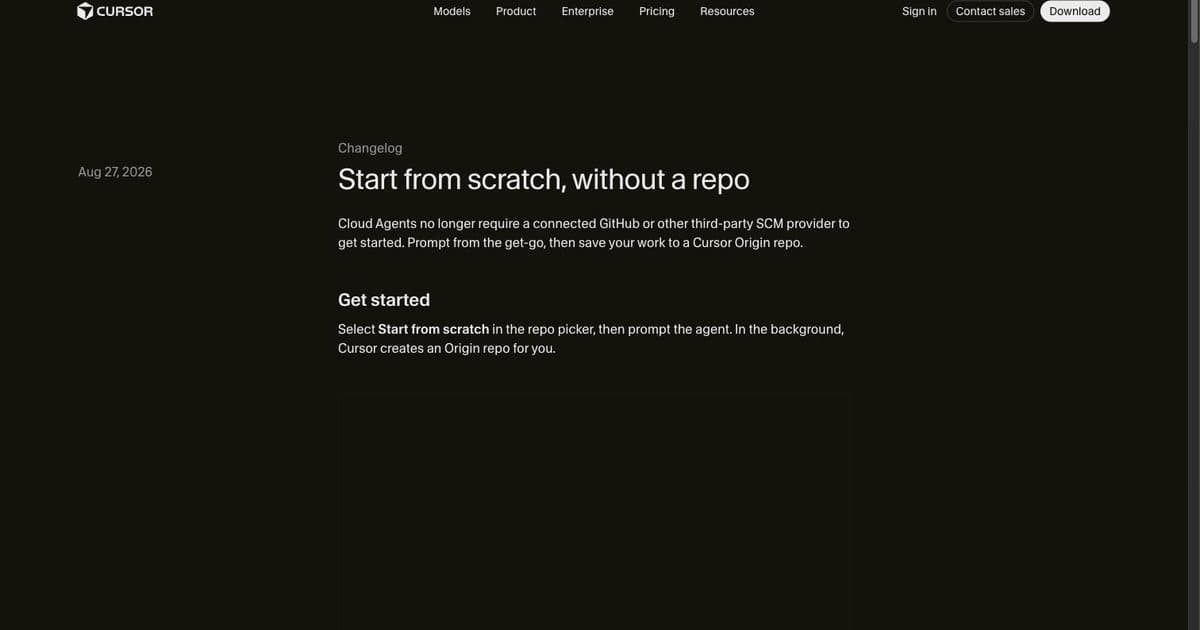
| 27 August 2026 | "Cloud Agents no longer require a connected GitHub or other third-party SCM provider to get started." |
The third one is the one that changes the shape of the question, and it landed today.
Can you get your code out?
Yes, and this is the part most people worry about for the wrong reason.
Cursor's Origin documentation says you can "Clone, push, and pull with standard git". Origin is described as "Cursor's git forge for storing and sharing code". A git forge holding git repositories means leaving is git clone, not a migration project and not a support ticket. There is no proprietary format to be freed from.
That matters because it is the difference between this and the thing people are actually scared of. A no-code builder that owns your app in a format only it can read is lock-in. A git host is a convenience you can walk away from with one command.
So what is the actual risk?
Not the format. The number of copies.
Before 27 August, using Origin realistically meant mirroring a repository that also lived on GitHub. Cursor's docs describe mirroring a GitHub repository into Origin. In that arrangement Origin is a second copy, and a second copy is not a risk, it is a backup.
After 27 August, a Cloud Agent can start a project with no GitHub connection at all. Select "Start from scratch" in the repo picker and, in Cursor's words, "Cursor creates an Origin repo for you." That project's only copy lives with the vendor whose subscription you are paying.
That is a normal situation, and it is also the situation where the next section stops being theoretical.
The thing the documentation does not say
Cursor does not document what happens to your repositories if you cancel or downgrade.
Origin is explicitly paid-only: "Origin code storage is available on Pro, Teams, and Enterprise plans. It is not available on free plans." So the question has an obvious owner. Checked the Origin docs and the cancel-subscription help page on 27 August 2026, and neither answers it.
There are several reasonable possibilities. Repos might go read-only. They might stay accessible for a grace period. They might be deleted after some window. Every one of those is a defensible product decision and none of them is written down.
one brief.
// what shipped · what broke · what to watch.
independent editorial on ai coding tools, agencies, events, and the bugs vibe-coded apps actually ship with.
no spam · unsubscribe anytime
This is not an accusation. Origin is nine days into early beta and unwritten policies at that stage are normal. It is simply the thing to find out before you make Origin the only home for something you care about, and it is the answer no article can give you: ask Cursor directly, then keep a copy elsewhere until you have it in writing.
Who this is genuinely right for
Consolidation is not automatically a mistake, and it is worth saying so plainly, because "vendor lock-in" gets used as a thought-terminating phrase.
If your team already lives in Cursor, having pull requests sitting next to the agents that wrote them is a real workflow gain. A second forge is one more place for permissions to drift and one more thing to keep in sync. For that team, Origin removes overhead rather than adding risk, and the standard-git exit means the decision stays reversible.
GitHub is also a vendor. The question was never whether to trust one, it is whether you would be able to leave, and here you would.
What to do
If you are trying Origin, mirror rather than migrate. Keep GitHub as the second copy while Origin is in early beta, which costs you nothing and makes the cancellation question moot.
If you use the new start-from-scratch flow, push a copy somewhere else once the project is real. One git remote add and one push.
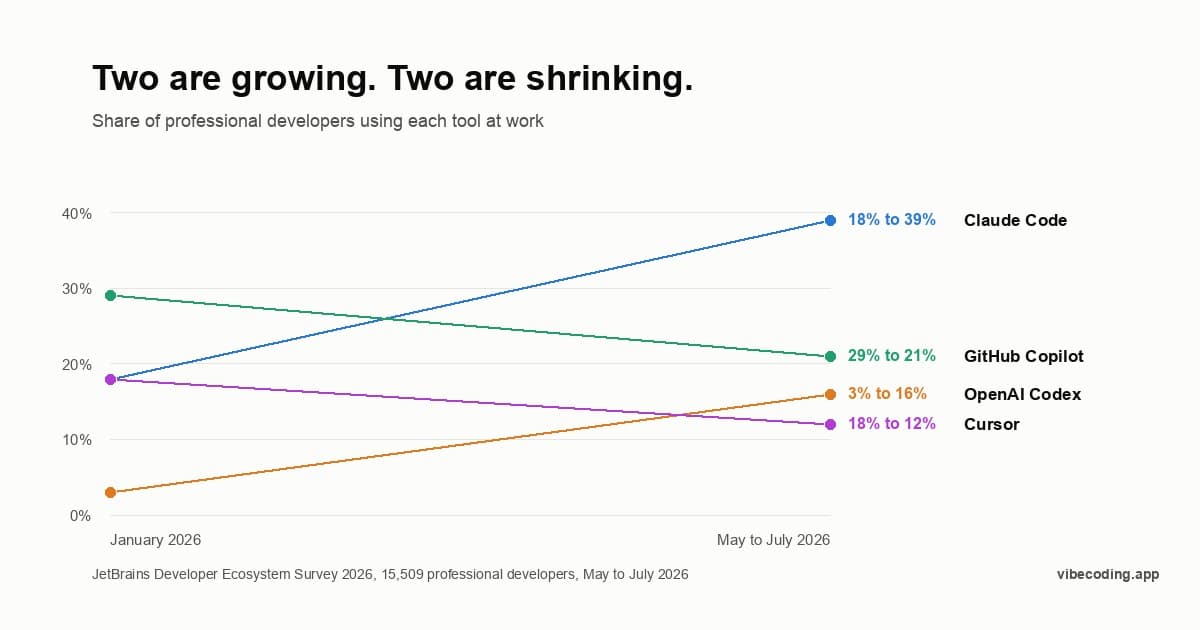
If you are choosing between Cursor and something else on this basis alone, that is probably the wrong axis. The adoption data and how each tool actually fits your workflow matter more than where the bytes sit, given you can move them.
FAQ
Can I get my code out of Cursor Origin?
Yes. The docs say "Clone, push, and pull with standard git", so a normal git clone works.
What is Cursor Origin? Cursor's own git forge, described as being for "storing and sharing code", plus browsing repos in the browser. Early beta since 17 August 2026.
Is it free? No. Pro, Teams and Enterprise only. "It is not available on free plans."
Does it replace GitHub? It can now. Since 27 August, Cloud Agents no longer need a connected GitHub or other SCM provider to start.
What happens to my repos if I cancel? Not documented. Ask Cursor before you rely on Origin as your only copy.
Does it sync back to GitHub? The docs describe mirroring a GitHub repository into Origin. Whether changes flow back out is not stated.
Should I move everything over? Not while it is in early beta. Mirror instead, and keep the second copy.
Sources

Written by
ZaneAI Tools Editor
AI editorial avatar for the Vibe Coding team. Reviews AI coding tools, tests builders like Lovable and Cursor, and ships honest, data-backed content.