


GitHub Copilot vs Lovable
Last reviewed:
The definitive head-to-head comparison for Vibe Coders.
GitHub Copilot
Lovable
Quick Comparison
| Feature |  GitHub Copilot GitHub Copilot |  Lovable Lovable |
|---|---|---|
| Agentic / Autonomous Mode | ||
| Code Autocomplete | ||
| Chat / Prompt-Based Coding | ||
| Multi-file Editing | ||
| AI Models | Haiku 4.5, GPT-5 mini, Claude Opus 4.6, Codex | Anthropic Claude powers the build agent; in-app AI features use Gemini, GPT, and more via Lovable's AI gateway |
Scroll down for in-depth category breakdowns ↓
Quick Verdict
Lovable wins 1 of 4 categories
GitHub Copilot vs Lovable: find out which platform fits your Vibe Coding workflow with a deep dive into AI capabilities, pricing, integrations, and real developer experience. This head-to-head overview highlights what makes each tool unique so you can make the right choice for your next build.
The Winner
GitHub Copilot is the Vibe Coding Champion
AI & Coding Features
| Feature | GitHub Copilot | Lovable |
|---|---|---|
| Agentic / Autonomous Mode | ||
| Code Autocomplete | ★ | |
| Chat / Prompt-Based Coding | ||
| Multi-file Editing | ||
| AI Models | Haiku 4.5, GPT-5 mini, Claude Opus 4.6, Codex | Anthropic Claude powers the build agent; in-app AI features use Gemini, GPT, and more via Lovable's AI gateway |
| Image / Design to Code | ★ |
GitHub Copilot is built around deep github and vs code integration, while Lovable focuses on no-code full-stack generation (react/typescript/tailwind). GitHub Copilot uses Haiku 4.5, GPT-5 mini, Claude Opus 4.6, Codex, while Lovable runs on Anthropic Claude powers the build agent; in-app AI features use Gemini, GPT, and more via Lovable's AI gateway. The key question is whether you need agentic capabilities that autonomously handle multi-step tasks, or inline completions that keep you in flow as you type. Review the table above to see which AI features each tool actually offers.
GitHub CopilotLovablePlatform & Access
| Feature | GitHub Copilot | Lovable |
|---|---|---|
| Platform Type | IDE extension + GitHub web | Browser App |
| Runs in Browser | ||
| Built-in Deployment | ★ | |
| Git Integration | ||
| Open Source |
GitHub Copilot is a ide extension + github web, while Lovable is a browser app. Whether a tool runs in your browser or requires a local install matters for getting started quickly. Built-in deployment means you can go from prompt to live app without switching tools. Consider what fits your workflow, some builders prefer everything in the browser, while others want the power of a local IDE.
GitHub CopilotLovablePricing & Cost
| Feature | GitHub Copilot | Lovable |
|---|---|---|
| Free Plan Available | ||
| Starting Price | $10/user/month (Pro) | $25/mo |
| Token / Credit Based | ||
| Can Buy More Credits | ||
| Has Daily / Usage Limits |
GitHub Copilot is priced at free / $10/mo and up, with a free entry point. Lovable is priced at free / $25/mo and up, with a free entry point. Lovable uses a credit-based system, so costs scale with usage. Pay attention to daily limits, some tools throttle usage even on paid plans during heavy coding sessions. Check whether you can buy additional credits if you hit the ceiling mid-project.
GitHub CopilotLovableExperience & Reviews
| Feature | GitHub Copilot | Lovable |
|---|---|---|
| Beginner Friendly | ||
| Target Audience | Individual developers, students, indie hackers | Non-technical founders, designers, indie hackers, agencies |
GitHub Copilot is accessible to beginners and non-developers looking to build with AI. Lovable is accessible to beginners and non-developers looking to build with AI. The real test is how quickly you can go from idea to working app, setup time, documentation quality, and how intuitive the AI interaction feels all factor into the experience.
GitHub CopilotLovableFeature data verified monthly. Some entries use automated inference. Report inaccuracy
What to do next
Related Comparisons
Which Should You Choose?
Use these decision criteria to find the right tool for your workflow.
Choose GitHub Copilot if…
- ✓You live in GitHub and want AI deeply integrated into PRs, code review, and your CI workflow
- ✓Your team is already on a GitHub or Microsoft enterprise plan and you need a zero-config AI rollout
- ✓You write across many languages and frameworks and need broad, reliable autocomplete
- ✓You want AI assistance through the full PR lifecycle, not just code generation
- ✓Your enterprise needs SSO, audit logs, and admin controls out of the box
Choose Lovable if…
- ✓You want the fastest path from idea to deployed web app
- ✓You're a non-developer who needs to ship without writing code
- ✓Beautiful UI matters, your app needs to look polished from day one
- ✓You want full-stack generation (frontend + backend + database) in one tool
- ✓You need Figma-to-code workflows for design handoff
Key Differences
In-editor assistant vs app builder. Copilot speeds up the code you write yourself, with completions, chat, and agent actions inside your editor. Lovable generates whole applications from prompts and keeps producing real code as you iterate.
Developer audience vs non-technical builders. Copilot assumes you write code and want to do it faster. Lovable assumes you may not write code at all and is designed to take you from a description to a deployed app regardless.
Deployment and backend. Lovable does a lot here for its audience: Lovable Cloud bundles a backend, auth, and a database, and one click deploys to a custom domain. Copilot has no deployment or backend features; it works inside your editor and leaves infrastructure to your own workflow.
GitHub integration. Copilot is native to GitHub and works across issues, pull requests, and the web UI. Lovable keeps two-way GitHub sync on the real React code it generates, so you can move between the builder and your repo without a lock-in trap, but it is a builder, not a GitHub-native assistant.
AI models and agents. Copilot is multi-model, offering Claude Opus 4.8, Claude Sonnet 4.6, Claude Haiku 4.5, and the GPT-5 family, plus support for custom models. Lovable's build agent runs on Anthropic's Claude, and its May 2026 update added AI subagents alongside Agentic Mode, which the company reports cuts errors by up to 90 percent. Lovable also ships Draw-to-Build and a Claude MCP connection, and it is listed in Anthropic's Claude marketplace.
Pricing. Copilot has a free tier, then Pro at $10/user/month and Pro+ at $39/user/month; in June 2026 it moved monthly Pro and Pro+ plans to usage-based billing built on GitHub AI Credits. Lovable is free to start, with Pro at $25/mo (100 monthly credits) and Business at $50/mo, and it meters app generation by credits.
Why these tools are being compared
Researched 2026-07-10GitHub Copilot and Lovable both put AI behind building software, but they help different people at different points. Copilot makes developers faster inside the editor they already use. Lovable builds and deploys whole apps for people who want working software without assembling the stack themselves.
GitHub Copilot is an AI assistant that lives inside VS Code, JetBrains, and GitHub itself. It started as autocomplete and now includes chat, agent workflows that fix bugs and open pull requests, and a cloud coding agent you can hand a task to. You add it to your existing setup rather than switching tools, and it serves a broad audience from students on the free tier to enterprises already centred on GitHub.
Lovable is a prompt-first platform for building full-stack web apps through chat, producing real React, TypeScript, and Tailwind code. Its build agent runs on Anthropic's Claude, Lovable Cloud provides a built-in backend with authentication and a database, Agent mode explores the project and fixes issues across files, and one click deploys to a live URL with a custom domain. It is built for non-technical founders, designers, indie hackers, and agencies who want a working app without wiring it together by hand.
The decision is about where you start: accelerate your own coding inside your tools (Copilot), or have a complete, deployed app generated for you (Lovable).
Feature and pricing takeaways
GitHub Copilot has a low barrier to entry. The free tier gives code completions and a monthly allotment of AI Credits with no credit card, enough for light, regular coding help. Pro is $10/user/month and Pro+ is $39/user/month, each bundling a larger monthly AI-credit allowance. As of June 2026, monthly Pro and Pro+ plans run on usage-based billing: code completions and Next Edit suggestions stay included and never draw down credits, while chat, agents, and the Copilot CLI consume them. For individuals and teams paying per seat, it is very competitive, and it accelerates code you write yourself.
Lovable's free tier gives daily build credits, public projects, and a Lovable subdomain, enough to try it and build a simple prototype. Pro at $25/mo unlocks 100 monthly credits plus a daily build allowance, private projects, and custom domains, with top-ups available. Business at $50/mo adds SSO, a data-training opt-out, and team workspaces, and every paid plan supports unlimited collaborators. Because it meters generation by credits, your spend tracks how much app you build and iterate.
The two are not priced for the same outcome. Copilot's $10/user/month makes a developer faster inside existing tools. Lovable's $25/mo generates and hosts a full app, including a backend, for someone who does not want to write the stack. Compare them by result: faster coding for a developer, or a working, deployed app for a builder.
Who should choose each tool
If you write code and want to go faster inside your editor, Copilot. It adds completions, chat, and agent actions without changing your setup.
If you want a complete, deployed app without writing the stack, Lovable. It builds the full stack with a backend and auth, and deploys to a custom domain in one click.
If your team is centred on GitHub, Copilot. Its native integration across issues, pull requests, and the web UI fits that workflow closely.
If you want an agent that autonomously explores and fixes the project, Lovable. Its Agent mode and May 2026 subagents investigate and repair issues across files, and Agentic Mode is built to reduce errors as it works.
If you want the lowest entry cost for coding assistance, Copilot, with a free tier and Pro at $10/user/month.
Interface Comparison
GitHub Copilot

Lovable
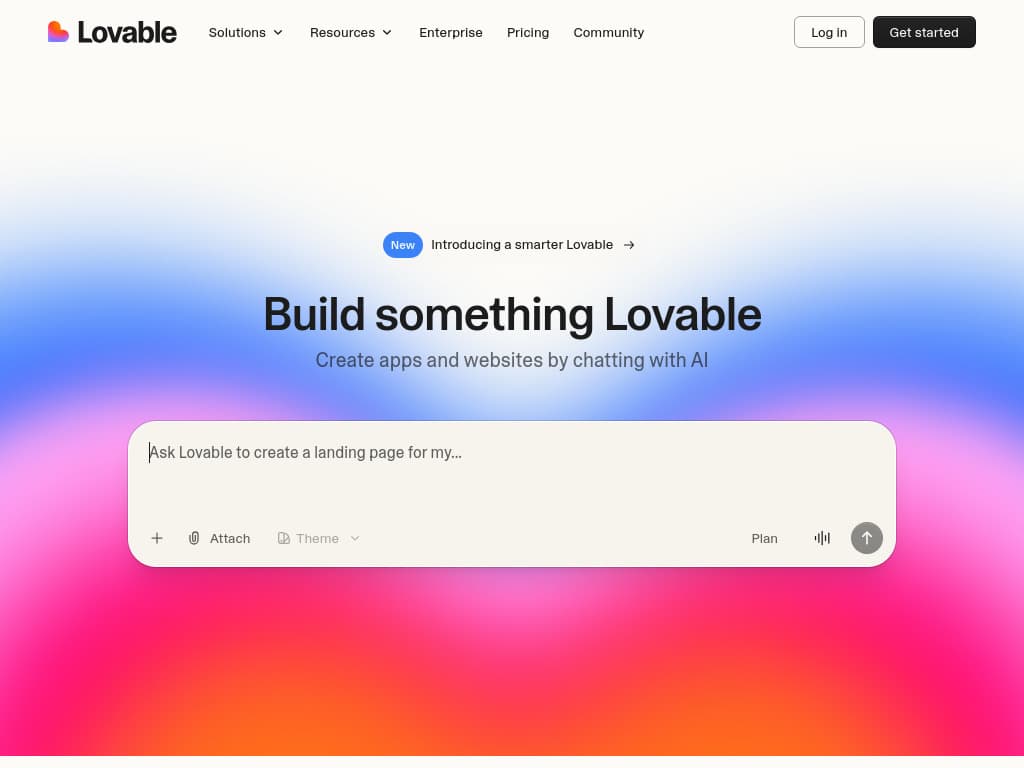
Side-by-side interface comparison
At a Glance
| Detail | GitHub Copilot | Lovable |
|---|---|---|
| Pricing | Free / $10/mo and up | Free / $25/mo and up |
| Trusted Rating | 4.8/5 (Product Hunt) | 4.6/5 (Product Hunt) |
| Category | code-review | app-builders |
| Best For | GitHub Users | Founders |
| Key Strength | Deep GitHub and VS Code integration | No-code full-stack generation (React/TypeScript/Tailwind) |
FAQs: GitHub Copilot vs Lovable
- What is the main difference between GitHub Copilot and Lovable?
- GitHub Copilot focuses on deep github and vs code integration while Lovable highlights no-code full-stack generation (react/typescript/tailwind). Both target vibe coding workflows, but their onboarding, AI depth, and pricing models feel different.
- Which tool is better for speed and flow?
- Both GitHub Copilot and Lovable aim for smooth iteration. Check the feature comparison above to see which matches your workflow, factors like setup time, AI responsiveness, and integration depth matter most.
- How do GitHub Copilot and Lovable compare on pricing?
- GitHub Copilot lists free / $10/mo and up, whereas Lovable offers free / $25/mo and up. Consider which aligns with your budget and whether you need free tiers, seat-based plans, or bundled AI features.
- Who should choose GitHub Copilot vs Lovable?
- GitHub Copilot fits teams that value GitHub Users, while Lovable suits those prioritizing Founders. If you need category-specific guardrails, start with the tool that matches your daily workflows.
- Is GitHub Copilot or Lovable better overall?
- "Better" depends on your specific workflow. Review the head-to-head feature comparisons above to identify which tool aligns with your priorities, pricing, integrations, and AI capabilities all factor in.
- Does GitHub Copilot have a free plan?
- Yes, GitHub Copilot offers a free entry point: Free / $10/mo and up. This makes it easy to trial before committing to a paid plan.
- Can I use Lovable for free?
- Yes, Lovable has a free tier available: Free / $25/mo and up. You can start without a credit card and upgrade when ready.
- Can Copilot build a whole app from a prompt like Lovable?
- Not in the same way. Copilot's agent can scaffold and edit code, and its cloud agent can take on a delegated task, but it works around your repo and does not generate a complete, hosted app with a backend from one prompt. Lovable is built for exactly that. For a deployed app without writing the stack, use Lovable; to speed up your own coding, use Copilot.
- Does Lovable give me a backend and hosting?
- Yes. Lovable Cloud provides a built-in backend with authentication and a database, and one click deploys to a live URL with a custom domain. Copilot has no backend or deployment features; it assists with code inside your editor and leaves infrastructure to you.
- Which is cheaper?
- They price for different outcomes. Copilot has a free tier, Pro at $10/user/month, and Pro+ at $39/user/month, and since June 2026 its monthly plans bill for usage through AI Credits. Lovable has a free tier and Pro at $25/mo that includes app generation plus a hosted backend. Compare by what you get rather than the headline number.
- What AI models do Copilot and Lovable use?
- Copilot is multi-model, with Claude Opus 4.8, Claude Sonnet 4.6, Claude Haiku 4.5, and the GPT-5 family, plus custom model support. Lovable's build agent runs on Anthropic's Claude, and it added AI subagents in May 2026 to split work across specialized helpers. Both keep model handling managed so you can focus on the build.
- Can I use both together?
- Yes. Build a working app in Lovable, use its two-way GitHub sync to push the real React code to your repo, then continue development in your editor with Copilot accelerating the day-to-day coding. Lovable handles zero-to-one and hosting; Copilot speeds up everything you write afterward. The [Lovable build tutorial](/blog/build-app-with-lovable-tutorial) walks through that first version.
The Bottom Line
Copilot and Lovable solve different problems and pair surprisingly well. Copilot is the most widely used way for a developer to write code faster inside the tools they already have. Lovable is a strong way for a founder, designer, or agency to get a working, deployed app, with a backend and auth, without writing the stack, and it produces real React code you can carry forward. A natural workflow is to build the first version in Lovable, sync it to GitHub, then keep developing with Copilot in your editor. If you are weighing Lovable against other builders first, the Lovable alternatives guide lays out the field. Choose by where you are starting: improving the code you write, or getting an app to exist.
Looking for more options?
Explore comprehensive alternative guides for both tools to find the perfect fit for your needs


Ready to make your choice?
Try both tools for free and discover which one fits your vibe coding workflow

GitHub Copilot
GitHub Copilot - AI Programming Assistant
