

Bolt.new vs Google AntiGravity
Last reviewed:
The definitive head-to-head comparison for Vibe Coders.
Bolt.new
Google AntiGravity
Quick Comparison
| Feature |  Bolt.new Bolt.new |  Google AntiGravity Google AntiGravity |
|---|---|---|
| Agentic / Autonomous Mode | ||
| Code Autocomplete | ||
| Chat / Prompt-Based Coding | ||
| Multi-file Editing | ||
| AI Models | Claude, GPT-4o, Gemini (multi-model) | Gemini 3.1 Pro, Gemini 3 Flash, Claude Sonnet 4.6, Claude Opus 4.6, GPT-OSS 120B |
Scroll down for in-depth category breakdowns ↓
Quick Verdict
It's a close call, depends on your needs
Bolt.new vs Google AntiGravity: find out which platform fits your Vibe Coding workflow with a deep dive into AI capabilities, pricing, integrations, and real developer experience. This head-to-head overview highlights what makes each tool unique so you can make the right choice for your next build.
The Winner
Bolt.new is the Vibe Coding Champion
AI & Coding Features
| Feature | Bolt.new | Google AntiGravity |
|---|---|---|
| Agentic / Autonomous Mode | ||
| Code Autocomplete | ★ | |
| Chat / Prompt-Based Coding | ||
| Multi-file Editing | ||
| AI Models | Claude, GPT-4o, Gemini (multi-model) | Gemini 3.1 Pro, Gemini 3 Flash, Claude Sonnet 4.6, Claude Opus 4.6, GPT-OSS 120B |
| Image / Design to Code |
Bolt.new is built around chat-based full-stack app creation from natural language prompts, while Google AntiGravity focuses on four product surfaces in one platform: ide, 2.0 desktop, cli, sdk. Bolt.new uses Claude, GPT-4o, Gemini (multi-model), while Google AntiGravity runs on Gemini 3.1 Pro, Gemini 3 Flash, Claude Sonnet 4.6, Claude Opus 4.6, GPT-OSS 120B. The key question is whether you need agentic capabilities that autonomously handle multi-step tasks, or inline completions that keep you in flow as you type. Review the table above to see which AI features each tool actually offers.
Bolt.newGoogle AntiGravityPlatform & Access
| Feature | Bolt.new | Google AntiGravity |
|---|---|---|
| Platform Type | Browser App | Agentic platform: IDE, standalone 2.0 desktop, CLI, SDK |
| Runs in Browser | ★ | |
| Built-in Deployment | ★ | |
| Git Integration | ||
| Open Source |
Bolt.new is a browser app, while Google AntiGravity is a agentic platform: ide, standalone 2.0 desktop, cli, sdk. Whether a tool runs in your browser or requires a local install matters for getting started quickly. Built-in deployment means you can go from prompt to live app without switching tools. Consider what fits your workflow, some builders prefer everything in the browser, while others want the power of a local IDE.
Bolt.newGoogle AntiGravityPricing & Cost
| Feature | Bolt.new | Google AntiGravity |
|---|---|---|
| Free Plan Available | ||
| Starting Price | $20/mo | $20/mo (Google AI Pro) |
| Token / Credit Based | ||
| Can Buy More Credits | ||
| Has Daily / Usage Limits |
Bolt.new is priced at free tier + paid pro/team subscriptions, with a free entry point. Google AntiGravity is priced at free tier, ai pro $20/mo, ultra tiers, with a free entry point. Bolt.new uses a credit-based system, so costs scale with usage. Pay attention to daily limits, some tools throttle usage even on paid plans during heavy coding sessions. Check whether you can buy additional credits if you hit the ceiling mid-project.
Bolt.newGoogle AntiGravityExperience & Reviews
| Feature | Bolt.new | Google AntiGravity |
|---|---|---|
| Beginner Friendly | ||
| Target Audience | Indie hackers, non-technical founders, rapid prototypers | Vibe coders, hobbyists, students, indie hackers |
Bolt.new is accessible to beginners and non-developers looking to build with AI. Google AntiGravity is accessible to beginners and non-developers looking to build with AI. The real test is how quickly you can go from idea to working app, setup time, documentation quality, and how intuitive the AI interaction feels all factor into the experience.
Bolt.newGoogle AntiGravityFeature data verified monthly. Some entries use automated inference. Report inaccuracy
What to do next
Related Comparisons
Which Should You Choose?
Use these decision criteria to find the right tool for your workflow.
Choose Bolt.new if…
- ✓You want to build and deploy a full-stack web app without leaving your browser
- ✓You're a non-technical founder who needs to prototype quickly without writing code
- ✓You're running a hackathon or need an MVP in hours, not days
- ✓You want Supabase auth and a backend database wired in from the start
- ✓You're starting from a Figma design or an existing GitHub repo
Choose Google AntiGravity if…
- ✓You want to mix IDE coding with autonomous agent orchestration
- ✓You prefer a Go-based CLI for terminal-native agent workflows
- ✓You need a Python SDK to build custom agents on Google's harness
- ✓You want model choice across Gemini, Claude, and GPT-OSS
Key Differences
Browser app builder vs agentic dev platform. Bolt runs in the browser and generates a whole app from a prompt. AntiGravity is a platform you install (IDE, desktop, CLI) that edits code, runs the terminal, and orchestrates agents in a real environment.
Deployment. Bolt includes built-in hosting plus Netlify export, taking you from prompt to live URL in one place. AntiGravity has no built-in deployment; you use your own pipeline. For a non-developer that gap matters; for a developer it is business as usual.
Autocomplete. AntiGravity offers Tab completion as you type, including unlimited completions on its free tier. Bolt has no code autocomplete; you build through prompts rather than typing code with suggestions.
Models. Both are multi-model. Bolt uses Claude, GPT-4o, and Gemini under the hood without exposing model choice. AntiGravity lets you choose among Gemini 3.1 Pro, Gemini 3 Flash, Claude Sonnet 4.6, Claude Opus 4.6, and GPT-OSS 120B. Neither supports fully custom models.
Pricing model. Bolt is token-based with daily limits on the free tier and Pro from $20/mo. AntiGravity has a generous free tier with weekly rate limits, Google AI Pro at $20/mo, and Ultra tiers, plus credit top-ups. The economics differ: Bolt meters generation by tokens, AntiGravity by periodic rate limits.
Audience. Bolt targets non-technical founders and rapid prototypers. AntiGravity targets vibe coders, students, hobbyists, and indie hackers who are comfortable in a code environment.
Why these tools are being compared
Researched 2026-06-23Bolt.new and Google AntiGravity both use AI to help you build software, but they aim at different builders and meet at the same search queries. Bolt generates complete apps in the browser. AntiGravity is a developer-grade agentic platform you install and drive.
Bolt.new is a browser-based full-stack app builder. You describe an app, optionally drop in a screenshot or Figma frame, and it scaffolds a working project on StackBlitz WebContainers, integrates Supabase, and gives you a live preview you can deploy in a click. Nothing to install. It is built for indie hackers and non-technical founders who want a deployed prototype quickly.
Google AntiGravity is Google's agentic development platform, spread across an IDE (a VS Code fork), a standalone 2.0 desktop app, a Go-based CLI, and an SDK. It gives you Tab autocomplete, multi-file agent editing, and access to Gemini, Claude, and GPT-OSS models, with a generous free tier. It is built for people who write code, or want to, and want strong agent tooling in a real development environment.
The split is clean: Bolt is for getting an app to exist without touching the stack; AntiGravity is for working in code with serious agent support.
Feature and pricing takeaways
Bolt.new starts free with limited daily tokens, enough to test it and build a small prototype before hitting the wall. Pro is $20/mo with more tokens and the option to buy more credits. Because it is token-based, your spend tracks how much you generate.
AntiGravity's free tier is notably generous: unlimited Tab completions, access to all supported models, and weekly rate limits that reset on their own. Many developers run daily work without paying. Google AI Pro at $20/mo raises the limits, Ultra removes most caps, and you can top up with credits at $25 for 2,500.
At $20/mo, Bolt buys more app generation plus built-in hosting, which is most of the stack for a non-developer. AntiGravity buys a full agentic coding environment with Google's models and a more generous free runway below that price. The right value depends on whether you want an app generated and hosted, or a powerful environment to write and ship code yourself.
Who should choose each tool
If you are a non-technical founder who wants a deployed app fast, Bolt.new. Describe it, build it, deploy it, without managing code or infrastructure.
If you write code and want strong agent tooling, AntiGravity. Its IDE, CLI, and SDK give you multi-file agents, terminal access, and model choice in a real environment.
If you want the most generous free tier for coding, AntiGravity. Unlimited Tab completions and access to all models for free is a strong runway.
If you need built-in hosting with no pipeline of your own, Bolt. It deploys for you; AntiGravity expects you to bring your own deployment.
If you want to prototype then take it further in code, start in Bolt, export to GitHub, then continue in AntiGravity for the deeper build.
Interface Comparison
Bolt.new

Google AntiGravity
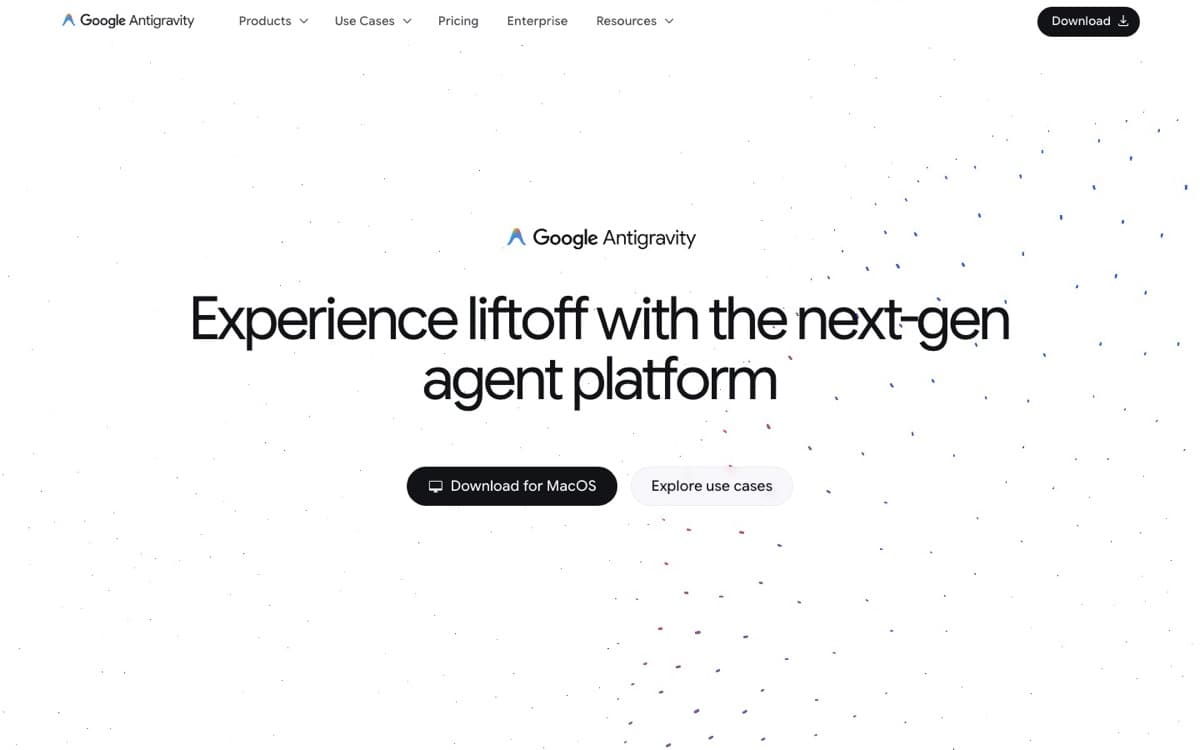
Side-by-side interface comparison
At a Glance
| Detail | Bolt.new | Google AntiGravity |
|---|---|---|
| Pricing | Free tier + paid Pro/Team subscriptions | Free tier, AI Pro $20/mo, Ultra tiers |
| Trusted Rating | 4.4/5 (Product Hunt) | N/A |
| Category | app-builders | ide-agents |
| Best For | Rapid Prototyping | Multi-agent orchestration |
| Key Strength | Chat-based full-stack app creation from natural language prompts | Four product surfaces in one platform: IDE, 2.0 desktop, CLI, SDK |
FAQs: Bolt.new vs Google AntiGravity
- What is the main difference between Bolt.new and Google AntiGravity?
- Bolt.new focuses on chat-based full-stack app creation from natural language prompts while Google AntiGravity highlights four product surfaces in one platform: ide, 2.0 desktop, cli, sdk. Both target vibe coding workflows, but their onboarding, AI depth, and pricing models feel different.
- Which tool is better for speed and flow?
- Both Bolt.new and Google AntiGravity aim for smooth iteration. Check the feature comparison above to see which matches your workflow, factors like setup time, AI responsiveness, and integration depth matter most.
- How do Bolt.new and Google AntiGravity compare on pricing?
- Bolt.new lists free tier + paid pro/team subscriptions, whereas Google AntiGravity offers free tier, ai pro $20/mo, ultra tiers. Consider which aligns with your budget and whether you need free tiers, seat-based plans, or bundled AI features.
- Who should choose Bolt.new vs Google AntiGravity?
- Bolt.new fits teams that value Rapid Prototyping, while Google AntiGravity suits those prioritizing Multi-agent orchestration. If you need category-specific guardrails, start with the tool that matches your daily workflows.
- Is Bolt.new or Google AntiGravity better overall?
- "Better" depends on your specific workflow. Review the head-to-head feature comparisons above to identify which tool aligns with your priorities, pricing, integrations, and AI capabilities all factor in.
- Does Bolt.new have a free plan?
- Yes, Bolt.new offers a free entry point: Free tier + paid Pro/Team subscriptions. This makes it easy to trial before committing to a paid plan.
- Can I use Google AntiGravity for free?
- Yes, Google AntiGravity has a free tier available: Free tier, AI Pro $20/mo, Ultra tiers. You can start without a credit card and upgrade when ready.
- Can AntiGravity build a whole app from a prompt like Bolt?
- AntiGravity's agents can generate substantial code and scaffold projects, but it is a development environment, not a one-click app-and-host product. Bolt is purpose-built to turn a prompt into a deployed full-stack app. If you want generation plus hosting with no setup, Bolt; if you want a powerful coding environment, AntiGravity.
- Does Bolt have a free tier?
- Yes. Bolt's free tier includes limited daily tokens, enough to test it and build a small prototype. Pro starts at $20/mo with more tokens and the option to buy credits. Because pricing is token-based, heavier generation uses more.
- Which is better for someone who does not code?
- Bolt.new. It builds the full stack from a description and deploys with one click, so a non-developer can reach a live app without a terminal. AntiGravity assumes comfort in a code environment and leaves deployment to you.
- Can I use both together?
- Yes. A common path is to generate a working prototype in Bolt, push it to GitHub, then open it in AntiGravity to refactor and extend with its agent tooling. Bolt handles zero-to-one; AntiGravity handles the deeper build.
The Bottom Line
These tools serve different stages and skill levels. Bolt.new is the fastest path from idea to a live app for someone who does not want to touch the stack. AntiGravity is a developer-grade agentic platform with a generous free tier for someone who wants to write and ship code with strong AI support. They even pair well: generate in Bolt, then export and build out in AntiGravity once the project is real.
Looking for more options?
Explore comprehensive alternative guides for both tools to find the perfect fit for your needs


Ready to make your choice?
Try both tools for free and discover which one fits your vibe coding workflow


Google AntiGravity
Google AntiGravity Agentic IDE