
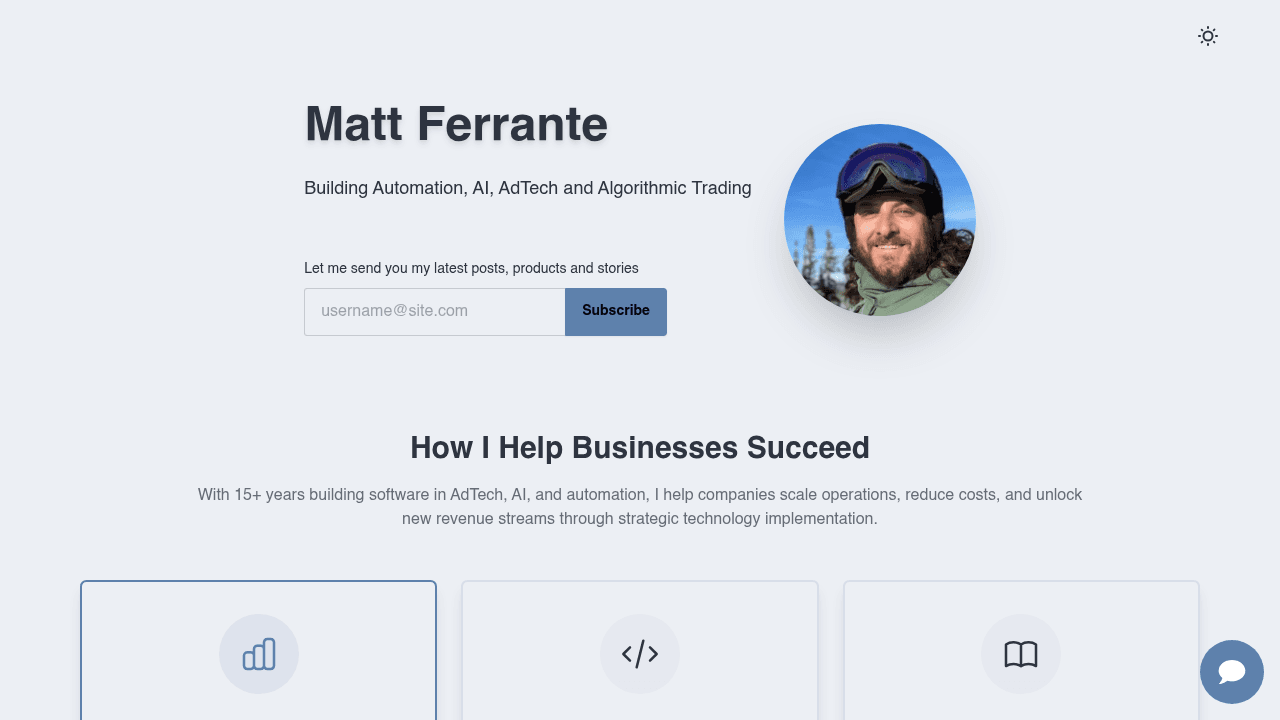
Hey Ferrante
Building automation, AI, AdTech, and algorithmic trading
About
Matt Ferrante is an independent AI consultant with 15+ years building software in AdTech, AI, and automation. The engagement model per his public site: strategic advisory for teams looking for competitive advantage in AI, tailored AI solutions (applications, agents, automation, integrations), hands-on workshops and training for engineering teams and business leaders, and custom implementations across automation, deployment, and SaaS. Low-friction entry point: a 30-minute consult for $20. NYC-based, solo consultant. Tools mentioned on his site include Claude Code, OpenCode, GitHub Copilot, Cursor, and n8n.
Services
30-Minute Consult
Book a 30-minute strategy call. Scoping, advisory, or quick-fire questions. Fee covers the call.
Custom AI Implementation
Tailored AI solutions: applications, agents, automation, integrations. Scope and pricing on intake call.
Vibe Tool Expertise
Tech Stack
Problems This Agency Can Fix
AI coding tools often generate code with exposed API keys, missing input validation, broken authentication, and insecure data handling. These vulnerabilities can lead to data breaches, unauthorized access, and compliance failures.
Authentication is one of the most common failure points in vibe-coded apps. AI tools frequently generate insecure auth flows, missing session validation, broken password resets, and improperly configured OAuth.
AI-generated database schemas often lack proper indexes, have no Row Level Security, use inefficient query patterns, and create data integrity problems. These issues worsen as your app grows.
AI-generated codebases frequently have duplicated logic, inconsistent patterns, missing error handling, no TypeScript strict mode, and poor separation of concerns. This makes maintenance and feature additions increasingly difficult.
AI tools often generate API integrations with missing error handling, no retry logic, hardcoded endpoints, and insecure credential storage. These integrations break silently and are difficult to debug.
AI-generated UIs often look great on desktop but break on mobile devices. Missing responsive breakpoints, oversized images, touch-unfriendly controls, and fixed-width layouts create poor mobile experiences.
AI-generated apps often lack proper meta tags, structured data, semantic HTML, and server-side rendering. This makes them invisible to search engines and kills organic traffic potential.